




A Monumental Navajo Five-inch Pin or Pendant [SOLD]
+ Add to my watchlist Forward to Friend
- Category: Pendants
- Origin: Diné of the Navajo Nation, Naabeehó Bináhásdzo
- Medium: silver, turquoise
- Size: 5” diameter
- Item # C4939F SOLD
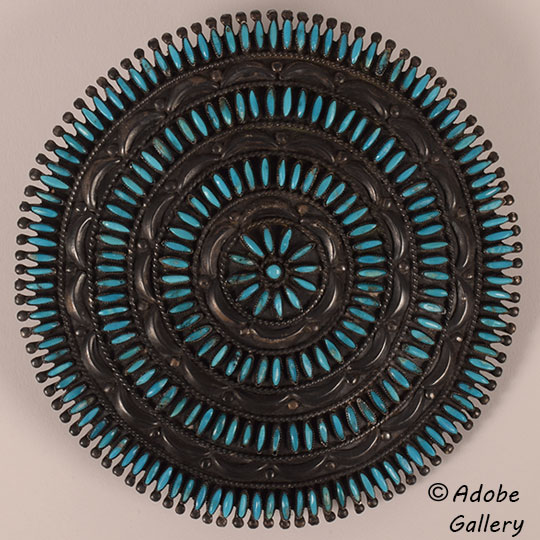
This is an exceptional and highly intricate piece that at first glance looks like traditional Zuni Pueblo jewelry. The style of work shown here is an example of a specific lapidary and silversmithing technique for which Zuni artists are world-renowned. However, it is from a Mater Diné lapidary artist from the Navajo Nation, Shirley M. Bahe. Here is a breakdown of what makes this piece special:
Turquoise Needlepoint Technique
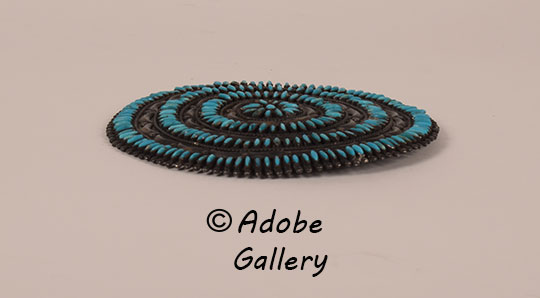
The defining characteristic of this turquoise pin or pendant is the needlepoint technique.
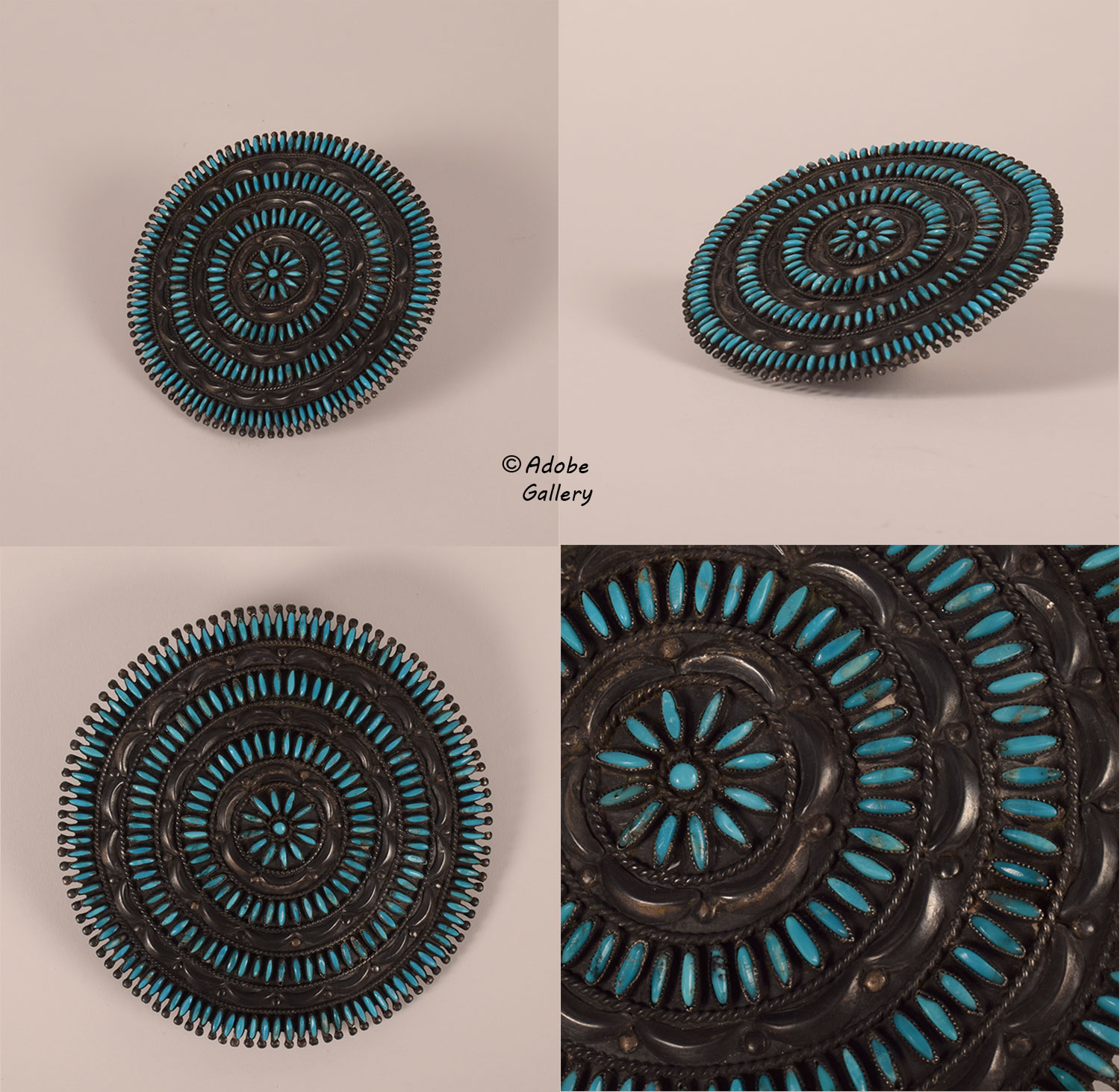
In Zuni Pueblo jewelry, "needlepoint" refers to stone settings where the turquoise is meticulously cut into tiny, straight, elongated shapes that are pointed on both ends (resembling the eye of a needle). This piece features multiple concentric ranks of these tiny stones, which requires an incredible amount of patience and precision. A single slip while cutting or shaping these minute stones would ruin them, and each one must be perfectly matched in size and hue to maintain the flawless symmetry.
Concentric Rosette Layout: The circular, cluster-style layout is a classic Southwestern design. It radiates outward from a central floral or starburst motif, separated by fine silver work. Between the rows of turquoise, the artist has incorporated detailed silver work, including delicate twisted wire (or rope wire) borders, tiny silver raindrops (the small silver beads), and stamped or scalloped silver dividers. These elements add texture and depth, beautifully contrasting against the bright blue of the turquoise. The darkening (oxidation) in the recessed areas of the silver highlights the precision of the wirework and makes the turquoise pop, indicating it has a wonderful vintage character.
The Artist: Shirley M. Bahe
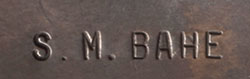 Master silversmith Shirley M. Bahe (Diné of the Navajo Nation) is celebrated for her exceptional mastery of labor-intensive lapidary techniques. While she brings her Diné heritage to her craft, her work beautifully showcases the specialized needlepoint and cluster styles historically perfected by Zuni Pueblo jewelers.
A large-scale, multi-tiered rosette like this one is a true "showpiece" item, serving as a testament to the immense skill and patience required of a master jeweler.
Versatility
Pieces designed as a pin/pendant combination feature both a standard pin stem/catch and a hidden silver loop (bail) on the back. This was a highly practical innovation by mid-to-late 20th-century Native American jewelers, allowing the owner to wear it as a traditional brooch or thread it onto a silver chain or a multi-strand liquid silver necklace.
This is a stunning heirloom-quality piece that perfectly captures the technical brilliance of Navajo lapidary art.
Condition: very good condition
Provenance: from the estate of Frank Burke of Gallup, NM
Recommended Reading:
- Zuni — a Village of Silversmiths by James Ostler, Marian Rodee, and Milford Nahohai
- The Beauty of Navajo Jewelry by Theda Bassman
TAGS: Diné of the Navajo Nation, Zuni Pueblo, Southwest Indian Jewelry, Shirley M. Bahe, Diné of the Navajo Nation Jeweler
- Category: Pendants
- Origin: Diné of the Navajo Nation, Naabeehó Bináhásdzo
- Medium: silver, turquoise
- Size: 5” diameter
- Item # C4939F SOLD
 Click on image to view larger.
Adobe Gallery Recommended Reading

Adobe Gallery Recommended Items
If you are interested in this item, we would also like to recommend these other related items: