




Hopi Pueblo Koshare Katsina Doll
+ Add to my watchlist Forward to Friend
- Category: Traditional
- Origin: Hopi Pueblo Nation, Hopituh Shi-Nu-Mu
- Medium: wood, pigment
- Size:
10” height x 7-½” outstretched arms - Item # C4887Z
- Price: $1500
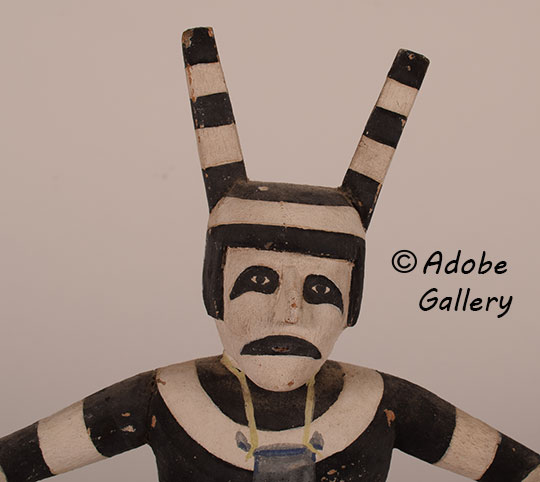
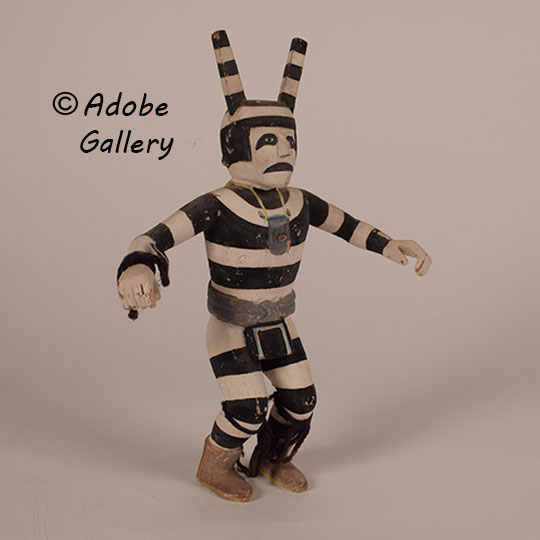
This figure is a representation of a Koshare (also known as the Hano Clown or Koyala). While originating with the Tewa Pueblos, this clown figure has been a prominent participant in Hopi ceremonies for generations.
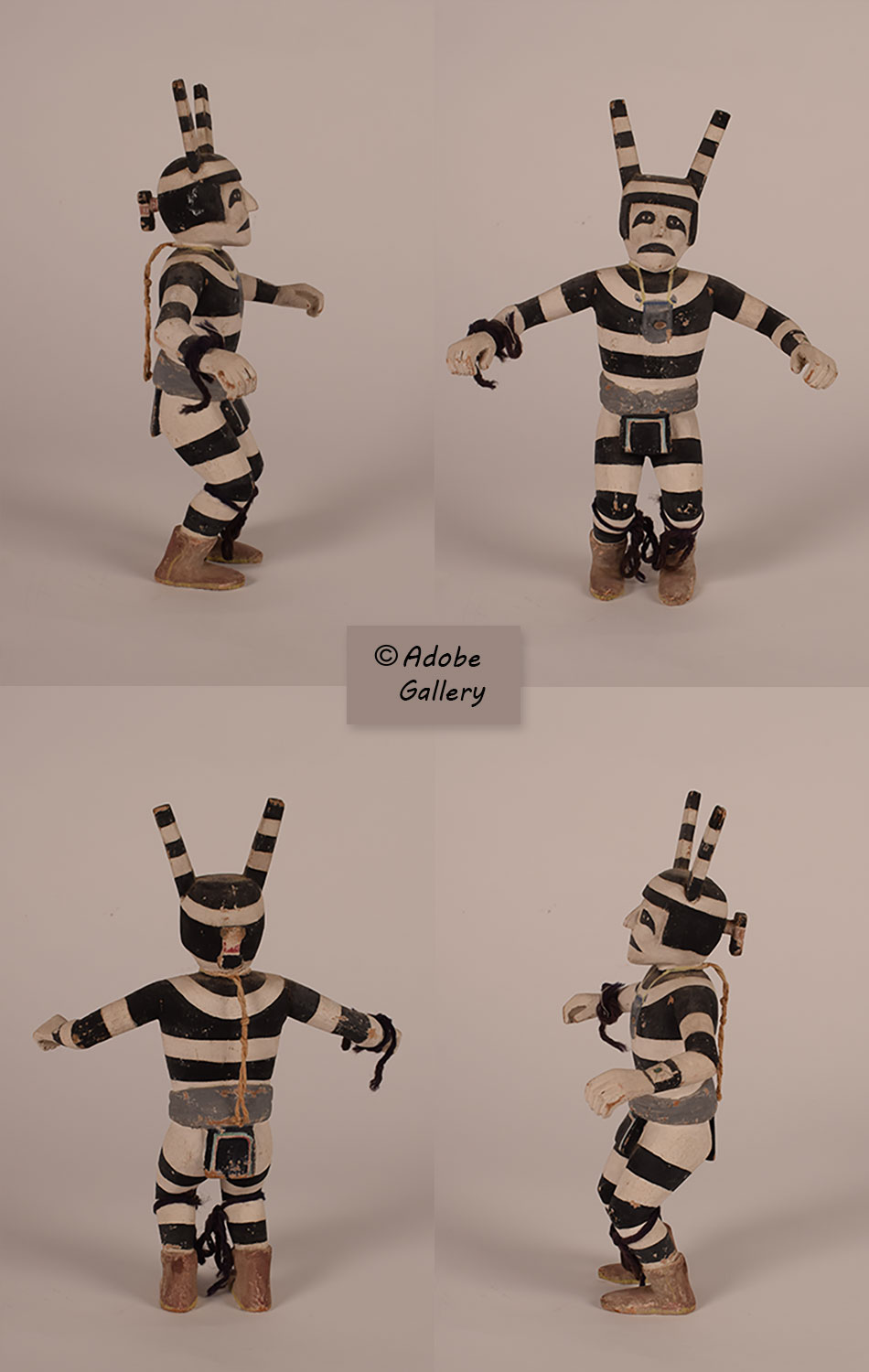
The most defining trait of the Koshare is the horizontal black and white body paint covering the arms, legs, and torso. The head features two upright horns made of a fabric-like structure, also painted with black and white stripes, often tipped with corn husks or wool in full ceremony dress. Koshares are known for their distinct facial paint, often featuring dark rings around the eyes and a wide, sometimes downturned or exaggerated mouth to convey a comedic, expressive look.
This vintage carving features a painted breechcloth, a small medicine or food pouch hung around the neck, and dark yarn tied around the wrists and below the knees, which mimics the real-world regalia worn during dances.
In Pueblo dances, clowns like the Koshare play a vital, dual role: They act as comic relief during serious, long ceremonial dances. They engage in rowdy, gluttonous, and irreverent behavior — sometimes mimicking spectators, playing pranks, or overeating — to make the crowd laugh.
Beyond simple entertainment, their outrageous behavior serves a didactic purpose. By acting out social taboos and improper manners, they show the community how not to behave, reinforcing social harmony, humility, and proper Pueblo values.
The doll exhibits the characteristic style of mid-20th-century traditional carvings. It is carved from cottonwood root (the traditional medium) and shows a beautifully weathered, matte patina with minor paint wear, indicating it has some age and has been handled with care. The slightly extended arms and rigid legs are typical of older, semi-traditional styles before the hyper-realistic, dynamic action-style carvings became dominant in the late 20th century.
Condition: very good condition with abrasions to the painted surfaces
Provenance: this Hopi Pueblo Koshare Katsina Doll is from the collection of a client from California
Recommended Reading: Clowns of the Hopi: Tradition Keepers and Delight Makers by Barton Wright, Kiva Publishing
TAGS: Katsina Dolls, Hopi Pueblo, Hopi Kachina Dolls
- Category: Traditional
- Origin: Hopi Pueblo Nation, Hopituh Shi-Nu-Mu
- Medium: wood, pigment
- Size:
10” height x 7-½” outstretched arms - Item # C4887Z
- Price: $1500
 Click on image to view larger.
Adobe Gallery Recommended Reading

Adobe Gallery Recommended Items
If you are interested in this item, we would also like to recommend these other related items: