




Long Necked Jar with Potshard Designs c. 1980s by Rondina Huma
+ Add to my watchlist Forward to Friend
- Category: Modern
- Origin: Hopi Nation, Hopituh Shi-Nu-Mu
- Medium: clay, pigments
- Size: 9” height x 6” diameter
- Item # C5008E
- Price: $4500
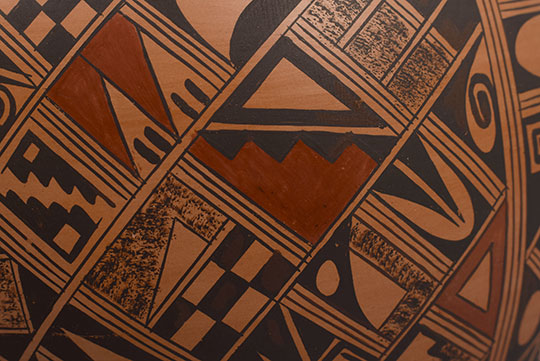
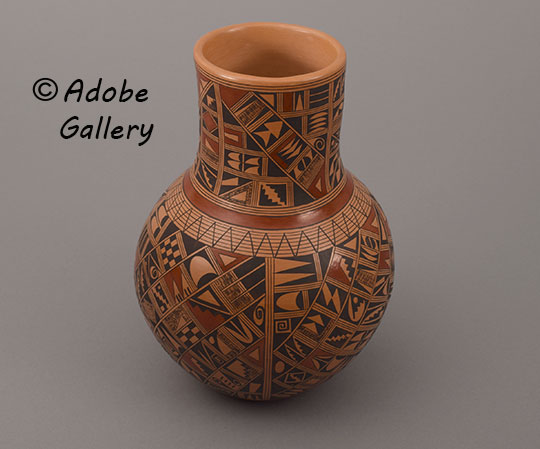
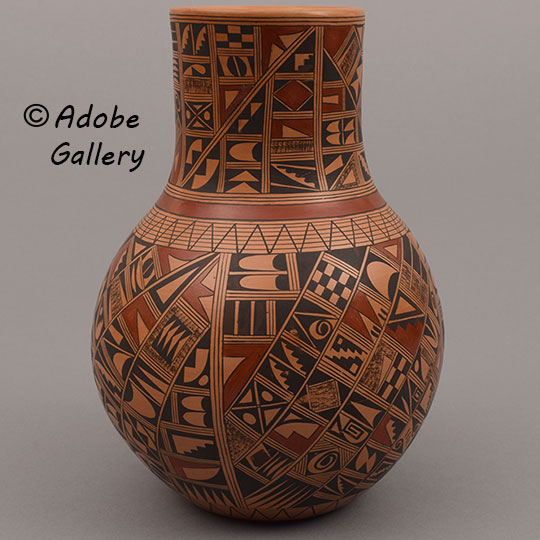
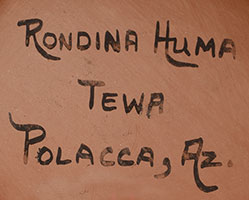 Featuring a distinctive long leck, this pot has the well-known thumbnail designs Huma is known for. Made with traditional black and brown pigments on cream slip with red slip accents, this piece features stippled designs on the neck that are very well known to Hopi potters. The use of earth tones such as ochre yellow, reddish orange, cream, dark-brown and light-black are representational of Hopi and Tewa-Hopi pottery. This pot is signed Rondina Huma Tewa Polacca, AZ on the bottom.
This is one of Huma's earlier works; while it already showcases small, detailed motifs, the brushwork is less dense than the hyper-intricate designs of her later career. Because this piece features such an abundance of intricate designs, identifying every single motif would be a lengthy endeavor. Instead, here are a few notable highlights:
Thumbnail Patterns: Around the entire pot there are designs for pottery shards found in Huma's village of Poacca. With over 40 thumbnails in one section of the pot, evidence proving that her steady hand and sense of perfection are evident.
Ancient Sikyatki Design Patterns: Small geometric elements inspired by ancient Sikyatki pottery flow across the surface of this jar. The elongated shapes with dark, stepped projections likely represent stylized birds, feathers, or other animal forms.
Stepped Geometric Patterns: These zigzags and angular shapes are characteristic of the geometric vocabulary found in Pueblo pottery, often evoking mountains, lightning, clouds, and other elements of the natural world.
About the Artist: Rondina Huma
Born in 1947 in Keams Canyon, Arizona, Rondina Huma (1947- ) is an award-winning, self-taught Tewa-Hopi potter from the village of Polacca. A member of the Katsina-Parrot Clan, she is renowned for crafting balanced, finely burnished vessels entirely from native materials. These materials include hand-coiled clay, vegetal and mineral paints, and brushes made from yucca leaves.
Her signature style features intricate, total-composite designs composed of hundreds of miniature ancient Sikyatki designs that completely cover the pottery's surface. These designs appear as thumbnails. Huma has received top honors at the Santa Fe Indian Market, including Best of Show in 1986 and 1996. Rondina strongly voices support for cultural preservation, "I don't want this craft to die out. I want to keep up the pottery making, so it will keep the culture of my tribe alive".
Condition: excellent condition
Provenance: this Long Necked Jar with Potshard Designs by Rondina Huma c. 1980s is from a client of Adobe Gallery who purchased it in 2011 from the Heard Museum.
Reference and Recommended Reading: Canvas of Clay: Seven Centuries of Hopi Ceramic Art by Edwin L Wade, Allan Cooke
TAGS: Contemporary Pottery, Hopi Pueblo, Rondina Huma
- Category: Modern
- Origin: Hopi Nation, Hopituh Shi-Nu-Mu
- Medium: clay, pigments
- Size: 9” height x 6” diameter
- Item # C5008E
- Price: $4500
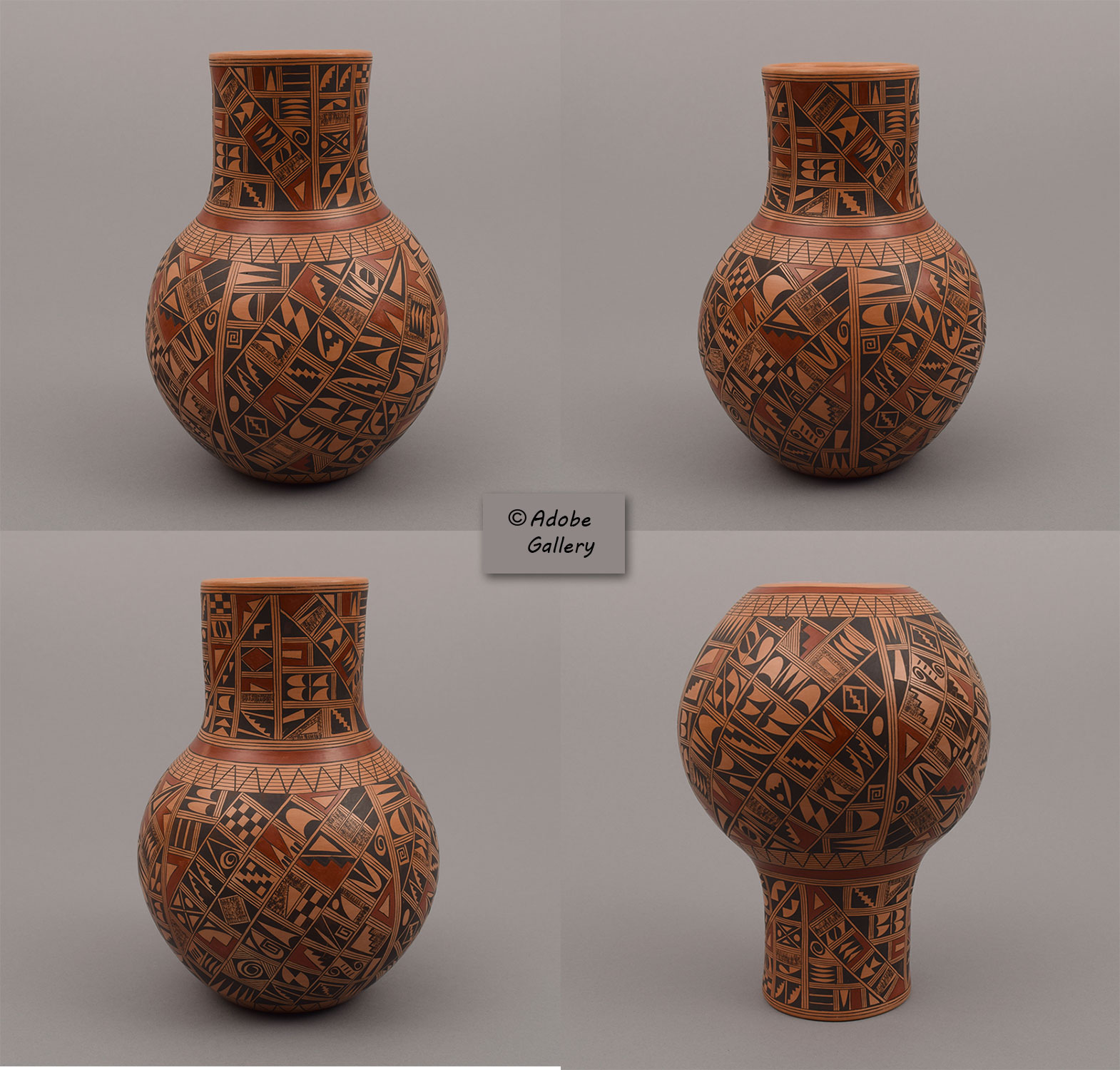 Click on image to view larger.
Adobe Gallery Recommended Reading

Adobe Gallery Recommended Items
If you are interested in this item, we would also like to recommend these other related items: