




San Ildefonso Pueblo Polychrome Olla by Maria & Julian [SOLD]
+ Add to my watchlist Forward to Friend
- Category: Historic
- Origin: San Ildefonso Pueblo, Po-woh-ge-oweenge
- Medium: native clay, pigment
- Size: 8” tall x 12-3/4” diameter
- Item # C3307A SOLD
Maria and Julian's earliest work was executed in traditional San Ildefonso Polychrome, the prevailing typology of the time. Edgar L. Hewitt of the newly founded School of American Research in 1907 began excavating prehistoric sites on the Pajarito Plateau, which is now Bandelier National Monument. Hewitt, impressed with the quality of Maria's pottery, encouraged her to make pottery using the prehistoric designs being excavated as inspiration. Maria and Julian did this in Polychrome. It is often stated that he encouraged them to paint in blackware, but actually they reproduced the prehistoric wares in Polychrome, the prevalent type at the pueblo at the time. It was years later that they began working in black-on-black.
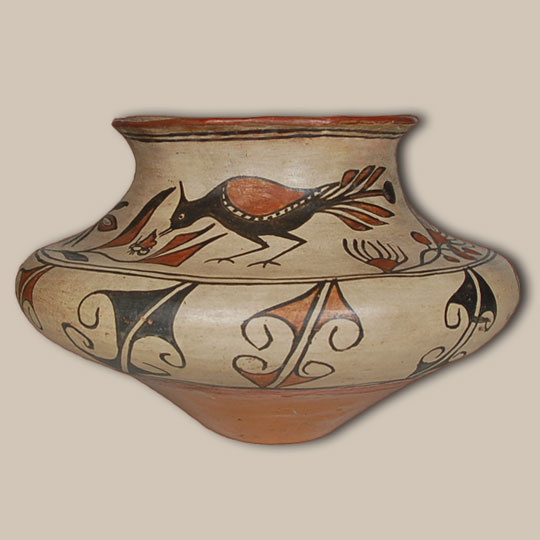
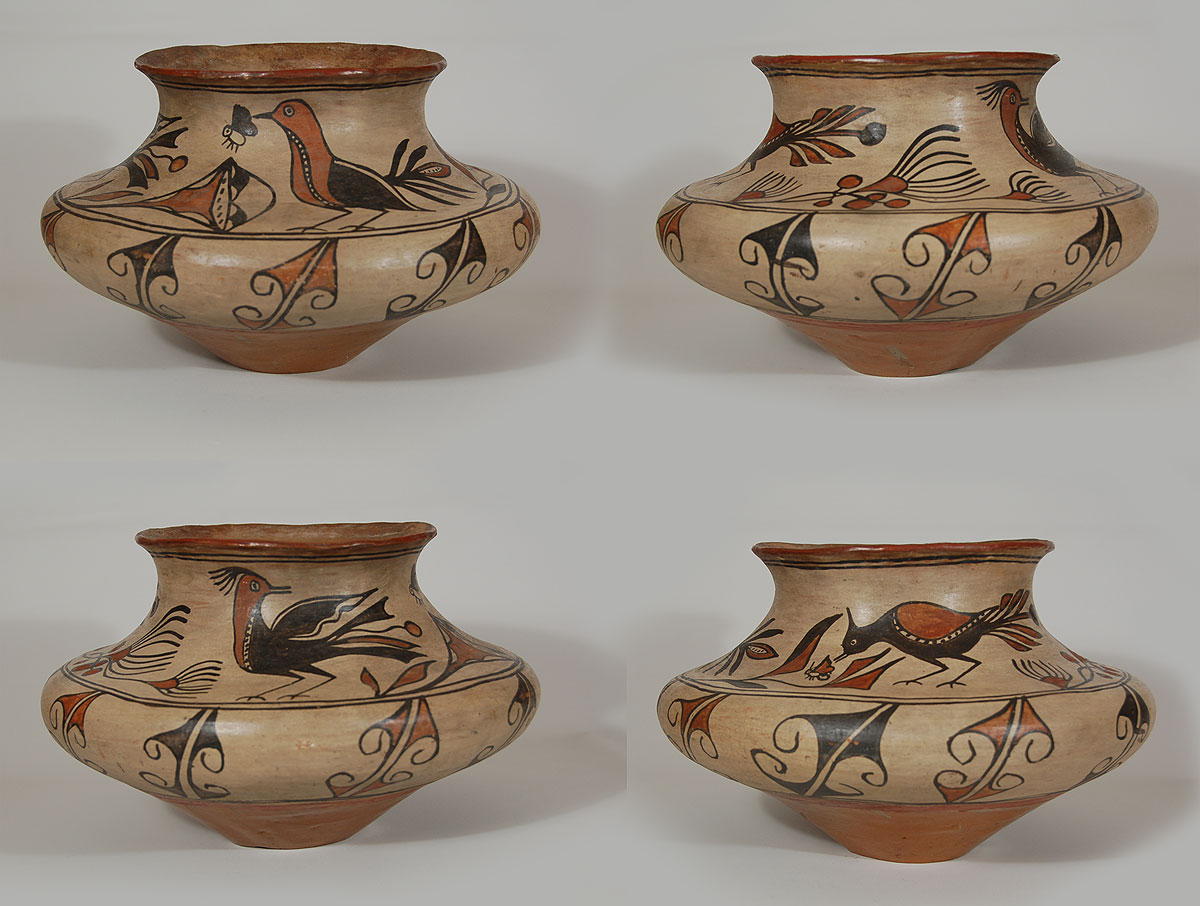
This exquisite jar features that absolutely stunning 19th century Tewa vessel shape with a large mid-body ring or bulge that provided for a secure hand-hold when the jar was being carried on the head of a person when walking. This shape, slightly modified over time, had existed for 500 years. The recent modification consisted of shortening the neck of the vessel from the earlier versions that had long graceful necks and lower centers of gravity.
The use of birds in designs existed in late 19th century pottery, but became more prominent in early 20th century vessels. The use of red slip on the rim gave way to a black rim in late 1800s and substitution of the traditional San Ildefonso white slip to the Cochiti bentonite slip occurred shortly after the turn of the century. Putting all these facts together, one can surmise that his jar was made around circa 1910.
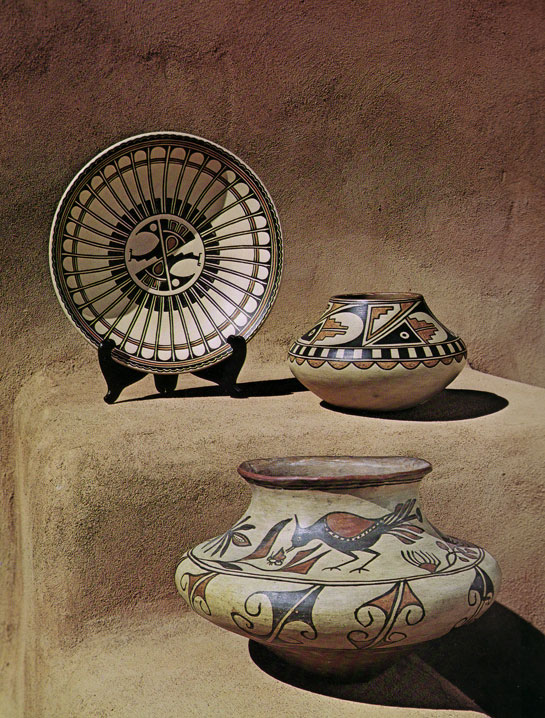
The jar actually is pictured in the book "Pottery Treasures: The Splendor of Southwest Indian Art" published in 1976. The caption to the photograph reads: "Large jar in foreground was made around 1910 and signed at a later date, 'Maria Poveka/Julian.'"
Upon close examination, there is an indication of a previous signature but it has been rubbed off to the extent that it is not readable, however, there is no question that this jar is the same one pictured on page 36 of the book. So, based on this documentation, we must say that this jar was made by Maria and painted by Julian as attested to by Maria signing the jar at a date later than when it was made.
Provenance: Marjorie and Charles Benton collection, Evanston, IL
Referenced Information: Pottery Treasures: The Splendor of Southwest Indian Art with photography by Jerry Jacka and text by Spencer Gill. ISBN 0-912856-28-9. Graphics Arts Center Publishing Company, Portland, 1976. Note: the picture below is from this referenced book, page 36.
- Category: Historic
- Origin: San Ildefonso Pueblo, Po-woh-ge-oweenge
- Medium: native clay, pigment
- Size: 8” tall x 12-3/4” diameter
- Item # C3307A SOLD
 Click on image to view larger.
