



Nampeyo of Hano, Hopi-Tewa Potter and Matriarch
+ Add Artist to My Preferences
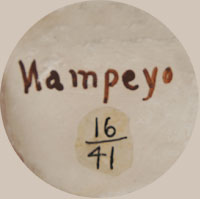
Nampeyo of Hano (c. 1857/1858-1942)
Hopi-Tewa Matriarch & Pioneer of the Sikyatki Revival
Nampeyo of Hano is universally recognized as one of the most important and influential figures in the history of Native American ceramic art. A Hopi-Tewa potter from First Mesa on the Hopi Reservation in northern Arizona, Nampeyo single-handedly transformed Southwestern pottery by sparking the legendary Sikyatki Revival movement in the late 19th century, bridging prehistoric aesthetic traditions with modern fine art.
Taught the fundamentals of ceramic art by her paternal grandmother, Nampeyo demonstrated extraordinary skill as a teenager, earning income through her pottery early in life. Driven by a passion for technical perfection and classic elegance, she became fascinated by the ancient pottery fragments (sherds) unearthed from 14th-16th century ancestral Hopi ruins, most notably Sikyatki. Believing the form, balance, and stylized imagery of these prehistoric wares superior to the contemporary designs of her era, Nampeyo visited excavation sites, carefully studying and sketching ancient motifs onto paper to reproduce them on her hand-coiled vessels.
Nampeyo revolutionized Hopi pottery by reintroducing traditional yellowware, creating signature low-slung, wide-shouldered "seed jars" with exceptionally thin walls and precise, flowing brushwork depicting stylized birds, feathers, and geometric forms. In keeping with 19th-century tribal tradition, Nampeyo's historic pieces are unsigned; however, her distinct hand, flawless symmetry, and characteristic vessel shapes are meticulously documented in art literature and instantly recognizable to collectors and museum curators worldwide.
As the matriarch of a multi-generational pottery dynasty, Nampeyo passed her artistic lineage down through her children-Annie Healing Nampeyo, Nellie Nampeyo Douma, Fannie Polacca Nampeyo, Wesley Lesso, and William Lesso-establishing a legacy of master potters that continues to shape Southwestern art today.
Note: Nampeyo's birth date has been stated to be either 1857 or 1858 by noted photographer W. H. Jackson who photographed her in 1875. At the time, he said she was 17 or 18 years of age. (Plateau, A Quarterly. October 1951, Volume 24, Number 2, page 92).
TAGS: Hopi Pueblo, Fannie Polacca Nampeyo, Nellie Nampeyo Douma, Annie Healing Nampeyo