




Traditional Squash Blossom Necklace with U.S. Quarters for Blossoms
+ Add to my watchlist Forward to Friend
- Category: Necklaces
- Origin: Probably Diné of the Navajo Nation
- Medium: silver, turquoise, U.S. Coins
- Size: 24” end-to-end
- Item # C5005
- Price: $2750
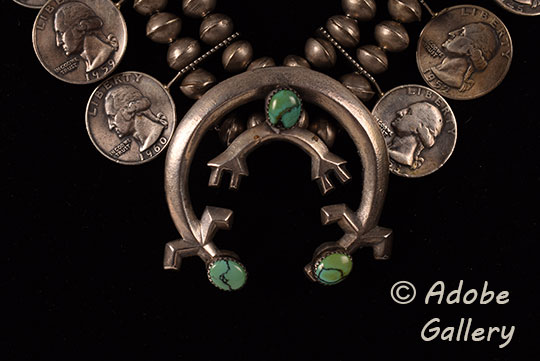
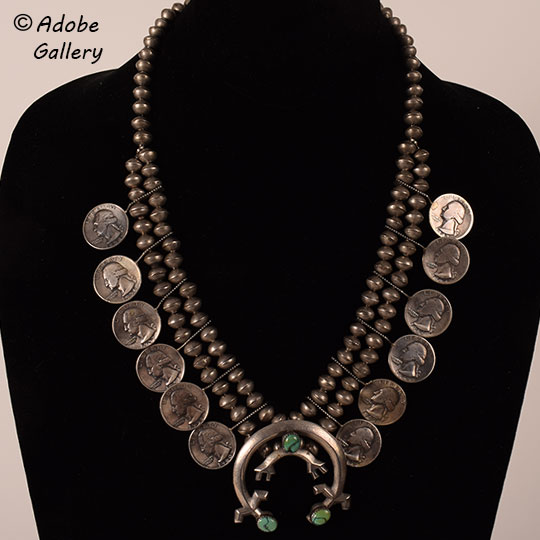
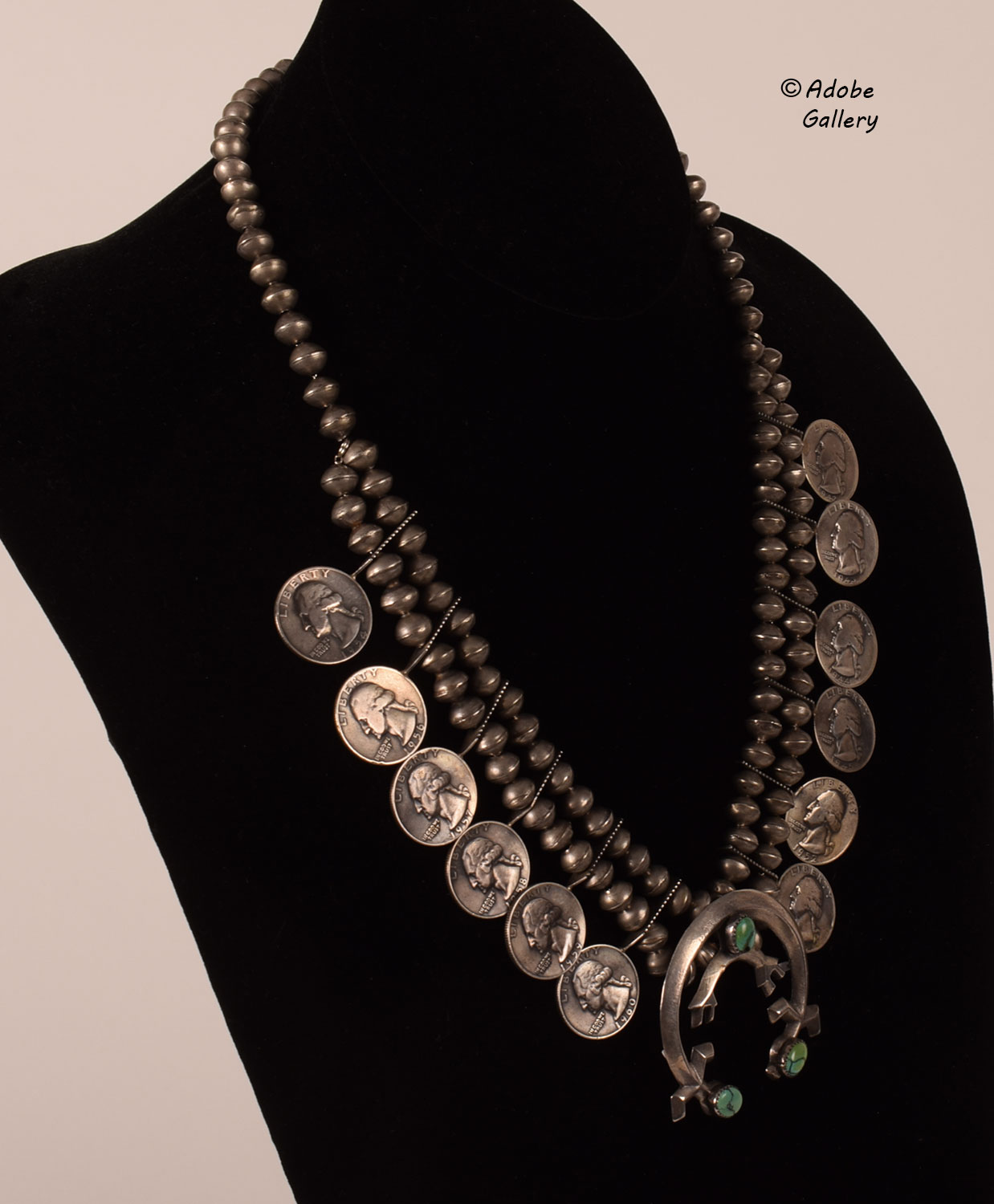
This is a fascinating and classic piece of mid-century silversmithing probably from the hands of a Diné of the Navajo Nation silversmith. The combination of hollow-bead construction, a symbolic naja pendant, and the use of vintage U.S. coinage offers several clues to its origins, craftsmanship, and era.
The Naja Pendant
The inverted horseshoe-shaped pendant — known as the naja — is the centerpiece of traditional squash blossom necklaces. Its origins trace back centuries, influenced by Spanish-Moorish bridle decorations (which ultimately drew from ancient Mediterranean protective amulets).
Yei'i Figures: Incorporating yei'i (holy figures or ancestral spirits of Navajo healing and ceremonial traditions) into the openwork design of a naja is a wonderful stylistic choice. Traditionally, yei'i figures appear more commonly in woven Navajo rugs or sandpainting-inspired inlay work, so finding them worked in silver sheet and wire within a cast or fabricated naja frame highlights the maker's artistic versatility and storytelling.
The Silver Beads
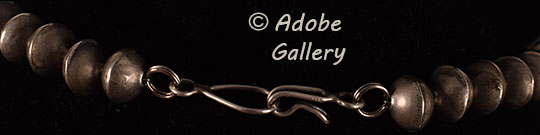
Traditional handmade silver beads are crafted by soldering two stamped or domed half-spheres of silver together. Because they are hollow, they keep the necklace remarkably lightweight and comfortable for everyday wear — an intentional and practical design choice made by historic silversmiths, given the substantial length and number of beads.
Finish and Patina: Over decades of wear, hand-strung silver beads develop a rich, dark patina in the recessed areas while high points polish bright against the skin, giving vintage pieces an unmistakable depth that modern machine-made beads cannot replicate.
The 1942-1960 Coin Dates
The inclusion of U.S. quarters ranging from 1942 to 1960 is a definitive dating anchor for the piece.
Coin Silver and The Coin Ban
While 19th-century silversmiths frequently melted down U.S. and Mexican coins (which were 90% coin silver) due to a lack of commercial sheet silver, by the mid-20th century, sterling silver sheet and wire were widely available and utilized. However, incorporating actual vintage quarters into necklaces — often drilled, soldered, stamped, or used as side elements/conchas — remained a popular aesthetic choice among silversmiths well into the mid-century, celebrating both American currency and the beauty of stamped coin edges. The 1960 end-date indicates the necklace was assembled no earlier than 1960, most likely during the height of the mid-century Southwestern tourist and trading post era of the 1960s.
Unsigned Attribution - Trading Post Era
The vast majority of Southwestern Native American jewelry created between the 1930s and 1960s for trading posts (such as those across the Navajo Nation and along Route 66) is unsigned. Silversmiths during this period rarely stamped their initials or hallmarks unless they were working at the upper echelon of Santa Fe Indian Market or supplying specific high-end galleries. Unsigned pieces are evaluated entirely on their craftsmanship, materials, stone quality, and design integrity.
Care and Preservation
Avoid commercial liquid silver dips, as they strip away the dark antique patina in the recesses that gives vintage jewelry its character. A gentle polish with a soft, dry jeweler's polishing cloth on the raised surfaces is all that is needed.
Condition: very good condition
Provenance: this Traditional Squash Blossom Necklace with U.S. Quarters for Blossoms is from the collection of a Santa Fe client
Recommended Reading: WHITE METAL UNIVERSE Navajo Silver from the Fred Harvey Collection by Cynthia J. Davies (Author) The Heard Museum Collection
TAGS: Southwest Indian Jewelry, Navajo, necklace
- Category: Necklaces
- Origin: Probably Diné of the Navajo Nation
- Medium: silver, turquoise, U.S. Coins
- Size: 24” end-to-end
- Item # C5005
- Price: $2750
 Click on image to view larger.
Adobe Gallery Recommended Reading

Adobe Gallery Recommended Items
If you are interested in this item, we would also like to recommend these other related items: