



Hopi Koshare Katsina Doll with Outstretched Arms [SOLD]
+ Add to my watchlist Forward to Friend
- Category: Traditional
- Origin: Hopi Pueblo, Hopituh Shi-nu-mu
- Medium: wood, paint, feather, string
- Size: 8” height x 8” arm width
- Item # C4887S SOLD
The Sacred Satire: A Rare 1940s Hopi Koshare "Triumph" Carving
In the world of the Hopi, the clown is not merely an entertainer; he is a mirror. Today, we are proud to feature an exceptional mid-century representation of the Koshare, a figure that perfectly balances the sacred and the satirical.
The Carving: A "Look at Me" Moment
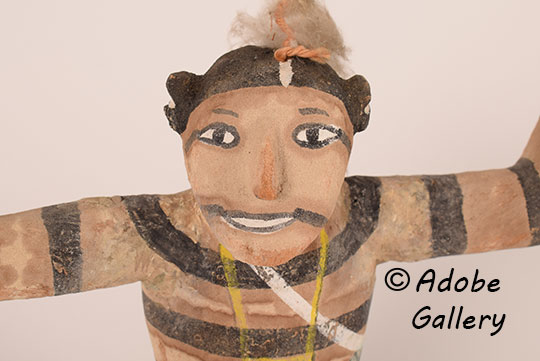
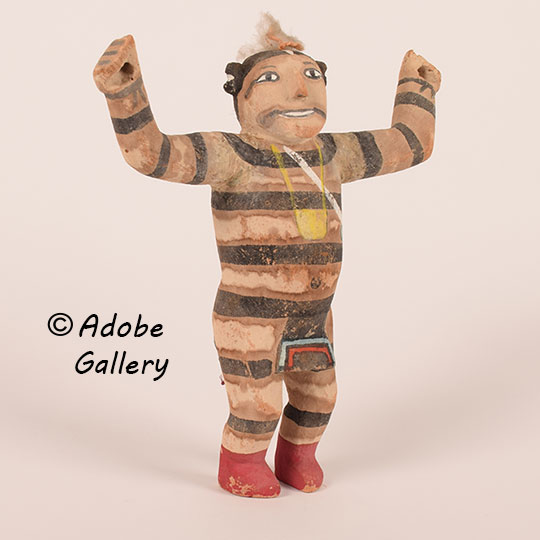
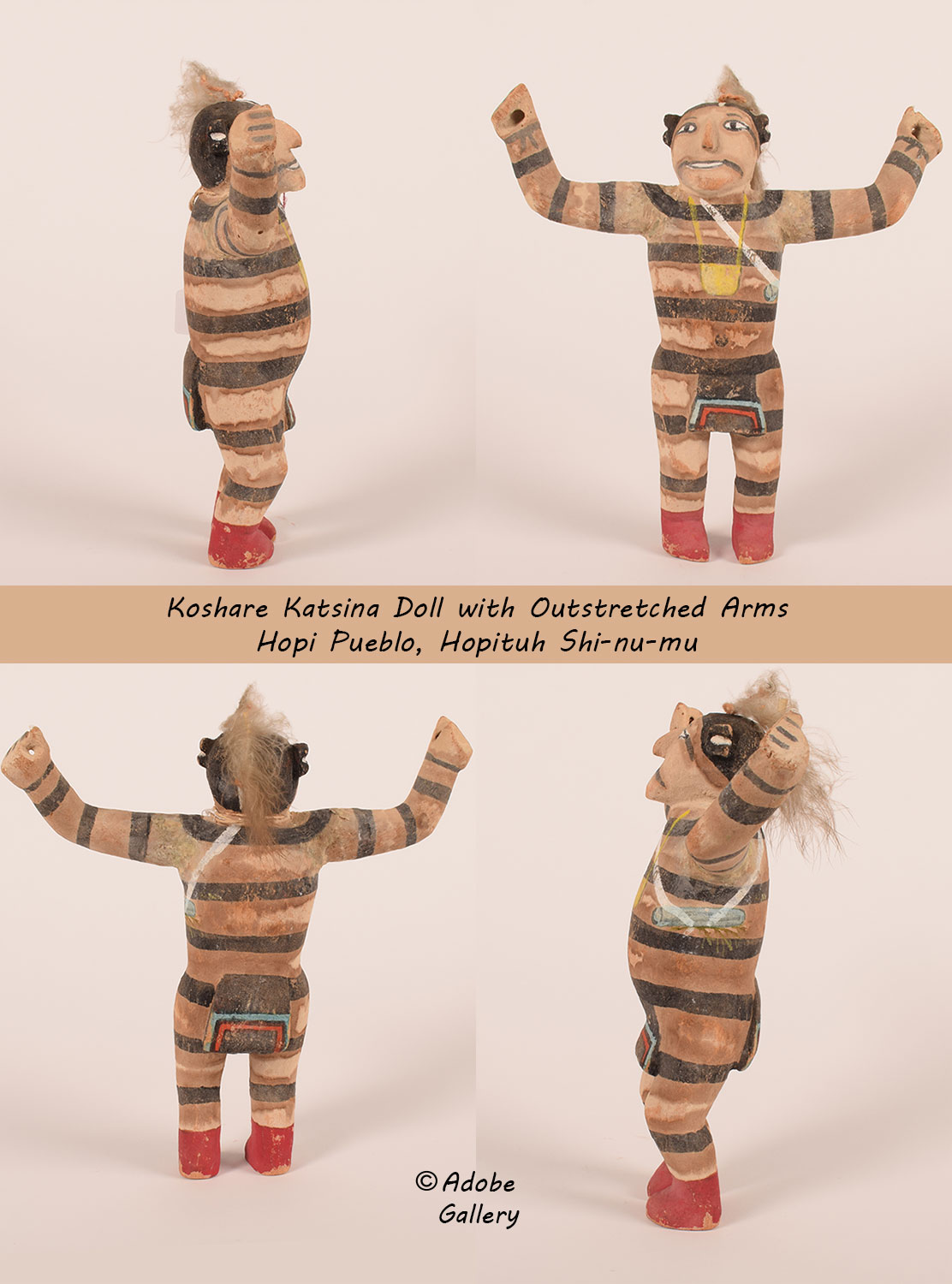
Dating to circa 1940s, this carving captures the Koshare in a rare moment of exuberant triumph. With arms extended outward and upward, his posture is a bold "Look at Me!", the quintessential pose of the Pueblo performance artist.
The figure is intricately adorned with traditional regalia, including a loincloth, a medicine bag, and a single, carefully carved roll of piki bread (the paper-thin corn delicacy of the Hopi). He features the iconic painted face and a character-filled large hook nose, giving him a distinct "personality" that modern carvings often lack.
As is typical for a piece of this vintage, he stands upright but is slightly unstable on his feet. In keeping with traditional display methods for katsina dolls of this era, he is best suited for wall-hanging, which allows his triumphant pose to truly shine.
Observation: While his hands appear to have held additional items in the past, their absence today only highlights the weathered, storied history of a piece that has survived eight decades.
The History: From the Rio Grande to First Mesa
While the Koshare is a ubiquitous figure across all Hopi villages today, his origins are a fascinating story of cultural migration. The Koshare originated with the Tewa Pueblos of New Mexico (where they are known as the Koosa). Following the Pueblo Revolt, Tewa immigrants settled in Hano Village atop Hopi's First Mesa. Over centuries, the people of Hano adopted Hopi culture while fiercely retaining their Tewa language. Through them, the Koshare became an integral part of Hopi life and a testament to the resilience and blending of Pueblo traditions.
The Purpose: Humor as a Moral Compass
Why is Koshare so beloved? Because his humor has a "sting" of truth. These clowns serve a dual purpose: to entertain and to educate. During plaza ceremonies, Koshare performs pantomimes that satirize behaviors that deviate from the "Hopi Way." By mimicking gluttony, greed, or vanity, they hold up a mirror to the community. When the audience roars with laughter at a clown's ridiculous behavior, they are also being reminded of the importance of humility and communal balance.
Condition: Very good condition
Provenance: this Hopi Koshare Katsina Doll with Outstretched Arms is from the collection of a client from California
Recommended Reading: Clowns of the Hopi: Tradition Keepers and Delight Makers by Barton Wright
TAGS: Katsina Dolls, Hopi Pueblo, Hopi Kachina Dolls
- Category: Traditional
- Origin: Hopi Pueblo, Hopituh Shi-nu-mu
- Medium: wood, paint, feather, string
- Size: 8” height x 8” arm width
- Item # C4887S SOLD
 Click on image to view larger.
Adobe Gallery Recommended Reading

Adobe Gallery Recommended Items
If you are interested in this item, we would also like to recommend these other related items: