




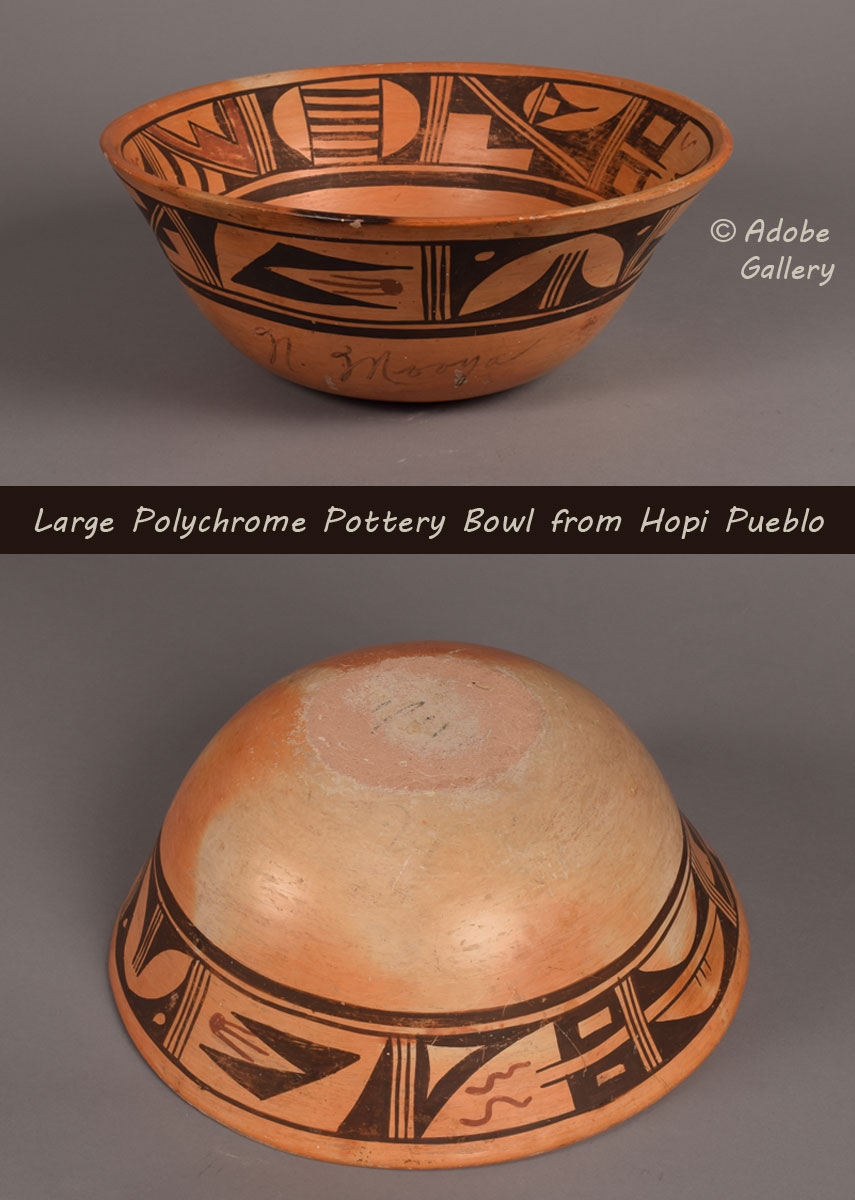
Large Polychrome Pottery Bowl from Hopi Pueblo
+ Add to my watchlist Forward to Friend
- Category: Modern
- Origin: Hopi Pueblo, Hopituh Shi-nu-mu
- Medium: clay, pigments
- Size:
5-⅝” height x 14-⅛” diameter - Item # C4629B
- Price: $2500
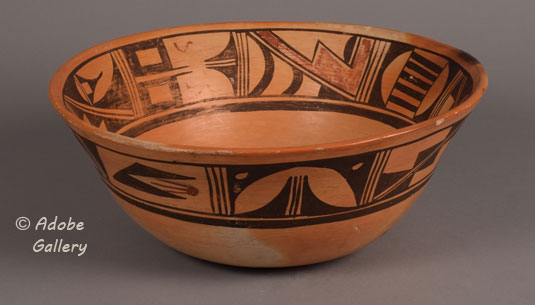
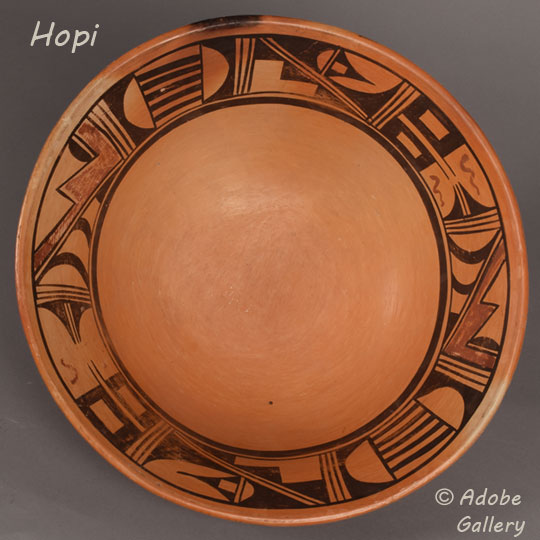
This large polychrome bowl is a fascinating architectural and historical outlier in the world of Hopi ceramics. While standard Hopi bowls typically curve inward at the rim, this piece flares outward to a commanding 14-inch diameter, signaling its heritage as a specialized utilitarian vessel.
The Story of the Bowl
This contemporary work is a sophisticated tribute to a rare 19th-century form. Through a historical photograph taken by Adam Clark Vroman around 1895 (see below), we know that bowls of this specific out-curving shape were once essential to Hopi life.
Vroman's photo captures a group of these large vessels sitting high on a shelf in an Oraibi home, each holding bread dough as it rises. While the Smithsonian collected several examples between 1876 and 1882, the form virtually vanished from the pottery record following the Oraibi political split of 1906. This is an exceptional historical photograph. It provides incredible context for the domestic use of Pueblo pottery at First Mesa around the turn of the century.
Artistic Evolution & Design
This modern interpretation elevates the functional "bread bowl" into a high-art canvas. Unlike the 19th-century originals — which lacked interior designs to keep the bread dough clean — this version features intricate painting on both the interior and exterior.
The designs move through a rhythmic sequence of traditional Hopi iconography, repeating twice around each band to create a sense of continuous motion. The orange slip is notably brighter than typical Hopi wares, providing a high-contrast, energetic backdrop for the black and red mineral paints.
The Mystery of "N. Mooya"
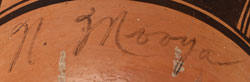
The bowl bears a unique signature: "N. Mooya," written in cursive near the base of the exterior rather than on the bottom. While there is no widely published record of a potter by this name, the Mooya family is highly respected for their mastery of katsina carving. This piece likely represents a rare foray into pottery by a member of that talented artistic lineage, making it a "sleeper" piece for a collector who appreciates genealogical mysteries in Pueblo art.
Condition: wear and abrasion from use, one short slip crack at the rim that does not penetrate the wall.
Provenance: this Large Polychrome Pottery Bowl from Hopi Pueblo is from a private New Mexico collection
Recommended Reading: Modern Hopi Pottery by Kathryn A. Sikorski, Utah State University
TAGS: Southwest Indian Pottery, Hopi Pueblo, Hopituh Shi-nu-mu
Enhanced Caption/Analysis for Vroman Photo
 Image Description: Circa 1900. A black and white photograph by Adam Clark Vroman, captured in a Hopi home.
Key Points of Analysis:
1. The Grinding Process (Corn as Life):
-
The Metates: The two young Hopi women in the foreground are kneeling before metates (grinding stones), set into wooden bins. This was a central part of daily life. The grinding was often labor-intensive, taking hours, as corn was ground multiple times to achieve different grades of fineness for piki bread, mush, and various traditional dishes.
-
The Corn: The coarse ground corn can be seen in the bin and on the hand stone. The bowl on the floor in the very front left (only partially visible) likely holds whole, dried blue, white, or yellow corn kernels waiting to be ground.
2. The Shelved Pottery (Abundance and Preparation):
-
The Dough Bowls: This image is a rare glimpse of pottery in context. As you noted, the upper shelf is lined with several large, utilitarian Polacca Polychrome or early Hano style pottery bowls. These were essential "dough bowls."
-
The Mounds of Corn: The large mounds piled high inside the bowls are ground cornmeal. This visualization is critical: these bowls were not just for mixing; they were the primary food storage containers. The sheer amount of ground corn shown speaks to preparations for a significant upcoming event or ceremony, where large quantities of food (especially piki bread) would be required.
-
Significance for Collectors: For collectors who own or see these massive, 14-inch (or larger) historic dough bowls, this photo vividly demonstrates how those bowls were actually used. It confirms that they were robust, utilitarian pieces, not meant merely for display.
3. The Dancers' Chilis and Regalia:
-
A World of Preparation: The shelf below the pottery holds dozens of ristras (bunches) of dried chilis, a vital food source.
-
The Regalia: Note the flat style katsina doll hanging just to the right of the central chili bunches. These are the style tihu's given to Hopi children by katsinas during a dance. It was probably a gift to one of the girls.
4. The Women (Hair and History):
-
Traditional Hairdos: Both women feature the complex, ornate Whorl ("butterfly" or squash blossom) hairstyle, worn by unmarried Hopi women. Achieving this hairstyle required great skill and was symbolic of readiness for marriage.
-
Clothing: They wear rich fabrics: a patterned woven manta (dress) and patterned woven shawls or capes. They also wear traditional silver squash blossom necklaces, demonstrating both aesthetic beauty and wealth.
5. Adam Clark Vroman (The Photographer):
-
Ethical Photography: Vroman (1856-1916) was unique among photographers of this era (unlike his contemporary, Edward S. Curtis). Vroman was a bookseller from Pasadena who picked up a camera and developed a respectful relationship with Pueblo communities, focusing on documenting everyday life as he found it.
-
Hopi Village Focus: This image is part of a series Vroman took showing the incredible density of people and artifacts at Hopi around the time of the major pottery revival led by Nampeyo.
Summary: This Vroman photograph is a historical and cultural treasure chest. It validates the large-scale utility of historic Pueblo dough bowls and connects the iconic "Butterfly Whorl" women directly to the production of the single most important sacred food in Hopi life: ground corn.
- Category: Modern
- Origin: Hopi Pueblo, Hopituh Shi-nu-mu
- Medium: clay, pigments
- Size:
5-⅝” height x 14-⅛” diameter - Item # C4629B
- Price: $2500
 Click on image to view larger.
Adobe Gallery Recommended Reading

Adobe Gallery Recommended Items
If you are interested in this item, we would also like to recommend these other related items: