


Adobe Gallery Blog
Ancestral Symbols, Modern Masterpieces: Artist Hopid and Reflections on Hopi Symbols
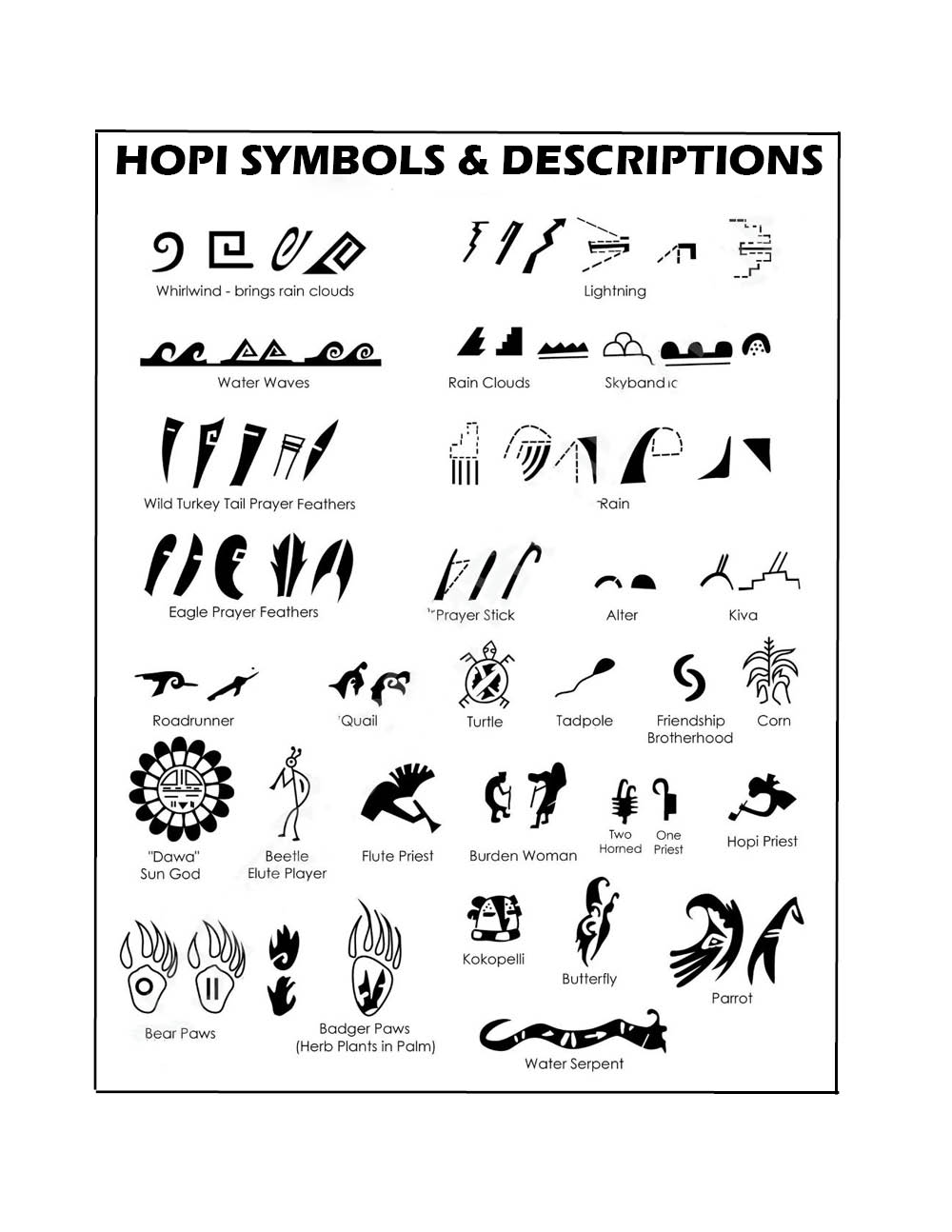
If you have witnessed Hopi (Hopituh Shi-Nu-Mu) poetry or paintings, you have seen vessels and canvases adorned with symbols that turn the artwork into an active prayer for life-giving rain, health, fertility, harmony and many other meanings. Because historical and spiritual concepts were traditionally shared through oral tradition, applying these symbols to pottery and paintings allows the Hopi to preserve cultural memory and pass traditions across generations. Hopi symbols serve as direct visual representations of prayers, ancestral katsina spirits, and cosmological balance.
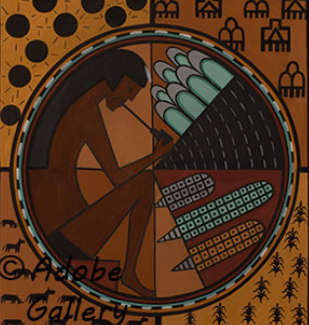
Formed in 1973, the Artist Hopid collective used painting to re-engage Hopi youth with their rich cultural heritage. By incorporating imagery inspired by prehistoric Hopi kiva murals, the group educated broader audiences while demonstrating that Native artists could build successful careers without leaving their homelands.
Equally important was their push to dismantle long-standing artistic constraints. From the 1920s through the 1960s, the fine art world expected Native American artists to adhere strictly to Flatstyle painting, a visually striking movement that notably influenced early Walt Disney animation. By defying these rigid expectations and forging a new visual narrative, Artist Hopid cemented their most enduring legacy.
For those interested in Hopi culture, much remains rightly hidden from outsiders. Certain sacred traditions—particularly ceremonial symbols and spiritual practices—are meant to be preserved within the community, reminding us that respect often means honoring those boundaries.
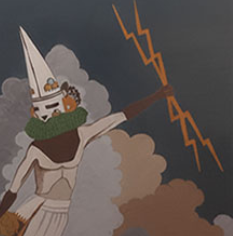
Rain Clouds & Lightning: Jagged lines and compact cloud forms that represent summer storms, power, speed, and the vital gift of water for dryland agriculture and survival.
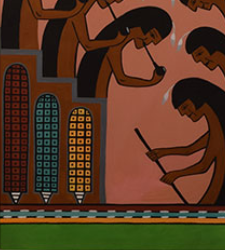
Corn: Represents the "staff of life," continuity, and spiritual nourishment. Also, the different colors represent different cardinal directions. Yellow for North, Blue for West, Red for South, and White for East.
Circular Borders & Interlocking Circles: Represent the unity, ceremonial kinship among clans or societies, and the eternal cycle of the Hopi world without beginning or end.