




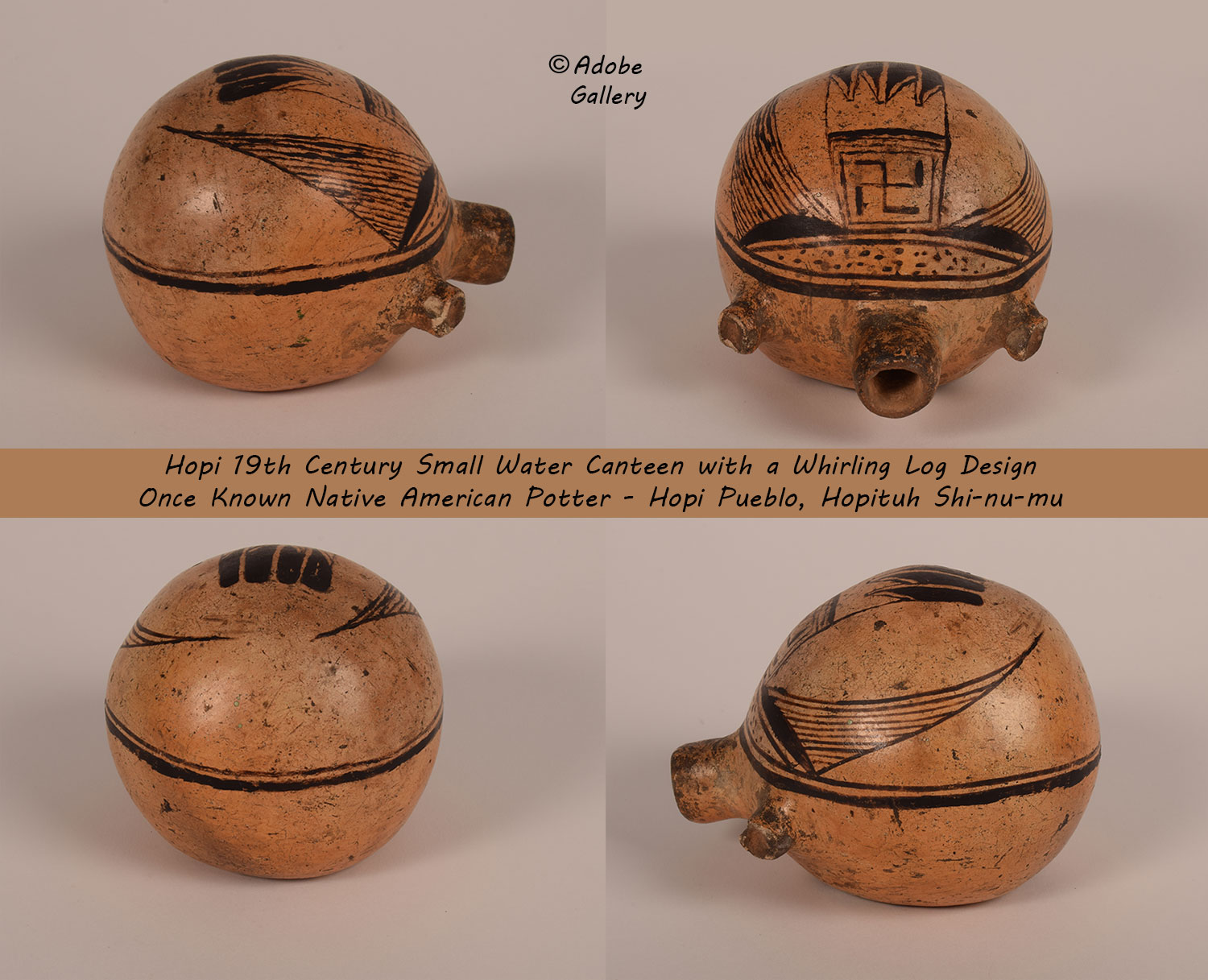
Hopi 19th Century Small Water Canteen with a Whirling Log Design
+ Add to my watchlist Forward to Friend
- Category: Historic
- Origin: Hopi Pueblo, Hopituh Shi-nu-mu
- Medium: clay, pigment
- Size:
5” base to top of spout;
4” diameter, 3-¾” front to back - Item # C4901Q
- Price: $2950
A Scholarly Puzzle: The Nampeyo Attribution Debate
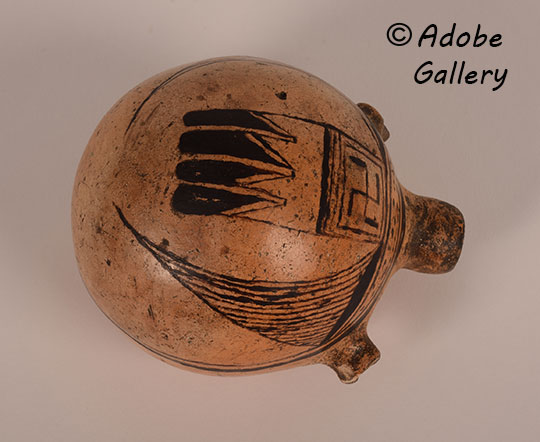
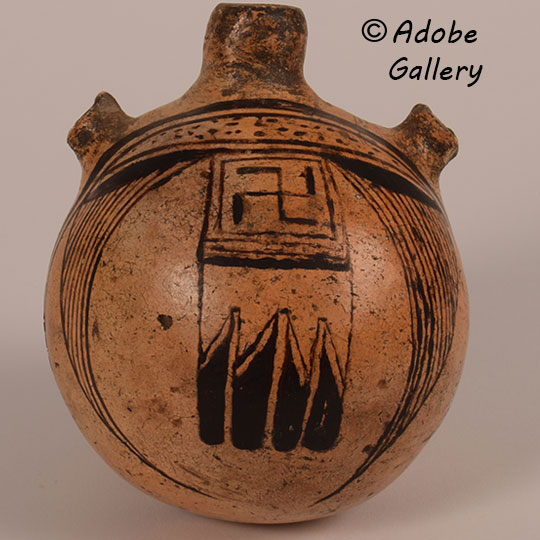
This small Hopi-Tewa canteen is a "jewel" of the late 19th century — a piece that sits at the exact intersection of ancient tradition and the burgeoning 1880s tourist market. While its size suggests it was created as a collector's object rather than a functional water carrier, its sophisticated design sparks a compelling debate regarding its creator.
The Context: Thomas Keam and the Early Market
During the 1890s, the famous Hopi trader Thomas Keam held standing orders from major museums for authentic, high-quality pottery. While Nampeyo of Hano was Keam's favorite potter, he purchased from several skilled artists of the era. This canteen displays the exact stone-polished slip and bulging body shape that Nampeyo popularized for Keam's clients.
The Case for Nampeyo
Several "design fingerprints" strongly suggest the hand of the master:
The "Eagle Tail": A classic Sikyatki motif running vertically down the center. "Wingtip" Elements: Graceful, curving lines that frame the central tail. Raindrop Band: A delicate row of curved raindrops positioned just below the spout. Monochrome Palette: The use of black pigment alone is a strong indicator of the 1880s-early 1890s period, a time when Dr. Ed Wade notes Nampeyo was likely the only artist actively reviving Sikyatki motifs.
The Counter-Arguments
Expert collectors and scholars often point to two specific details that cast a shadow of doubt:
The Spout: The specific shape and positioning of the spout differ slightly from the profiles typically associated with Nampeyo's later, more refined work. The "Whirling Log": While Nampeyo used this motif, her versions are usually softer and more fluid. The design on this canteen is "severe" and highly structured. However, some argue this could represent an early, experimental phase of her career before her style became more "painterly."
The Final Word
As Dr. Ed Wade (2012) suggests, the Sikyatki Revival was evident in Nampeyo's work as early as the 1880s, an era when few other potters had the privilege or the inclination to explore these ancient designs.
Ultimately, this canteen offers a fascinating look at the "evolution of a style." Whether it is a rare early work by Nampeyo of Hano or the output of a highly skilled contemporary, it remains an exceptional example of the Hopi-Tewa transition into fine art. We leave the final attribution to the discerning eye of the collector.
Condition: very good condition for its age.
Provenance: this Hopi 19th Century Small Water Canteen with a Whirling Log Design is from a client of Adobe Gallery
Reference: Wade, Edwin L. and Allan Cooke. Canvas of Clay - Seven Centuries of Hopi Ceramic Art.
TAGS: Daisy Hooee Nampeyo, Annie Healing Nampeyo, Nampeyo of Hano, pottery, Hopi Pueblo
- Category: Historic
- Origin: Hopi Pueblo, Hopituh Shi-nu-mu
- Medium: clay, pigment
- Size:
5” base to top of spout;
4” diameter, 3-¾” front to back - Item # C4901Q
- Price: $2950
 Click on image to view larger.
Adobe Gallery Recommended Reading

Adobe Gallery Recommended Items
If you are interested in this item, we would also like to recommend these other related items: