




Hopi Pueblo Hú (Whipper) Katsina Doll [SOLD]
+ Add to my watchlist Forward to Friend
- Category: Traditional
- Origin: Hopi Pueblo, Hopituh Shi-nu-mu
- Medium: wood, paint, yarn, fabric
- Size: 11-¾” height
- Item # C4887ZF SOLD
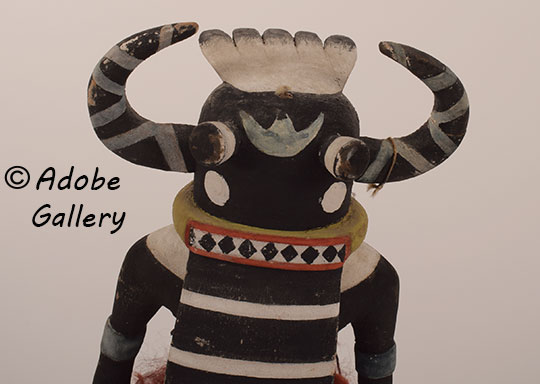
This figure is the Hú Katsina (sometimes referred to as Tüngwup), prominently known as the Whipper Katsina. As traditional, it was carved from cottonwood root, the traditional material used by Hopi carvers due to its lightweight and water-seeking properties. As the root of the cottonwood feeds life to the tree, the root feeds life to the katsina doll.
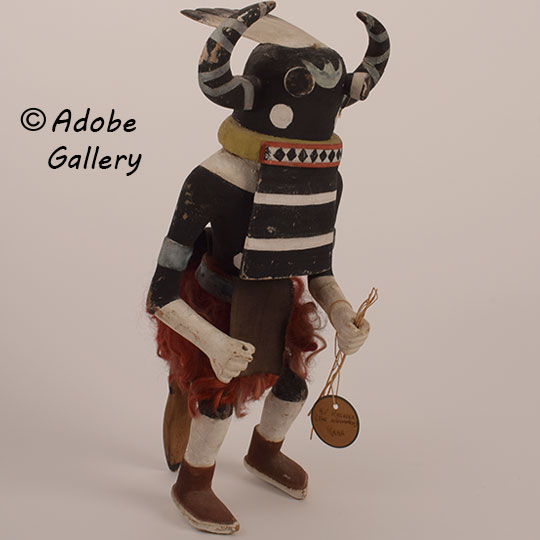
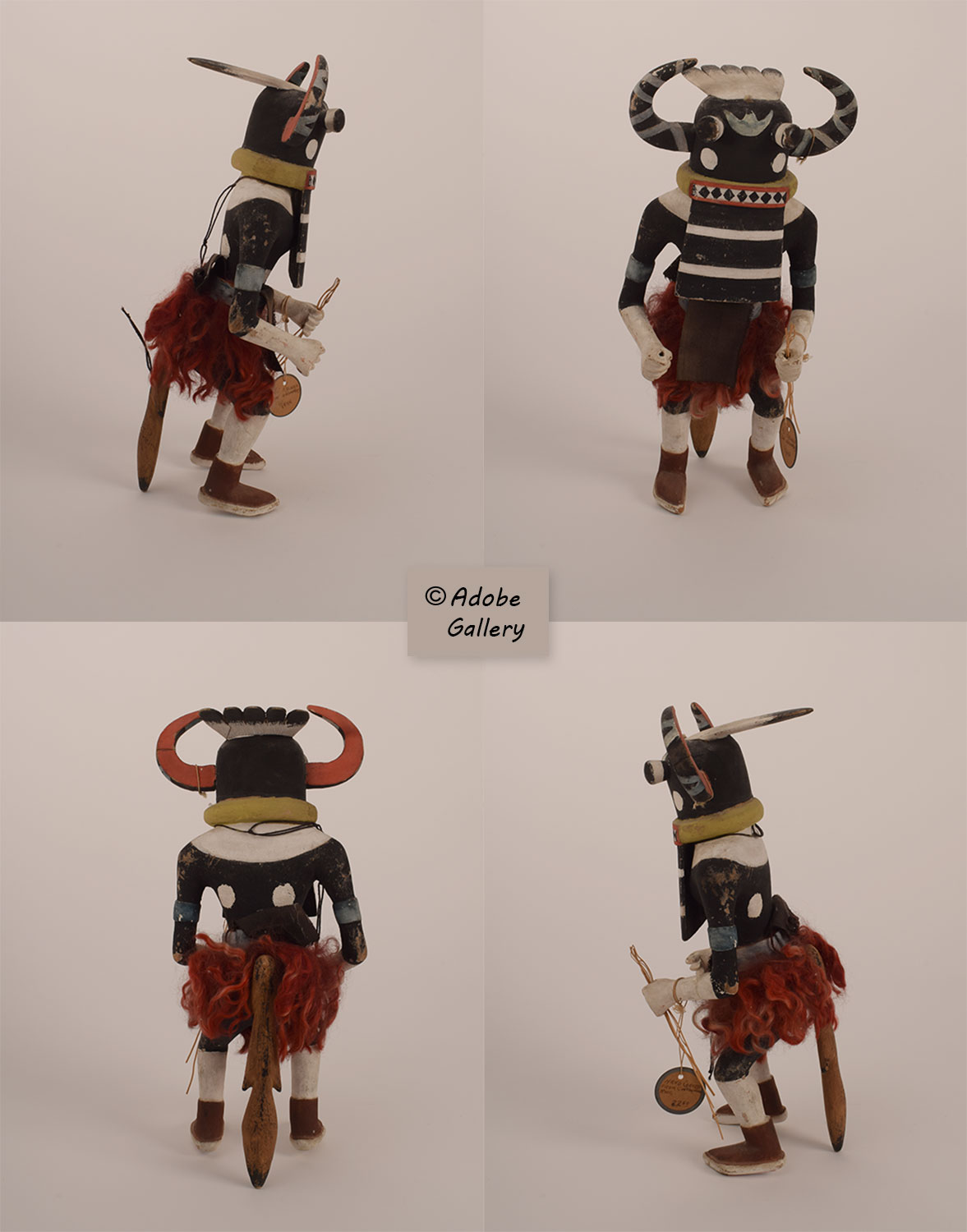
The face is solid black featuring upward curving, black and white striped horns, prominent protruding eyes, with a crescent moon symbol on the forehead, on its head a tablet of carved wood representing a grouping of feathers, and a wide rectangular lower band displaying a zigzag/diamond tooth motif bordered in red.
The katsina has a black painted upper torso adorned with white circular markings (under the long black beard) contrasting with white painted forearms and lower legs. He wears a traditional red-dyed wool/horsehair skirt, dark leather loincloth/breechcloth, and brown moccasins. In its hands, it carries yucca switches (represented here by natural fibers). The proportions, painted details, natural fiber attachments, and aged patina indicate a mid-20th-century traditional carving style. Classic traditional katsina carvings of this era feature semi-rigid stances carved from assembled cottonwood root with natural pigment finishes and added textile elements (such as real wool and leather accents). This doll stands unaided and has a slightly forward lean.
Disciplinarian & Purifier: The Hú Katsina plays a vital role as a guardian, disciplinarian, and purifier within Hopi ceremonial tradition. Appearing in pairs alongside Angwusnasomtaqa (Crow Mother) during the Powamuya ceremonies, Hú Katsinam are responsible for ritually whipping/flogging young children during their formal initiation into the Katsina society. This act of whipping is not intended as punishment, but rather as a spiritual cleansing — stripping away childhood innocence, protecting them from bad spirits, and preparing them for adult responsibilities in the community.
Condition: very good condition. One horn was broken and glued back in position.
Provenance: this Hopi Pueblo Hú (Whipper) Katsina Doll is from the collection of a client from California
Recommended Reading: Following the Sun and Moon: Hopi Kachina Tradition by Alph H. Secakuku
TAGS: Kachina – Katsina Doll, Hopi Pueblo
- Category: Traditional
- Origin: Hopi Pueblo, Hopituh Shi-nu-mu
- Medium: wood, paint, yarn, fabric
- Size: 11-¾” height
- Item # C4887ZF SOLD
 Click on image to view larger.
Adobe Gallery Recommended Reading

Adobe Gallery Recommended Items
If you are interested in this item, we would also like to recommend these other related items: