




Sunday Double Saddle Blanket with Germantown Yarn [SOLD]
+ Add to my watchlist Forward to Friend
- Category:
- Origin: Unknown
- Medium: wool, cotton
- Size: 50” x 26” including fringe
- Item # C4778N
- Price: $1750
After the Navajo internment at Bosque Redondo (1864-1868) the Navajo began to receive, as a part of the annual annuity, goods from the United States Government, plied commercial yarns known colloquially as Germantown, from the section of Philadelphia, Pennsylvania where they were produced. These plied yarns were first produced in three plies circa 1863, and production changed over to the four-ply yarns circa 1875.
After the horror and desolation of Bosque Redondo, little material goods were left to the Navajo. The native flocks were so decimated that the weavers had to turn to these plied commercial yarns, as well as synthetic-dyed American flannel, which were basically the only weaving materials available except for limited homespun wool fleeces. By the 1880's, the best weavers were often working solely with these commercial Germantown yarns.
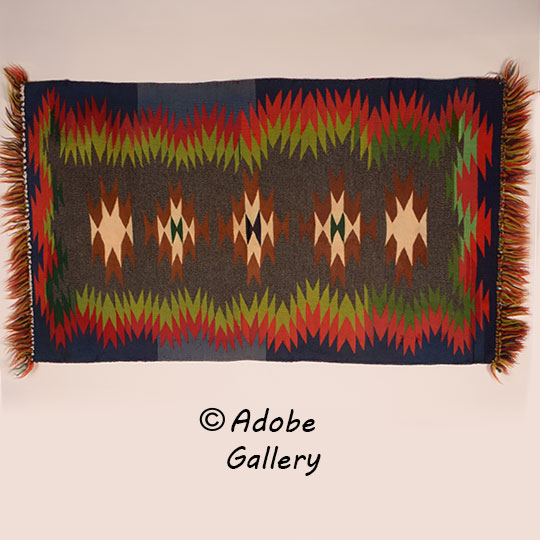
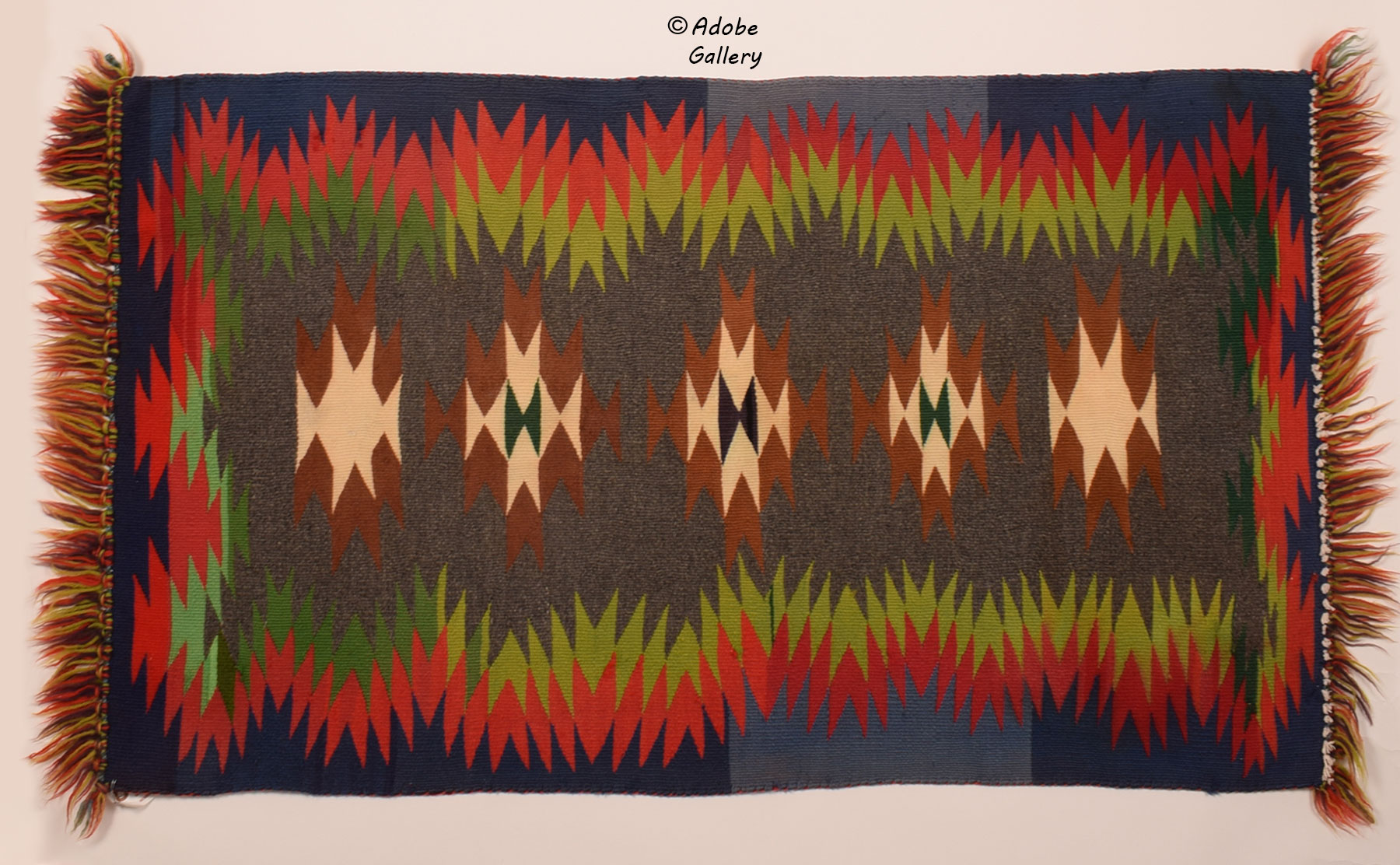
The weaving is a classic example of a Navajo Germantown "Eye-Dazzler" weaving, likely dating from the early 20th century. Diné weavers who experienced Bosque Redondo returned to their home reservation with experience using Germantown yarn. They continued using the yarn because their sheep herds were not yet returned to sufficient numbers to provide wool. This continued for decades.
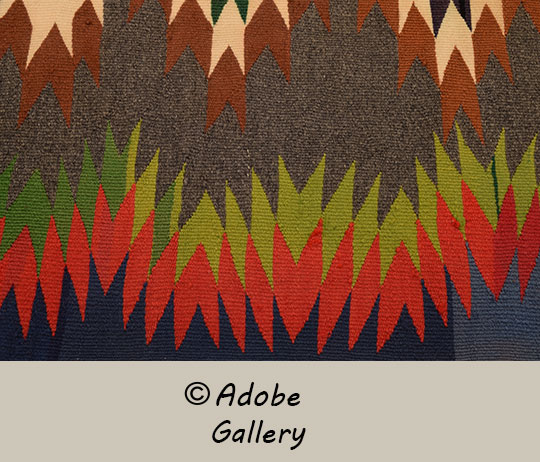
The key characteristic of this weaving is the"Eye-Dazzler" design: The central field features serrated (toothed) diamonds and zigzags. This style was influenced by Mexican Saltillo serapes and was intended to create a vibrating, three-dimensional visual effect. The use of bright reds, greens, oranges, and deep blues is a hallmark of the synthetic aniline dyes that were revolutionary at the time. These colors were much more intense than the indigo and vegetal dyes used previously.
One of the most distinctive features of Germantown weavings is the added fringe. Unlike earlier Navajo blankets, which had four finished edges (selvages) and no fringe, Germantown pieces often featured "Germantown fringe" or tassels added to the ends to mimic the style of Victorian-era shawls and oriental rugs. Textiles with fringe were often used by the Diné as saddle blankets to place over the regular blanket that absorbed the horse's sweat. They became known as "Sunday Saddle Blankets."
This is a superb example of Germantown yarn weaving.
Condition: very good condition
Provenance: this Sunday Double Saddle Blanket with Germantown Yarn is from a client of Adobe Gallery
Recommended Reading: Navajo Saddle Blankets: Textiles to Ride in the American Southwest by Lane Coulter
TAGS: textiles, Navajo Nation
- Category:
- Origin: Unknown
- Medium: wool, cotton
- Size: 50” x 26” including fringe
- Item # C4778N
- Price: $1750
 Click on image to view larger.
Adobe Gallery Recommended Reading

Adobe Gallery Recommended Items
If you are interested in this item, we would also like to recommend these other related items: