




Pueblo Silver Dragonfly - Double Bar Cross Necklace [SOLD]
+ Add to my watchlist Forward to Friend
- Category: Necklaces
- Origin: KEWA, Santo Domingo Pueblo
- Medium: silver
- Size:
29-½” end-to-end;
small crosses 1-½” length;
large cross 2-½” length - Item # C4750M SOLD
The Dragonfly Cross: A Tradition of Pre-Columbian and Historic Southwest Silver
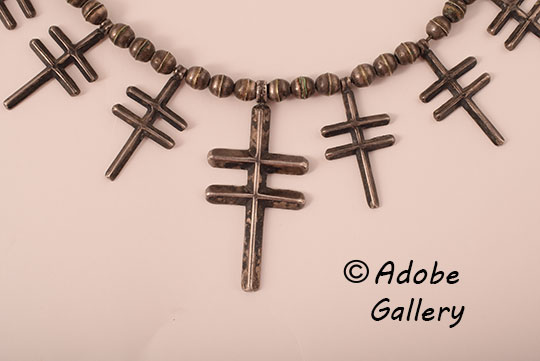
This spectacular historic necklace is a definitive example of an iconic Southwest art form. While often assumed to be a Spanish colonial design, the double-bar cross carries a profound, indigenous history that long predates European contact.
The Legend of the Dragonfly Cross
The double-bar cross existed in Southwest culture centuries before the Spanish arrived in the late 1500s. A prime example is a prehistoric Hohokam shell pendant (c. 1200-1400) unearthed in Arizona, which features a silhouette identical to the double-bar cross necklace.
Ethnographic studies from the 1870s reveal that for the Pueblo and Diné (Navajo) peoples, this emblem symbolizes the dragonfly in flight. As water creatures, dragonflies are deeply sacred heralds of moisture, renewal, and life. Utilizing this form was — and remains — a visual prayer for rain in an arid land.
The geometry of a double-bar cross perfectly mirrors the outstretched, dual wings of a hovering dragonfly. When forged from sterling silver, the metal catches the light, creating a shimmering, reflective quality reminiscent of a dragonfly's translucent, iridescent wings.
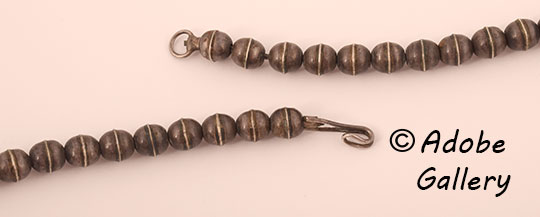
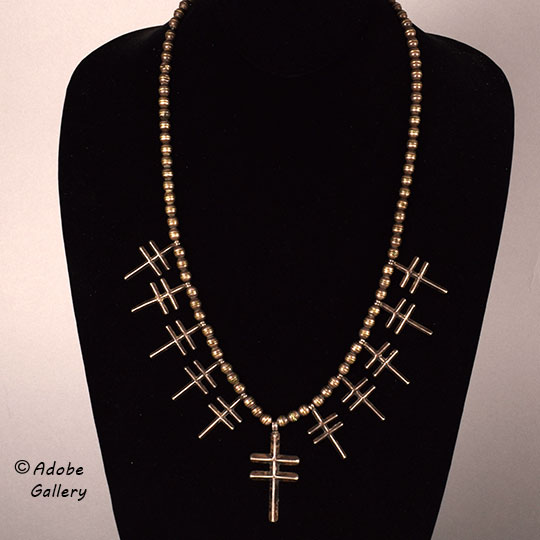
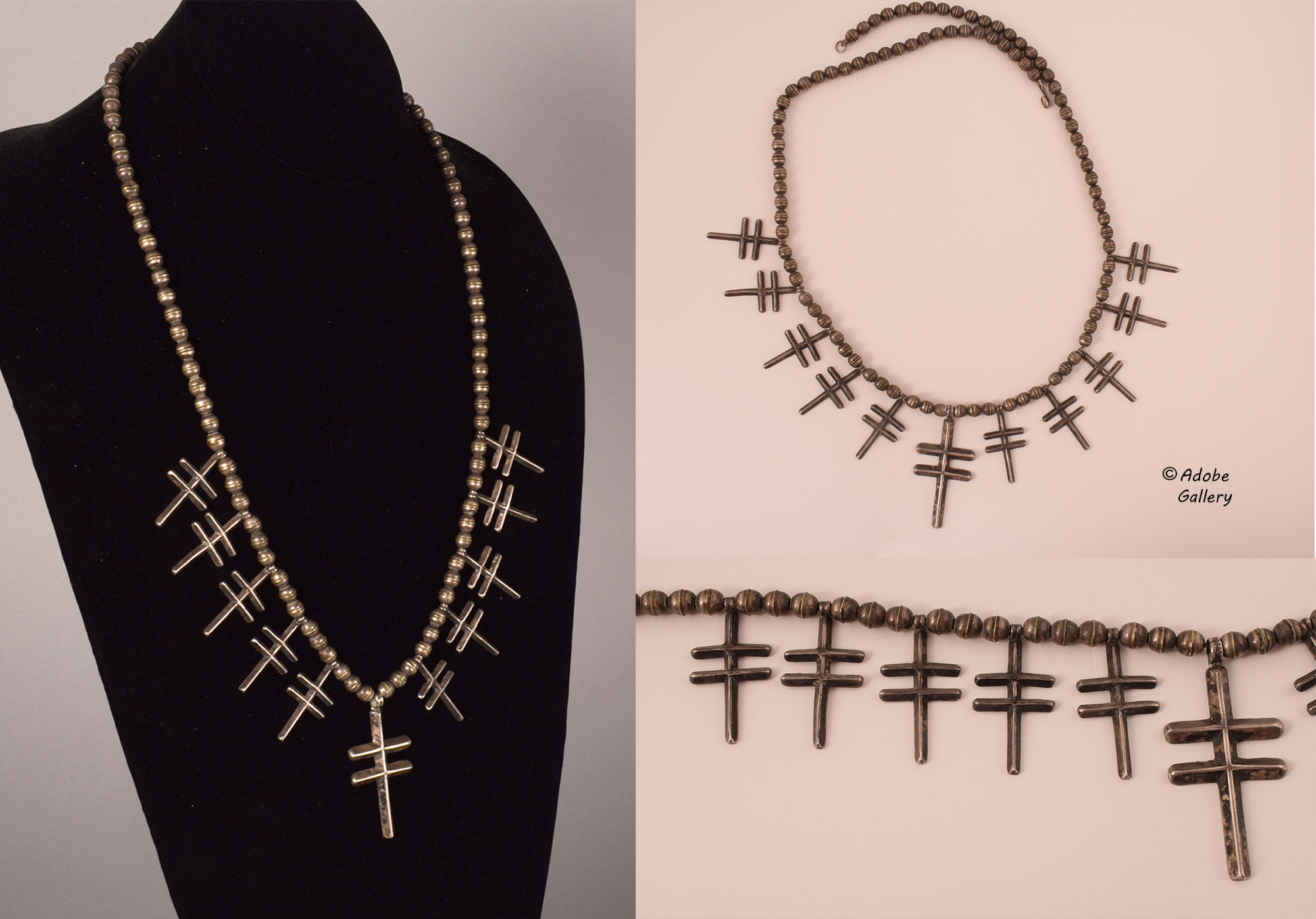
The architecture of this necklace meticulously follows the prestigious layouts worn during the late 19th and early 20th centuries: Ten smaller, double-barred crosses are arranged symmetrically along the strand, elegantly guiding the eye to a single, larger central cross that acts as the primary focal pendant. The crosses are interspersed among beautifully matching, handmade silver beads, giving the necklace a balanced aesthetic structure very similar to a traditional squash blossom layout.
Historically, these cross necklaces were revered as invaluable family heirlooms and sacred bridal gifts. They held immense spiritual and emotional value; while a woman might pawn or sell other jewelry out of absolute necessity during hard financial times, she would rarely part with her cross necklace. This cultural reverence makes pristine, vintage pieces exceptionally rare and highly sought on the secondary market today.
The ubiquity and importance of this jewelry were noted by early anthropologists. Matilda Coxe Stevenson, visiting Zuni Pueblo in 1879, observed:
"The Zuni woman must be poor indeed who does not wear a silver necklace and bangles... occasionally a number of crosses or other forms are added."
Similarly, archaeologist Jesse Walter Fewkes documented that these necklaces were meticulously hammered from historic coin silver, noting that "this form of ornament is the most constant of feminine neck ornaments." [Bird1992:35]
As a tangible link to pre-Columbian tradition and the golden era of historic silverwork, this necklace is a foundational acquisition for any serious collection of native jewelry.
To acquire this historic treasure or request high-resolution details, please reply directly to this email or contact the gallery.
Condition: very good condition with aged patina
Provenance: this Pueblo Silver Dragonfly - Double Bar Cross Necklace is from the estate of a gentleman from Albuquerque.
Reference: Bird, Allison. Heart of the Dragonfly: The Historical Development of the Cross Necklace of the Pueblo and Navajo Peoples, Avanyu Publishing, Inc., Albuquerque. 1994
- Category: Necklaces
- Origin: KEWA, Santo Domingo Pueblo
- Medium: silver
- Size:
29-½” end-to-end;
small crosses 1-½” length;
large cross 2-½” length - Item # C4750M SOLD
 Click on image to view larger.
Adobe Gallery Recommended Reading

Adobe Gallery Recommended Items
If you are interested in this item, we would also like to recommend these other related items: