




J. D. Roybal Untitled Painting of Two Rams and Rainbow
+ Add to my watchlist Forward to Friend
- Category: Paintings
- Origin: San Ildefonso Pueblo, Po-woh-ge-oweenge
- Medium: gouache and ink on paper
- Size:
9” x 11” image;
16-¼” x 18-¼” - Item # C4970A
- Price: $2000
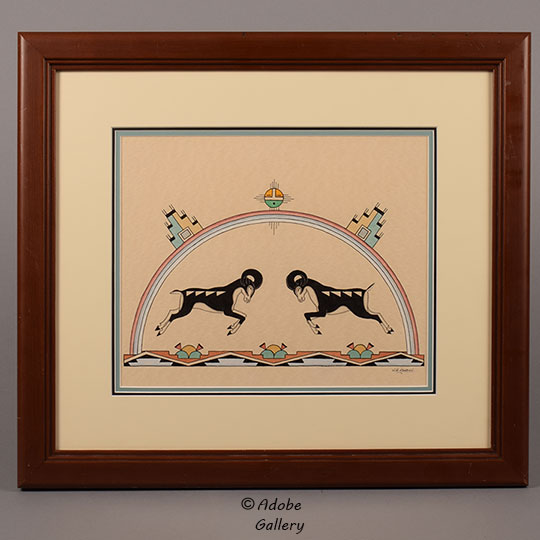
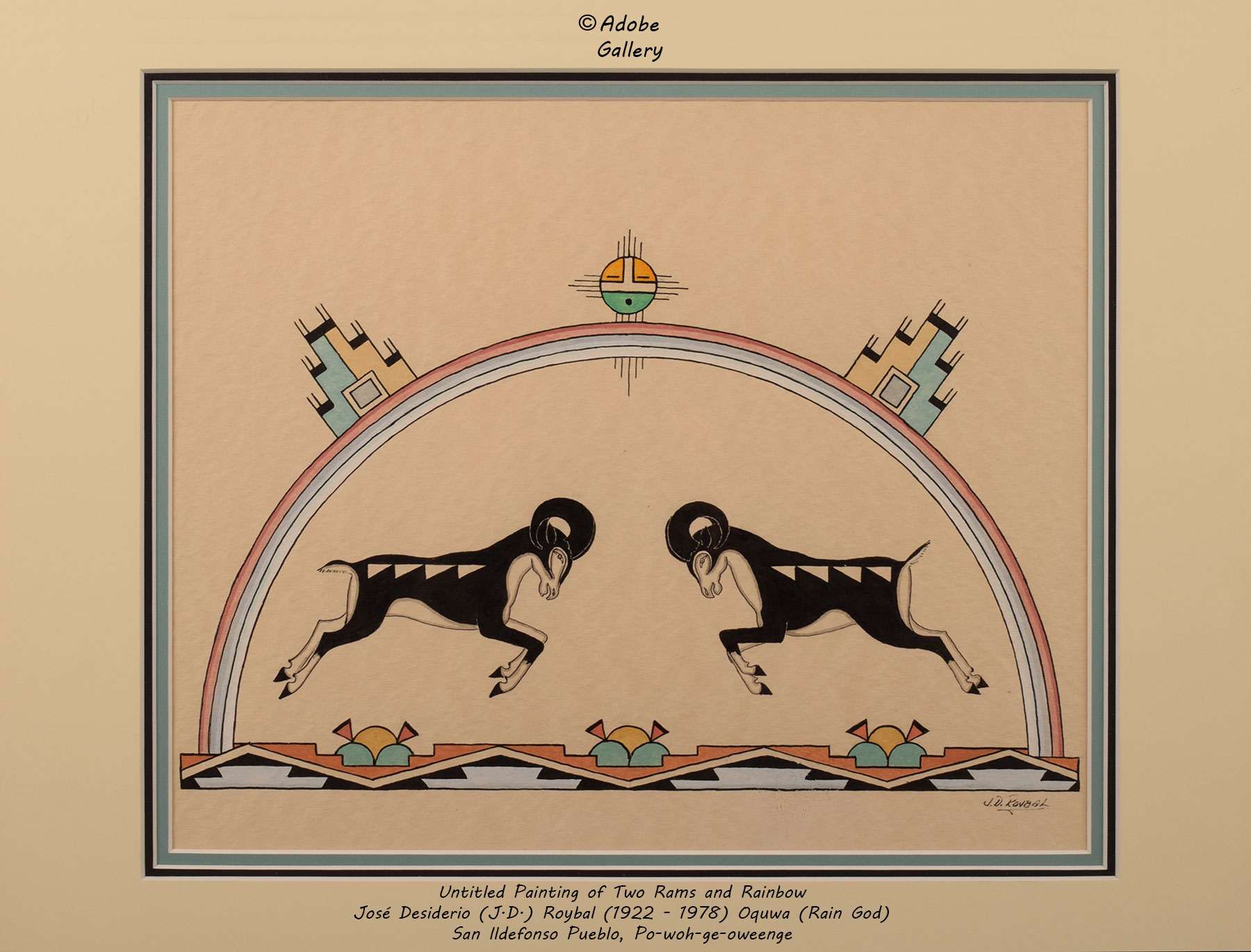
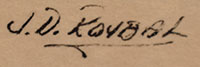 This painting is a classic example of work by J.D. (José Desiderio) Roybal (1922-1978), a prominent artist from San Ildefonso Pueblo. His Tewa name, Oquwa (Rain God), is reflected in the heavy use of rain and water symbolism throughout his body of work. The piece is executed in the "flat style" characteristic of 20th-century Pueblo painting. It emphasizes clean, fine outlines and solid blocks of color without the use of three-dimensional shading.
The two rams (Bighorn sheep) are depicted in a dynamic, leaping pose. In Pueblo culture, rams are often associated with the high mountains and are central figures in winter social dances, symbolizing strength and connection to the animal spirit world. The figures are enclosed within a multi-colored rainbow. In Southwestern indigenous art, rainbows are sacred symbols of moisture, protection, and the bridge between the physical and spiritual realms. At the apex of the rainbow is a stylized "Sun Father" symbol, a common motif in San Ildefonso art representing life-giving energy and the source of all things.
The painting is dense with traditional iconography that frames the central scene: The "stair-step" designs on either side of the rainbow and along the bottom border represent altars or rain clouds., often seen as tablitas being worn by ceremonial dancers. These are prayers for rain, which is essential for survival in the arid Southwest. While not a full serpent here, the geometric patterns in the bottom border and the small circular motifs (sometimes interpreted as seeds or water droplets) reinforce the theme of agricultural fertility.
J.D. Roybal was the nephew of the famous artist Awa Tsireh (Alfonso Roybal), who was a pioneer of modern Pueblo painting. Roybal was particularly celebrated for his "miniature" style-his ability to capture immense detail, such as the fine texture of the rams' fur and the precise geometry of the borders, on a small scale.
While he is perhaps most famous for his whimsical depictions of Koshare (Tewa Clowns), this specific piece showcases his mastery of ceremonial and natural themes. His work remains highly collectible and is featured in major institutions like the Museum of Northern Arizona and the Millicent Rogers Museum.
The painting is framed under double mats and a brown wood frame. It is mounted on 100% rag backing, and covered by conservation glass.
Condition: very good condition
Provenance: this J. D. Roybal Untitled Painting of Two Rams and Rainbow is from the collection of a client of Adobe Gallery
Recommended Reading: Indian Painters and White Patrons by J. J. Brody, University of New Mexico Press, Albuquerque, 1971.
TAGS: San Ildefonso Pueblo, Tonita and Juan Cruz Roybal, Alfonso Roybal - Awa Tsireh, Native American Painting, J.D. Roybal, Katsina Dolls
- Category: Paintings
- Origin: San Ildefonso Pueblo, Po-woh-ge-oweenge
- Medium: gouache and ink on paper
- Size:
9” x 11” image;
16-¼” x 18-¼” - Item # C4970A
- Price: $2000
 Click on image to view larger.
Adobe Gallery Recommended Reading

Adobe Gallery Recommended Items
If you are interested in this item, we would also like to recommend these other related items: