




San Ildefonso Painting of Zuni Pueblo Shalako Figures by Tse Ye Mu
+ Add to my watchlist Forward to Friend
- Category: Paintings
- Origin: San Ildefonso Pueblo, Po-Woh-Geh-Owingeh
- Medium: Watercolor
- Size:
13-½” x 10" image;
20" x 18-¾” framed - Item # C4864E
- Price: $3500
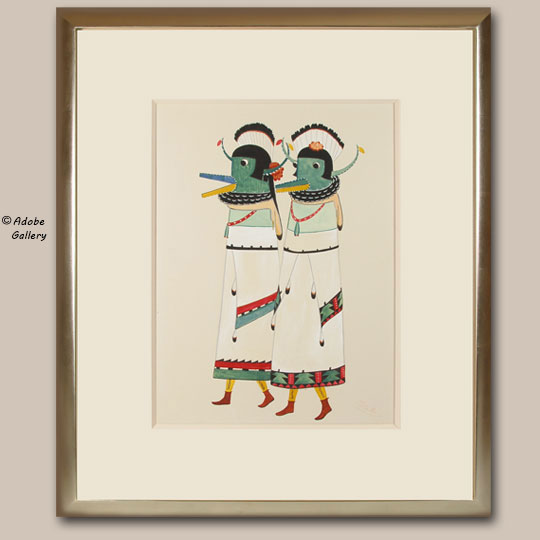
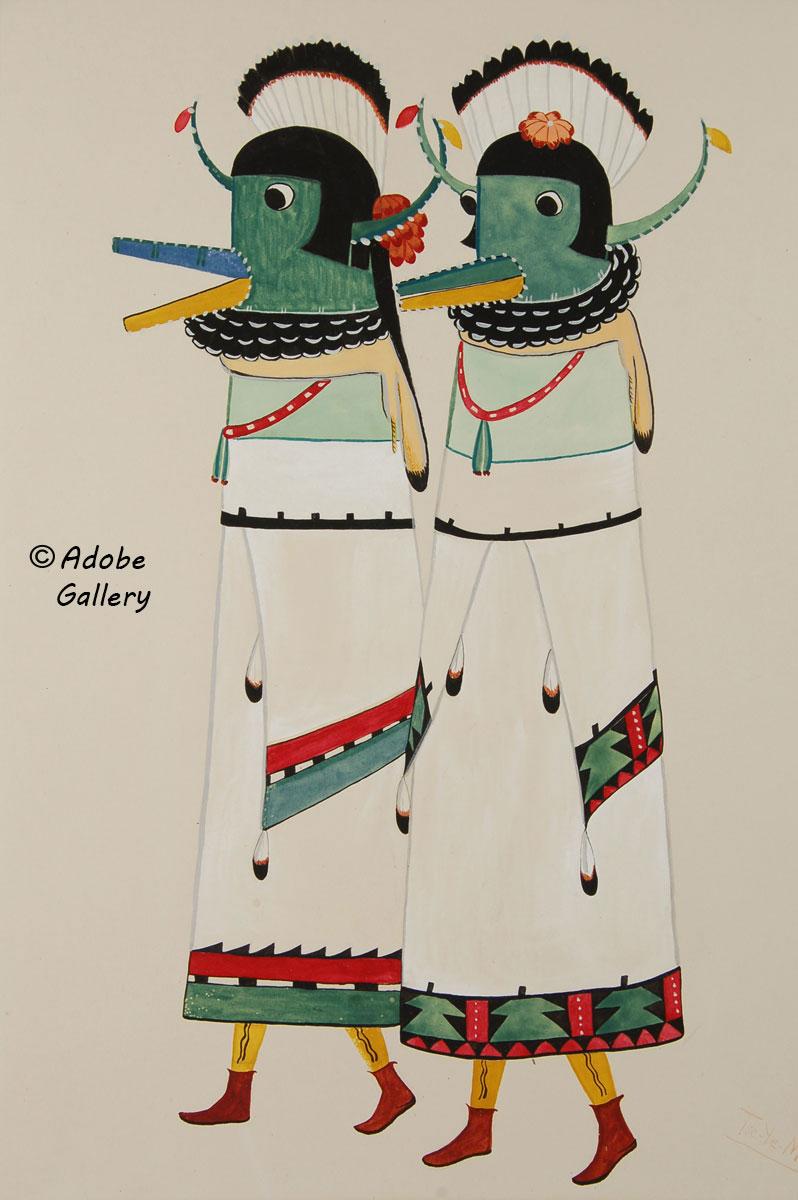
This painting by San Ildefonso artist Romando Vigil (Tse Ye Mu) offers a rare and technically accurate glimpse into one of the most significant events in the Pueblo world: the Zuni Shalako Ceremony.
The Shalako Katsinas
The artwork depicts two Shalako, who are the giant, beaked messengers of the rain gods. Vigil's painting focuses on several key physical details: Each Shalako stands about 10 feet tall. The figure is actually a large mask and frame carried on a pole by a man hidden inside. You can see the scale of the human "impersonator" by looking at the legs visible at the bottom of the figure.
One Shalako is shown with an open beak and the other closed. This highlights the "clacking" sound they make during the dance, produced when the man inside pulls a cord. The Shalako are adorned with curved horns, turquoise-colored masks, a ruff of raven feathers around the neck, and a fan of eagle feathers behind the head. Their white "clothing" is actually stiff cotton or canvas decorated with traditional Zuni symbols.
The Zuni Shalako Ceremony
Held in late November or early December at Zuni Pueblo, New Mexico, this ceremony serves several sacred purposes: It marks the end of the Zuni religious calendar, the time that the Shalako visit and bless newly constructed homes in the village. The community offers thanks for the harvest and prays for rain, health, and fertility for the coming year.
The Shalako is unique because it is the only Katsina ceremony in New Mexico that non-Native people are permitted to witness. Most other Pueblos keep these ceremonies private.
The Artist: Romando Vigil (1902-1978)
Romando Vigil, also known by his Tewa name Tse Ye Mu (Falling Cloud), was a pioneer of the San Ildefonso Watercolor Movement. He was part of a group of artists in the early 20th century who created a brand-new style of Native American painting. Although he lived in California for many years, he painted from memory. This specific piece was likely created in the late 1960s after he returned to New Mexico.
Because San Ildefonso (Vigil's home) does not allow their ceremonies to be painted, artists like Vigil often chose the Zuni Shalako as a subject because Zuni and Hopi traditions allow for public depiction and attendance.
Condition and Presentation: The painting is preserved to a high standard, having been professionally updated with archival materials, that is re-framed using acid-free materials to prevent yellowing or damage. It is framed in a handcrafted silver wood frame by the renowned Goldleaf Framemakers of Santa Fe.
Provenance: this San Ildefonso Painting of Zuni Pueblo Shalako Figures by Tse Ye Mu was the property of Richard M. Howard, a Santa Fe dealer and collector, and it hung in the upstairs bedroom at his residence. It was purchased in 2010 from his estate by Navajo artist Tony Abeyta, from whose collection it was acquired.
Recommended Reading: Indian Painters of the Southwest: The Deep Remembering by Katherin Chase
TAGS: Native American Painting, San Ildefonso Pueblo, Santa Fe, Carmelita Dunlap, Maria Martinez, Romando Vigil (1902-1978) Tse Ye Mu - Falling Cloud
- Category: Paintings
- Origin: San Ildefonso Pueblo, Po-Woh-Geh-Owingeh
- Medium: Watercolor
- Size:
13-½” x 10" image;
20" x 18-¾” framed - Item # C4864E
- Price: $3500
 Click on image to view larger.
Adobe Gallery Recommended Reading

Adobe Gallery Recommended Items
If you are interested in this item, we would also like to recommend these other related items: