



Replacing the Term "Unknown Artist" with "Once Known Artist"
Replacing the term "unknown artist" with "once known artist" is an intentional and respectful shift in how we approach Indigenous art, provenance, and historic attribution.
Here is an enhanced breakdown of why this distinction is so vital in fine art and gallery curation:
1. Reframing Anonymity into Historical Dignity
The label "unknown artist" subtly implies that the creator was nameless, insignificant, or lost to history without identity. In contrast, "once known" serves as a active reminder that this artist was a real individual-a respected master within their community whose talent, vision, and craftsmanship were recognized and celebrated during their lifetime.
2. Oral Tradition vs. Western Signatures
Historically, Southwestern Native American artists worked within oral traditions and did not "sign" their pottery, weaving, or carvings with a written name. Signing artwork with a western alphabet was a concept introduced to Indigenous communities much later (pioneered in the early 20th century by potters like Maria Martinez at the encouragement of traders and anthropologists). The absence of a written signature was never a lack of pride or ownership; it was simply not the cultural standard.
3. Community Knowledge & "Stylistic Fingerprints"
In a close-knit Pueblo or village, community members did not need a written signature to identify an artist's work. Everyone recognized the distinct "fingerprints" of individual makers:
-
The precise temper or wall-thickness of a pot
-
The unique curvature of a rim
-
A signature brushstroke in wild bee-plant slip
-
A subtle variation in a traditional geometric pattern
To their contemporaries, their workmanship was as recognizable as a face or a voice.
4. How the Attribution Was Lost
As early traders, tourists, and museum collectors acquired these pieces in the late 19th and early 20th centuries, they frequently bought and sold them without recording the maker's name. Over generations, as these physical objects left the villages and entered private collections worldwide, the oral lineage connecting the vessel to its creator was severed.
Ancestral Symbols, Modern Masterpieces: Curator's Talk with Otillia Engle
Curating an exhibition is always a collaborative effort. In my role at Adobe Gallery, I’ve had the privilege of learning from the deeply knowledgeable Alexander E. Anthony, Jr. Few things match the thrill of researching artists and artworks, and I am especially drawn to modern painters and historic potters. Fortunately, the Southwest offers an endless supply of art, set in a landscape that naturally invites and inspires creators to produce true masterpieces. An idea that indigenous communities know all too well.
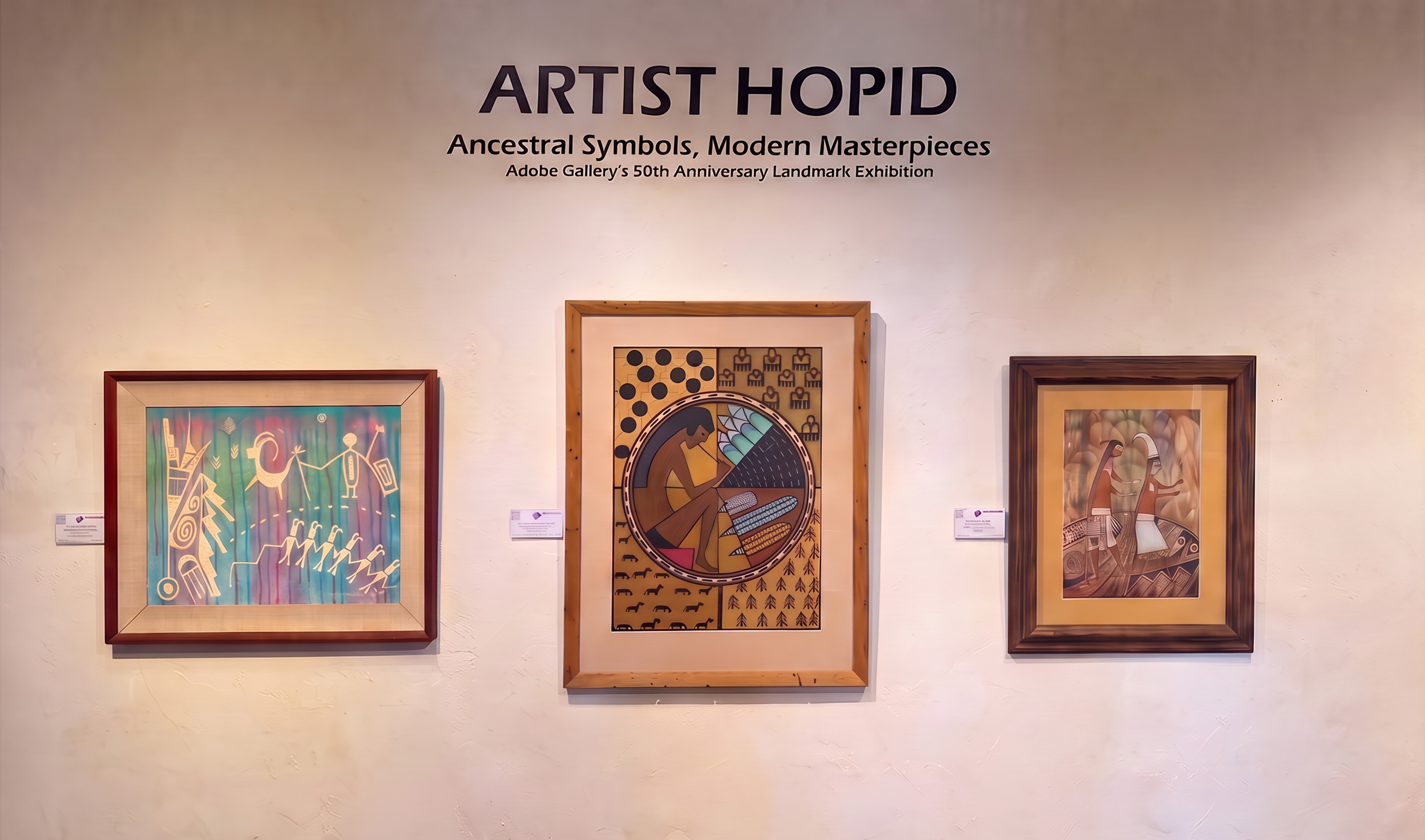
The most gratifying moment for any curator is seeing an exhibition come to life. Connecting viewers with the excitement of art is what it's all about, particularly for modern pieces like those featured in Ancestral Symbols, Modern Masterpieces: Documenting the Sacred Narratives and History of the Hopi People. As the title implies, these modern artworks draw deep inspiration from the ancestral kiva murals found across the Hopi Nation (Hopituh Shi-Nu-Mu).
During the 1930s, only a decade before the members of Artist Hopid were born, Harvard’s Peabody Museum excavated the murals at ancient ruins of Awatovi Village in the name of Archeological research. There are a lot of Native Americans who disagree with Archeology and the research that comes out of the field, because disturbing remnants of the past is considered disrespectful. However, the members of Artist Hopid saw publications with these mural paintings, like many painters and potters from the Hopi Nation (Hopituh Shi-Nu-Mu) during this time and even until today.
Ancestral Symbols, Modern Masterpieces: CLOSING
Exhibition Closing: October 29th, 2026
Don't Miss the opportunity to meet and chat with Adobe Gallery curator Otillia Engle about this landmark exhibition and other highlights in the collection. Just because the exhibit is coming to a close, dosen't mean the conversation around Artist Hopid must end. We will not have a closing reception, so come by anytime before October 30th!
During the run of this exhibition, we have received an outpouring of love for Artist Hopid. Witnessing collectors and art appreciators explore the symbols and motifs in each painting, and watching their curiosity unfold, makes us truly proud. The stories shared by visitors who personally knew members of Artist Hopid have been priceless. The main goal behind curating these exhibitions is to inspire, foster meaningful conversations about art, and perhaps help you take a piece of it home to appreciate for years to come. From Adobe Gallery to your home, we invite you to bring a piece of this living history into your daily life.
Click the image below to view the exhibition!
Remembering Neil David, Sr.
(June 4, 1944 - October 21, 2026)
We honor the memory of Neil David Sr., who has passed away, marking the end of an era as the final surviving member of Artist Hopid. A prolific artist, master carver, and celebrated painter, he was widely revered for his expressive Katsina imagery and lifelong dedication to preserving Hopi culture. Out of respect for his mother’s Tewa heritage, his native name remains private.
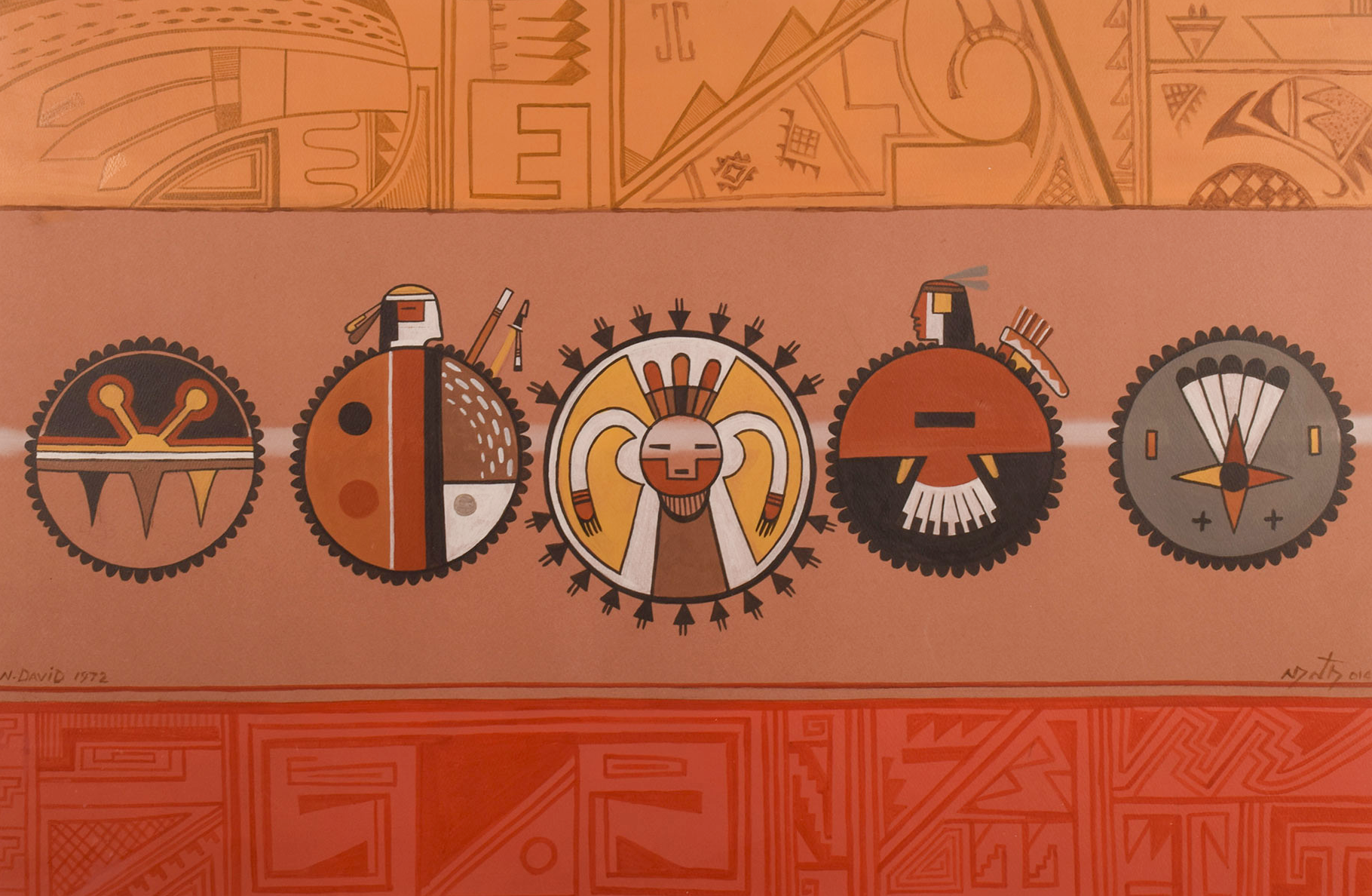
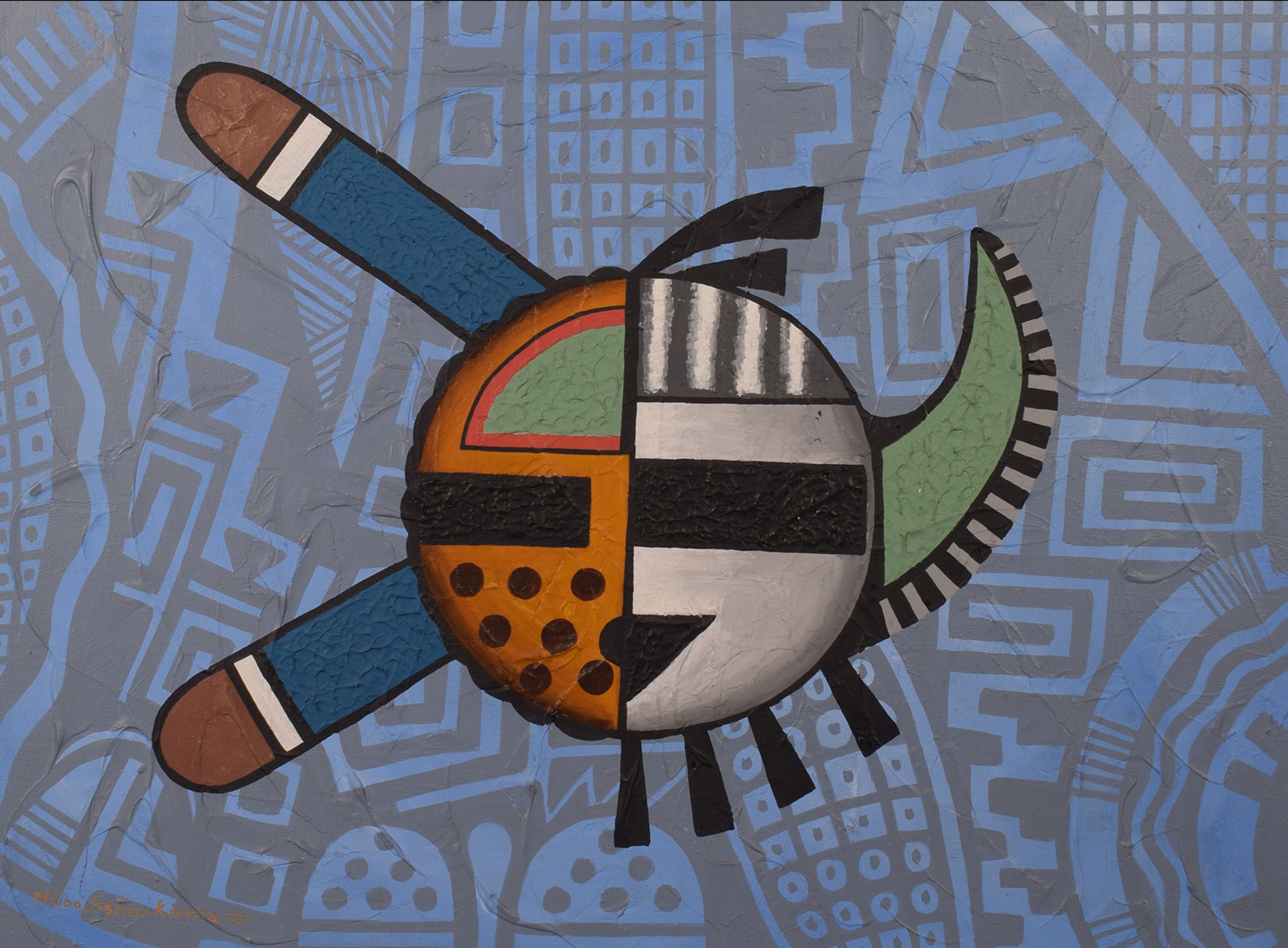
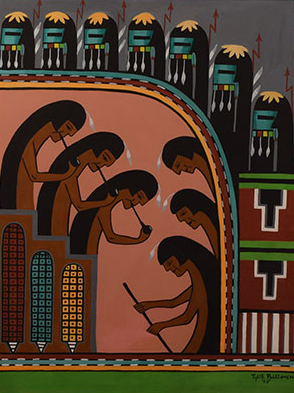
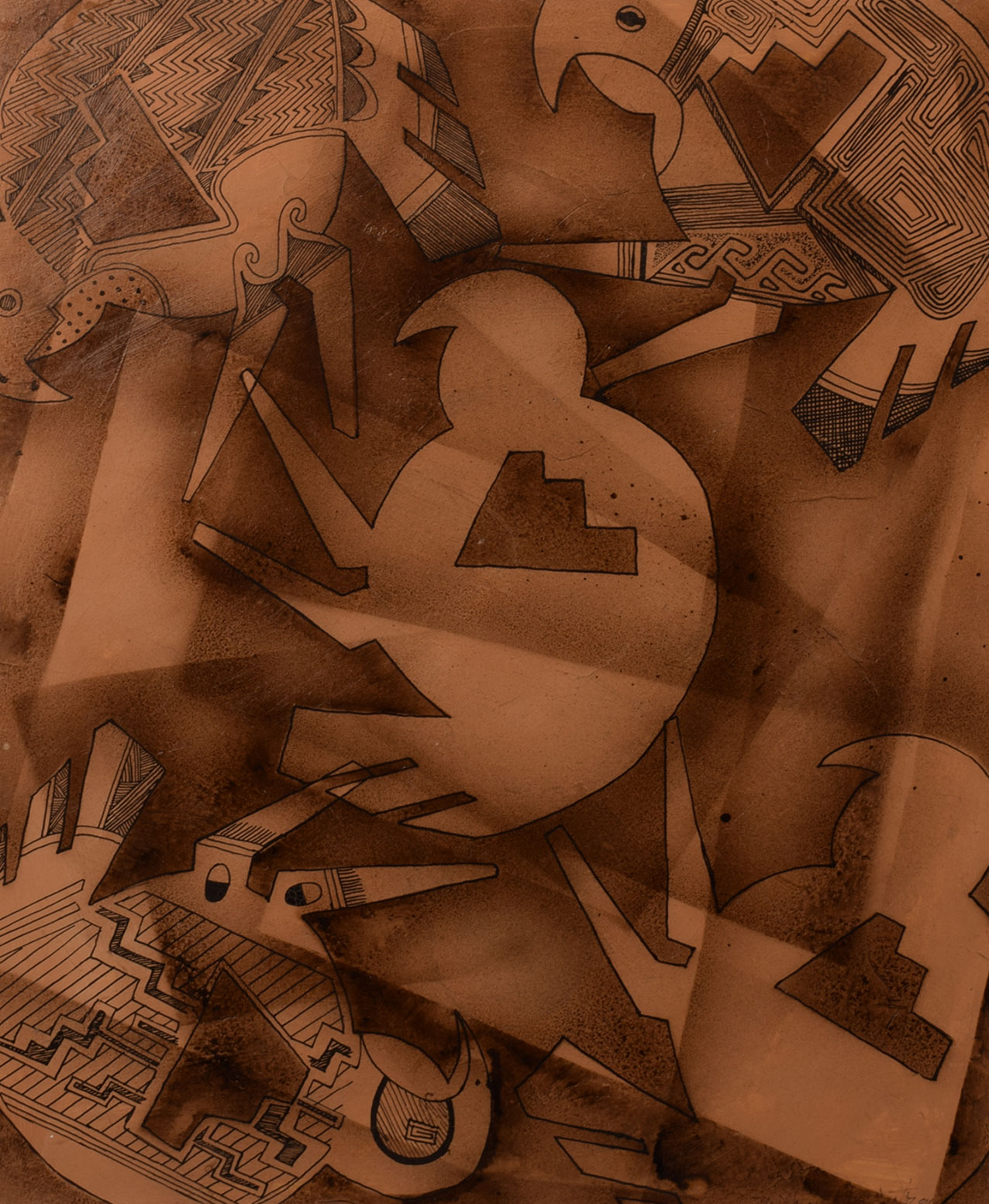
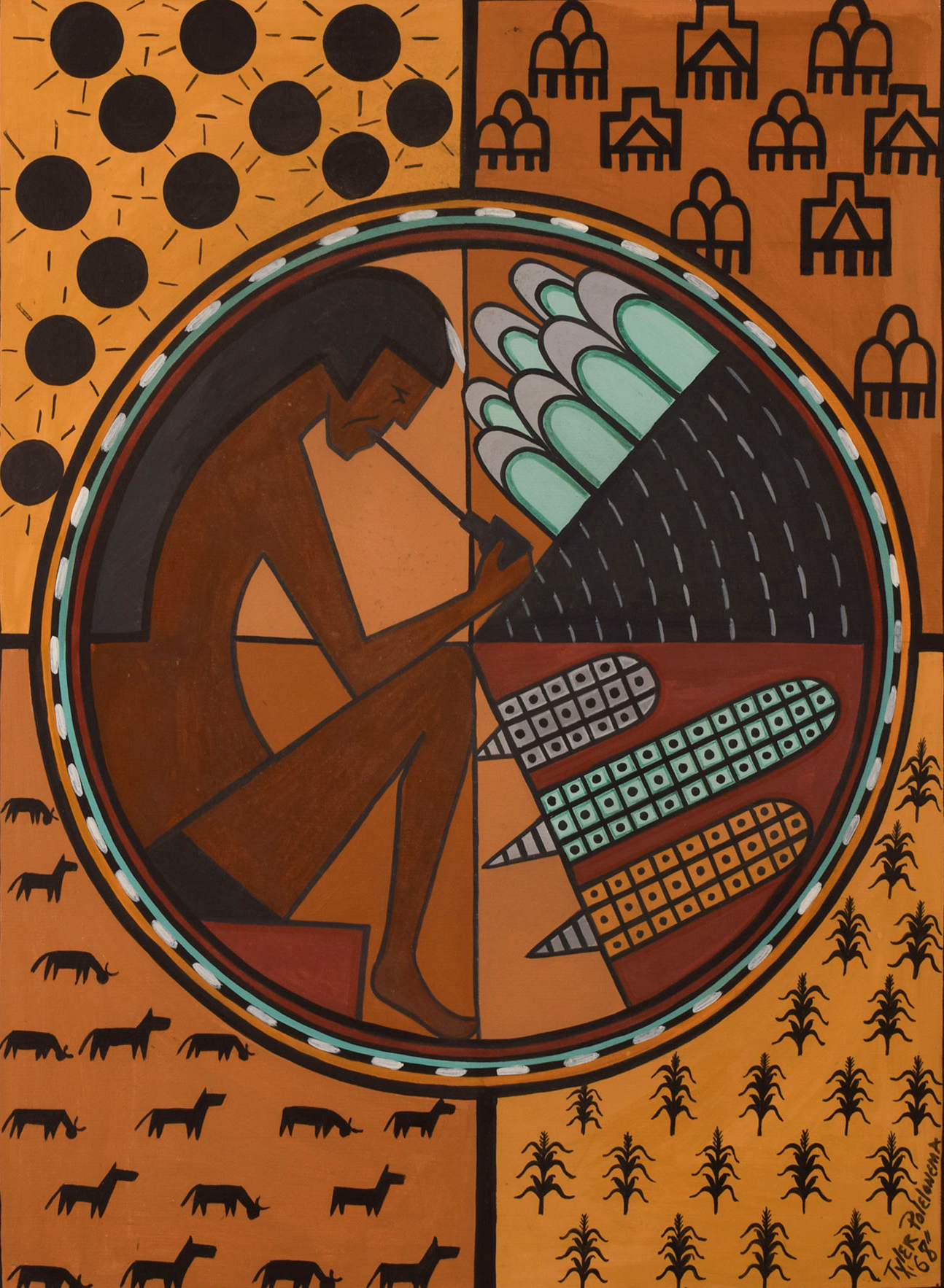
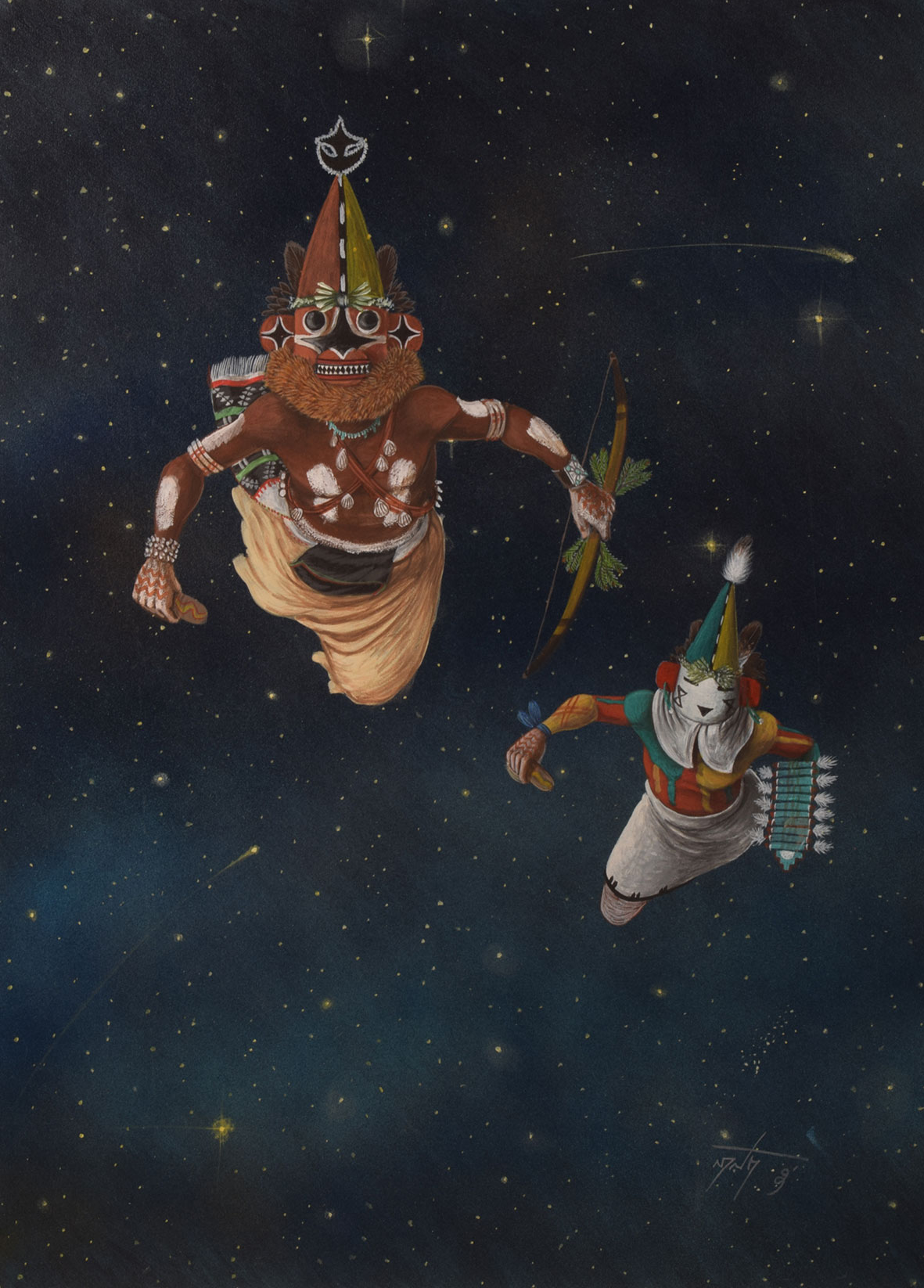
With this exhibition coming to a close on October 29, 2026, we invite everyone who has not experienced this showcase to visit and enjoy it while it lasts. A remarkable selection of paintings by Neil David, Sr., Delbridge Honani (Coochsiwukioma), and Tyler Polelonema (Duyauestewa), remains available. We hope to connect these exceptional works of art with collectors who will treasure them as deeply as we have throughout the run of the show.
Click on the paintings below to see availability!
How Modern Pueblo Pottery Forms Reflect Industrialization and Colonial Expansion in Turn-of-the-Century United States
The late nineteenth and early twentieth centuries marked a period of profound transition across the American Southwest, as rapid industrialization, the expansion of the transcontinental railroad, and encroaching colonial infrastructure dramatically altered the landscape. In New Mexico—home to 19 vibrant Native Nations whose ancestors engineered specialized ceramic vessels for thousands of years—the influx of manufactured goods and tourist economies fundamentally disrupted traditional patterns of material culture. As cheap, mass-produced metal and glass containers flooded local markets, the ancestral necessity for large, heavy utility jars diminished. Yet, rather than eroding the practice, Pueblo potters dynamically adapted their craft to survive within the newly imposed market economy, transforming pottery from an instrument of domestic utility into a canvas of economic resistance and artistic identity.
Here in the Southwest, pottery has served as utility to help aid the everyday lives of Native Americans for thousands of years. Form is functionality, and beautiful designs on smooth, polished slip indicate the communities from which they originate. After the arrival of the AT&SF Railroad in the late 1880s, many of the traditional pottery forms, symbols and motifs from the native nations in the Southwest either transformed, continued, or faded away.
San Ildefonso Pueblo (Po-Woh-Geh-Owingeh) pottery is known historically for their polychrome and black-on-red symbols/motifs, during the large tourism boom around the turn-of-the-century they transitioned to black-on-black wares in unique forms.
This artistic evolution established pottery-making as a viable foundation for economic independence and cultural preservation. The blackware aesthetic was expanded upon by later generations of the Martinez family. Julian Martinez reintroduced traditional and sacred motifs onto these modern matte-on-gloss surfaces.
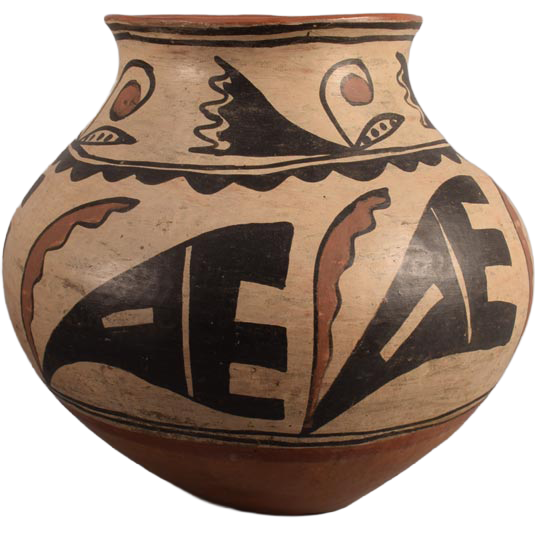
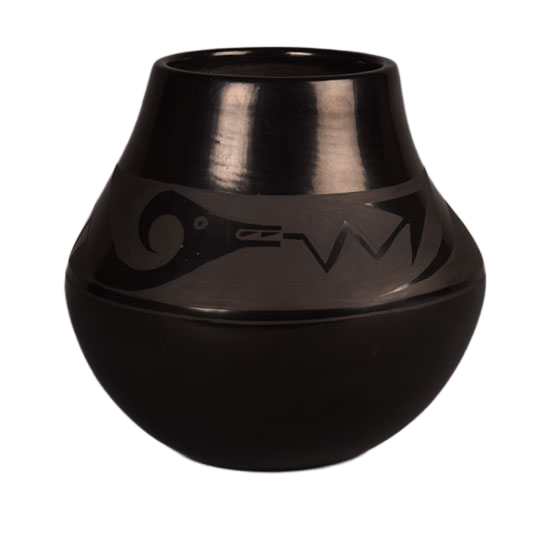
Santa Clara Pueblo (Kha’p’oo Owingeh) pottery experienced significant stylistic changes as tour-bus and train travel expanded in the Southwest during the early to mid-twentieth century. The shift toward smaller, carved blackware and red-slip vessels made the pieces easier for tourists to transport and purchase as souvenirs.
Prior to the expansion of regional tourism and rail lines, Pueblo vessels were primarily large, heavy, and engineered for storage, cooking, or hauling water. The introduction of manufactured enamelware and glass replaced the functional necessity of clay pots, prompting artists to reimagine pottery as an artistic medium and source of economic independence. Beyond sgraffito, Santa Clara Pueblo (Kha’p’oo Owingeh) potters adapted by introducing deeply carved melon jars, double-spouted wedding vases, and bear-paw motifs, expanding their artistic signatures to meet collector demand
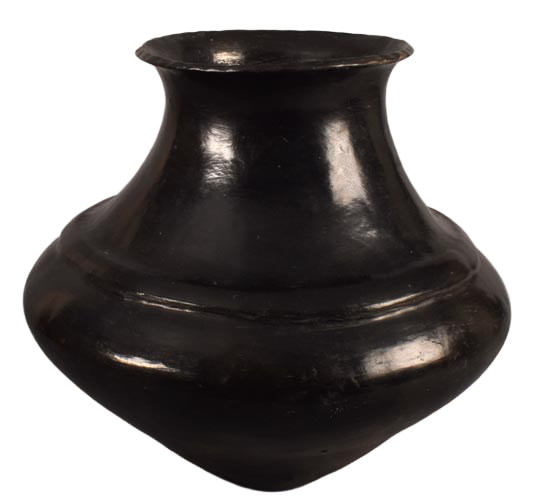
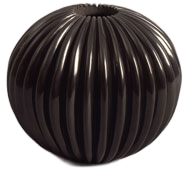
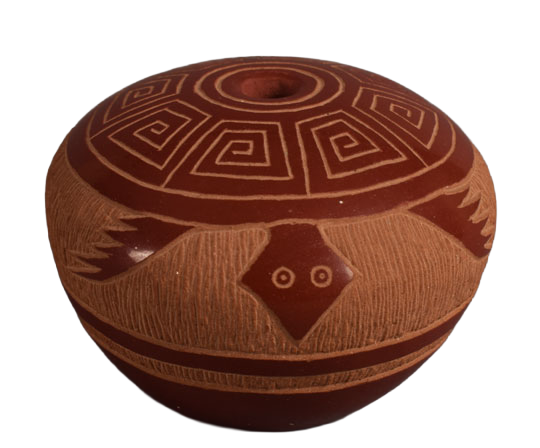
The transition from historic to modern Pueblo pottery unfolded alongside a period of intense colonial expansion and unethical archaeological extraction. Throughout the late nineteenth and early twentieth centuries, anthropological expeditions systematically removed vast collections of ancestral items from Southwestern Native Nations under the guise of scientific preservation. Many Native Americans shifted focus onto tourism to help support their communities. Concurrently, the disruption of traditional inter-tribal trade avenues compelled many Pueblo communities to pivot toward the emerging tourist economy for financial survival. Pottery, traditionally engineered for daily utilitarian function, were adapted into commodities for non-Native consumers. Although rooted in systemic displacement and the commercialization of Indigenous culture, the evolution of commercial Pueblo pottery underscores the profound adaptability, economic sovereignty, and artistic innovation of Southwestern Native artists.
Cited Sources:
Frank, Larry and Harlow, Francis. Historic Pottery of the Pueblo Indians, 1600–1880 West Chester: Schiffer Publishing, 1990, p. 45–48.
Pueblo Pottery Collective. Pueblo Pottery Stories in Clay: Historical Context, Vilcek Foundation. 01 August 2023.
Ancestral Symbols, Modern Masterpieces: Artist Hopid and Reflections on Hopi Symbols
If you have witnessed Hopi (Hopituh Shi-Nu-Mu) poetry or paintings, you have seen vessels and canvases adorned with symbols that turn the artwork into an active prayer for life-giving rain, health, fertility, harmony and many other meanings. Because historical and spiritual concepts were traditionally shared through oral tradition, applying these symbols to pottery and paintings allows the Hopi to preserve cultural memory and pass traditions across generations. Hopi symbols serve as direct visual representations of prayers, ancestral katsina spirits, and cosmological balance.
Formed in 1973, the Artist Hopid collective used painting to re-engage Hopi youth with their rich cultural heritage. By incorporating imagery inspired by prehistoric Hopi kiva murals, the group educated broader audiences while demonstrating that Native artists could build successful careers without leaving their homelands.
Equally important was their push to dismantle long-standing artistic constraints. From the 1920s through the 1960s, the fine art world expected Native American artists to adhere strictly to Flatstyle painting, a visually striking movement that notably influenced early Walt Disney animation. By defying these rigid expectations and forging a new visual narrative, Artist Hopid cemented their most enduring legacy.
For those interested in Hopi culture, much remains rightly hidden from outsiders. Certain sacred traditions—particularly ceremonial symbols and spiritual practices—are meant to be preserved within the community, reminding us that respect often means honoring those boundaries.
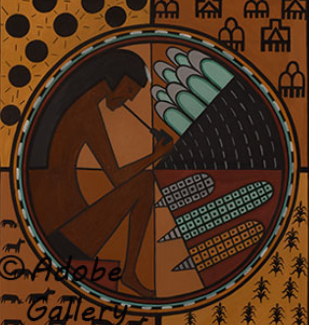
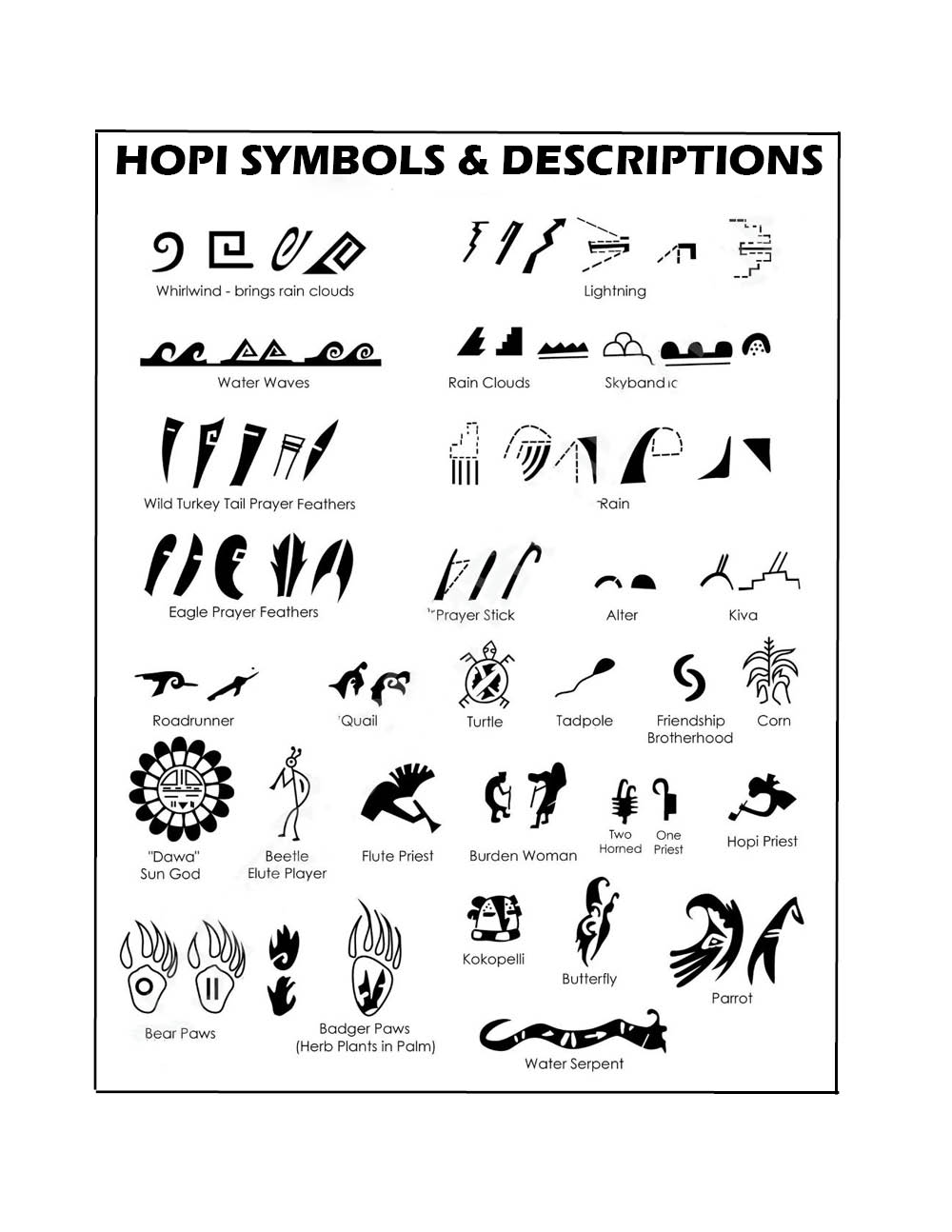
Rain Clouds & Lightning: Jagged lines and compact cloud forms that represent summer storms, power, speed, and the vital gift of water for dryland agriculture and survival.
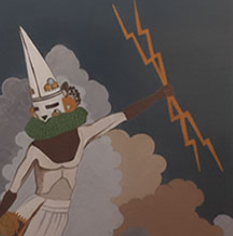
Corn: Represents the "staff of life," continuity, and spiritual nourishment. Also, the different colors represent different cardinal directions. Yellow for North, Blue for West, Red for South, and White for East.
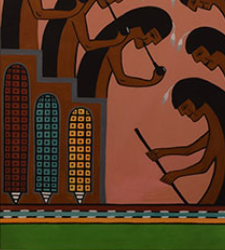
Circular Borders & Interlocking Circles: Represent the unity, ceremonial kinship among clans or societies, and the eternal cycle of the Hopi world without beginning or end.
How Historic Pueblo Pottery Forms Reflect Industrialization and Colonial Expansion in Turn-of-the-Century United States
Here in the Land of Enchantment, cultural history and the natural environment interweave in ways distinct to the Southwest. Alongside the other Four Corners states, New Mexico shares a heritage rooted in rich traditions and profound resilience - a legacy that continues to inspire communities today. Though colonial expansion, the influx of tourist economies, and invasive archeological practices have forever altered the trajectory of these communities, New Mexico remains home to 19 Native Nations that have continuously inhabited these ancestral lands for centuries.
It is important to understand that pottery has been utilized for practical needs by agrarian societies such as Southwest Native Americans for thousands of years. While more nomadic societies such as Plains Native Americans relied on materials suited for migratory patterns. “Settled agricultural communities required durable containers for everyday survival, leading Southwest potters to engineer specialized vessels for gathering, preparing, and storing essential resources.” (Frank & Harlow)
Here in the Southwest, pottery has served as utility to help aid the everyday lives of Native Americans for thousands of years. Form is functionality, and beautiful designs on smooth, polished slip indicate the communities from which they originate. Or the influence of neighboring communities which they associate and exchange ideas with.
Small vessels such as water jars feature thin, hand-built walls designed for hauling large volumes of water throughout the day. Every aspect of the form serves its purpose: a narrowed rim and neck prevent spillage during transport, a full belly maximizes water capacity, and a concave foot rests securely on the curve of the bearer's head.
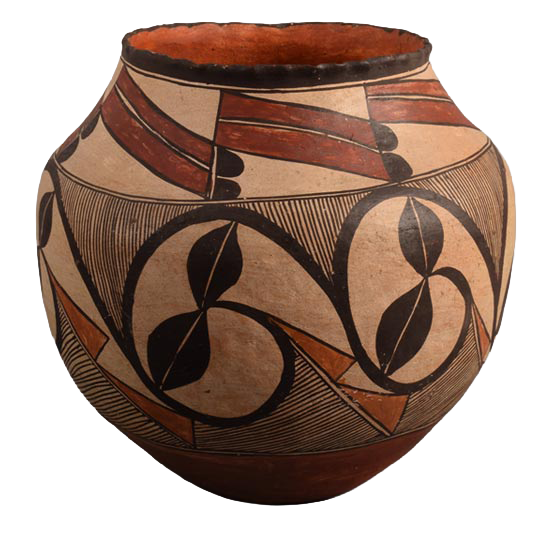
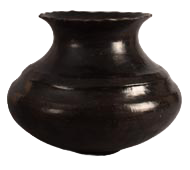
Large vessels for preparation and storage have convex bottoms to easily nestle into the soft earth floors of adobe homes. Rims are much narrower, and bellies hand built as large as the firing process can withstand. Walls are built thick, increasing the weight, which is possible for societies that can settle for long periods of time. These forms would have been very heavy, and engineered to keep out rodents.
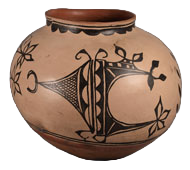
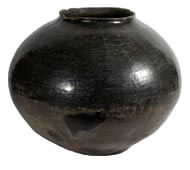
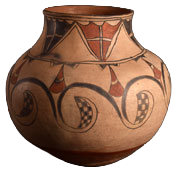
Dough bowls represent another critical utilitarian form, specifically engineered for kneading and rising bread. However, Indigenous communities did not immediately adopt Spanish baking traditions; it took over a century after contact for communities to integrate wheat flour and yeast-risen bread into their diets. Prior to wheat's introduction in the late sixteenth century, Southwestern communities had no need for these broad, low-walled vessels. Instead of above-ground dome ovens, they used pit ovens or baked corn flatbreads—like piki bread and tortillas—indoors on flat, hot stones. Following Spanish colonialism, these forms emerged to accommodate flour-based breadmaking, and Spanish-style hornos (outdoor ovens) served as a clear testament to how Native ceramic practices evolved alongside changing foodways. (Frank and Harlow, p. 45-48).
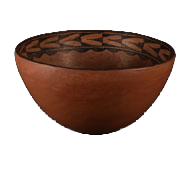
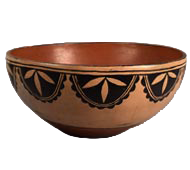
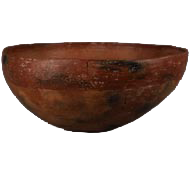
Pueblo Pottery forms experienced a transition period in the late 1800s; pottery forms shifted in size and shape to accommodate tourists arriving on the AT&SF Railroad (completed in 1881). This period saw a decline in utilitarian pottery, replaced both by tourist-driven wares and new metal alternatives. “During the late 1800s, some Pueblo potters began creating decorative pieces of pottery inspired by images of glass and dinnerware seen in magazines and newspaper advertising. In addition to traditional pottery forms, vases, pitchers and other pots with fanciful handles, ash trays, and animal figurines were made” (Pueblo Pottery Collective). It was never present in indigenous ideologies that one must sign their name to pottery - this is how art historians and Native American communities distinguish between historic and modern pottery in this region.
Even the United States in general saw this transition in everyday life. According to Freddie Wilkinson at National Geographic, “the most harmful effects of the Industrial Revolution might have been changes that families had to make. Before the revolution, most people worked with their families on farms or in shops.” So, we can imagine then how this affected Native Americans whose culture relied, and still relies, on the interconnectedness of kinship, community and reciprocity over a market economy.
Around the turn of the century, these vessels shifted from the spirit and femininity inherent in their original designs as their functional necessity faded. Women were at the center of the craft and usage thereof. When we create materials out of necessity over centuries, it is understandable that these objects naturally start to incorporate soulful and personal elements. If not all along. And as economies transition, usually by force, from gift giving to market based, we lose the fact that "gifts from the earth or from each other establish a particular relationship, an obligation of sorts to give, to receive, and to reciprocate" (Kimmerer, p. 25). Thriving communities inspire creativity.
This leaves me to ponder: had major institutions - such as the Smithsonian, the American Museum of Natural History, Harvard’s Peabody Museum, and the Penn Museum - not removed so many sacred artifacts from Native Nations, and had Indigenous communities not been forced into a market economy, would these pottery traditions have ever waned? While we may never have definitive answers, contemporary Native American artists continuously blend the traditional pottery forms of their ancestors with new perspectives that reflect today's world. Championing their living culture through art.
Cited Sources:
Division of Rare and Manuscript Collections, Cornell University Library. Guide to the Hemenway Southwestern Archaeological Expedition Papers, 1886-1896.
Frank, Larry and Harlow, Francis. Historic Pottery of the Pueblo Indians, 1600–1880 West Chester: Schiffer Publishing, 1990, p. 45–48.
Jaffe, Logan, et al. “America’s Biggest Museums Fail to Return Native American Human Remains.” ProPublica, 11 August 2026.
Kimmerer, Robin Wall. Braiding Sweetgrass: Indigenous Wisdom, Scientific Knowledge and the Teachings of Plants. Milkweed Editions, 2013, p. 25.
Wilkinson, Freddie. “Industrialization, Labor and Life.” National Geographic, 30 May 2025.
Pueblo Pottery Collective. Pueblo Pottery Stories in Clay: Historical Context, Vilcek Foundation. 01 August 2023.
Ancestral Symbols, Modern Masterpieces: OPENING
Marking a half-century of stewardship in the arts, Adobe Gallery is proud to celebrate its 50th Anniversary with a landmark exhibition opening this Memorial Day weekend. This premier event explores the profound spiritual and historical narratives of the Hopi people through a masterfully curated selection of paintings by the revolutionary collective, Artist Hopid. Established in 1973 by visionaries Michael Kabotie, Delbridge Honanie, and Neil David, Sr.-and soon expanded to include the significant contributions of Terrance Talaswaima and Milland Lomakema-this movement fundamentally redefined the trajectory of modern Hopi art, bridging the gap between ancient iconography and contemporary expression.
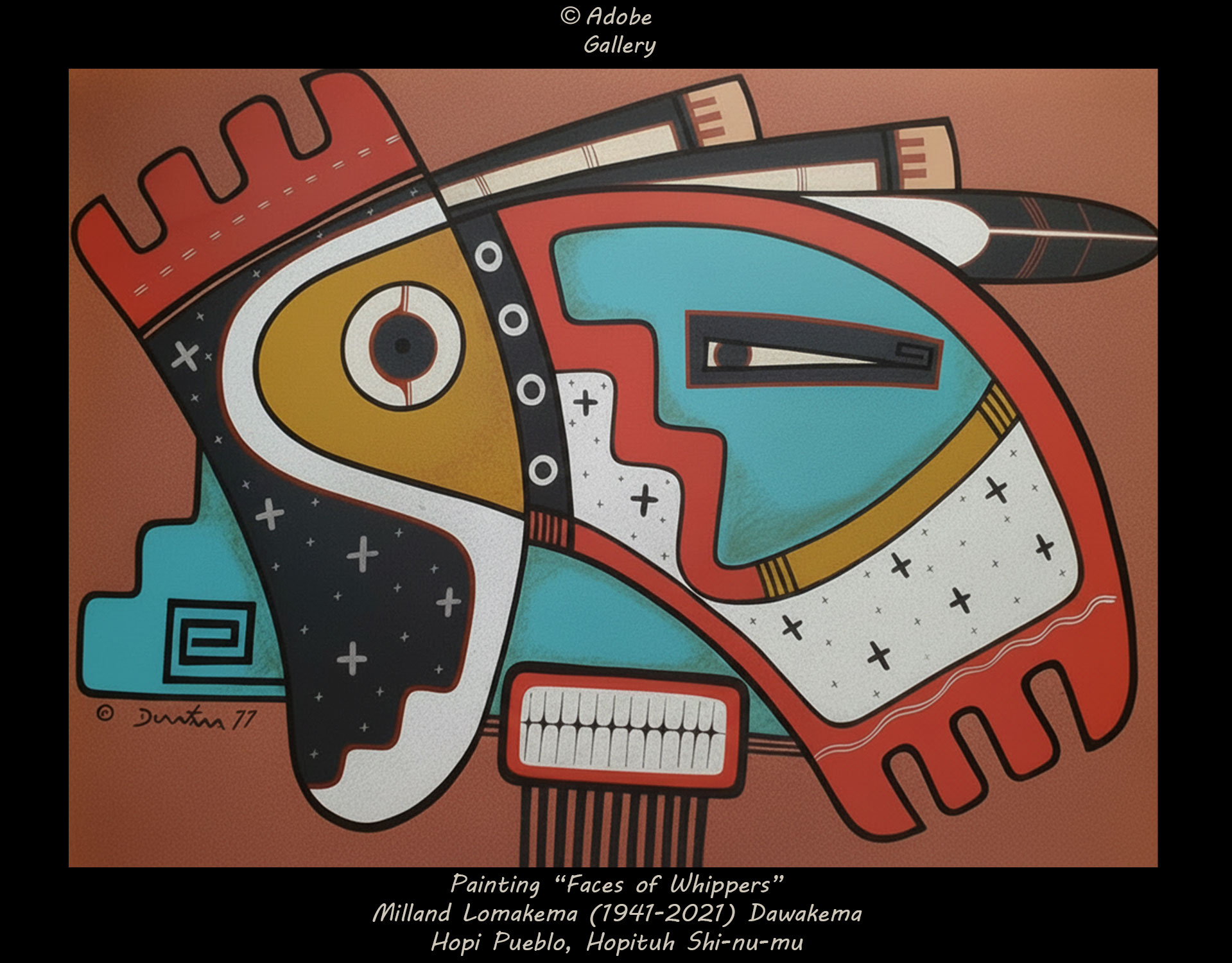
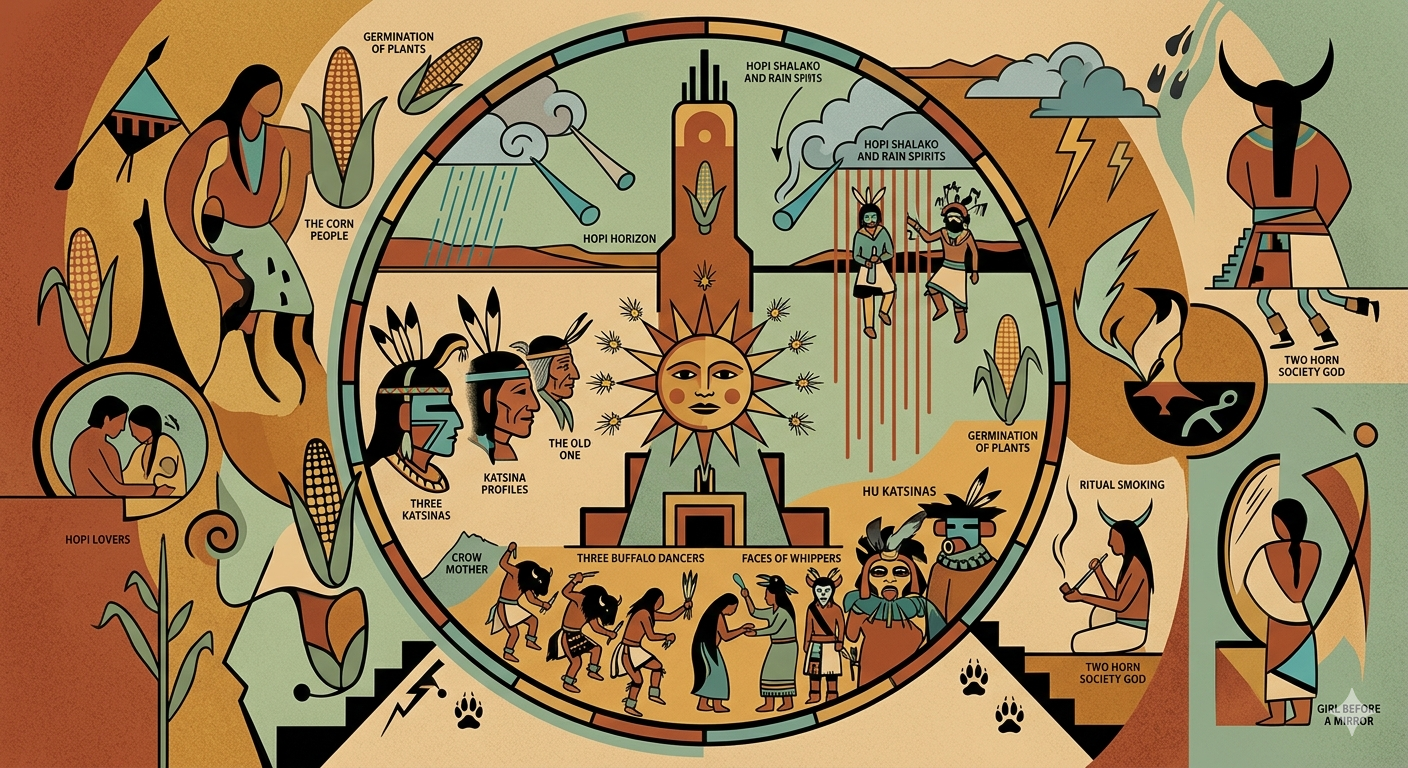
Interpretation of a Contemporary Hopi Masterwork Honoring the 17 Artist Hopid Works
An interpretation of a contemporary Hopi modern master painting, honoring the collective themes, iconography, and palettes of the 17 works featured in the Artist Hopid exhibition:
The image seamlessly bridges ancient geometric abstraction with rich cultural storytelling. In the center, a striking ceremonial composition incorporates elements from "Faces of Whippers" and "Three Katsinas," showcasing abstract spirit faces and Katsina profiles layered with rich textures. Encircling the composition is a stylized circular border representing the unity and cycle of the Hopi world.
Throughout the piece, traditional Hopi symbols are woven together: fine vertical red lines signifying life-giving rain descending to the earth, star-like motifs representing corn tassels and spiritual radiance, and stylized rain clouds from the "Cloud Blowers" and "Shalako Rain Spirits" themes. The scene is grounded by abstract figures resembling "Three Buffalo Dancers" and corn people, with stylized horizons evoking a "Summer Sunset." The entire piece uses a sophisticated palette characteristic of Milland Lomakema and the collective, dominated by deep earth tones-terracotta, rich ochre, sage green, and sand-rendered with a clean gouache-like application that rejects the flat "Bambi Style" in favor of deep geometric abstraction and symbolic complexity.
Why Art Remains the Ultimate Economic Safe Harbor
The $2.6 Billion Rebound:
Why Art Remains the Ultimate Economic Safe Harbor
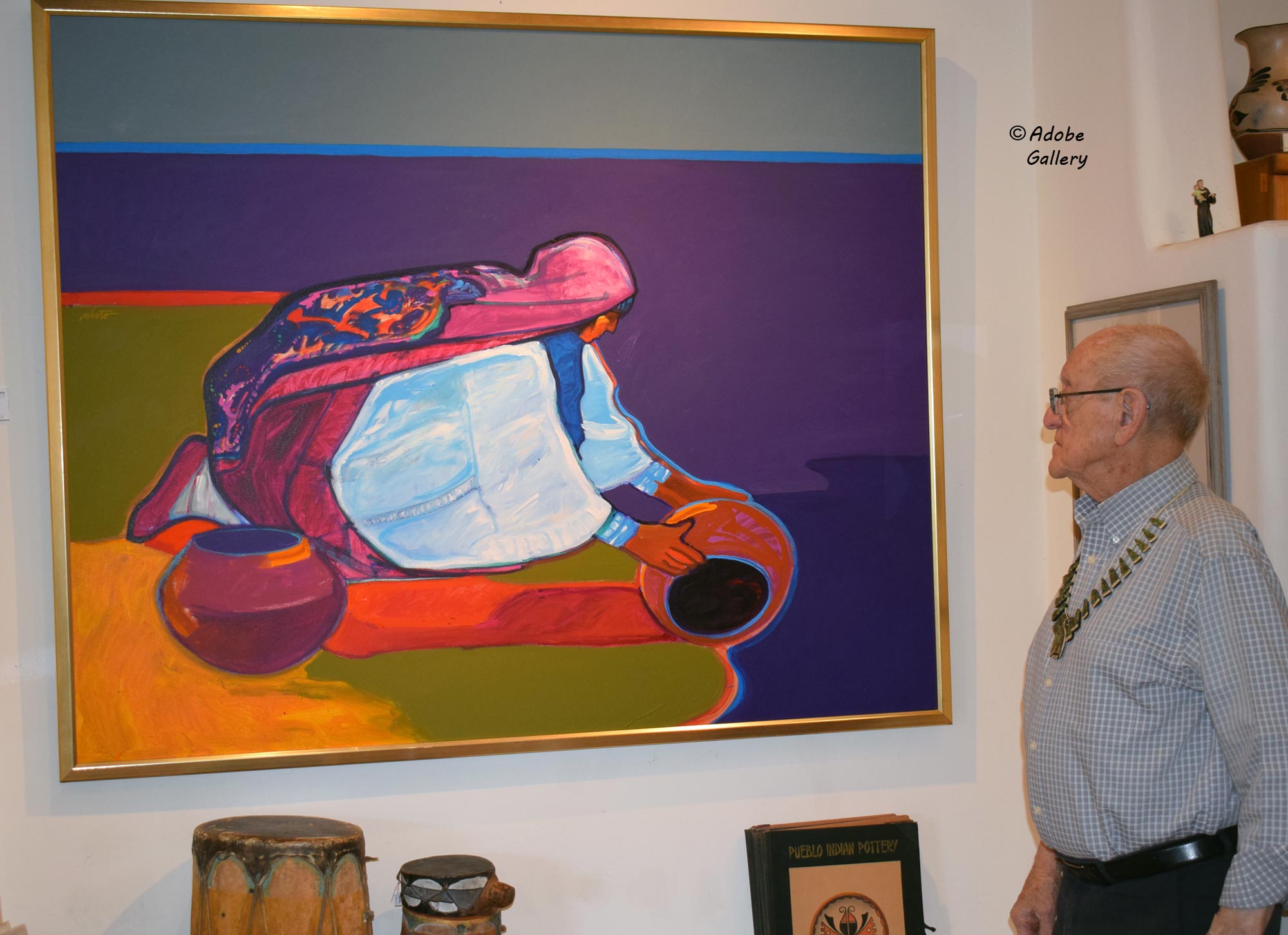 In the world of high finance and fine aesthetics, few things signal a market's health quite like the major spring auction season. This week, a headline from The New York Times caught our eye: "3 auction houses aim to sell $2.6B worth of art in week."
As Christie's, Sotheby's, and Phillips prepare to move a staggering amount of inventory, the story beneath the numbers is one of resilience, strategic investment, and a return to "trophy" assets.
The Current Landscape: A Bullish Turn in Uncertain Times
The art market has spent the last few years in a state of "retrenchment"-a period of pulling back and re-evaluating. However, despite global headwinds including inflation and geopolitical instability, the luxury art industry is feeling bullish again.
According to the report by Tim F. Schneider, Julia Halperin, and Zachary Small, the industry is projecting sales 60% higher than last May. This isn't just about spending money; it's about a flight to quality. We are seeing a pivot away from the "speculative bidding" on ultra-contemporary artists that defined the last few years, and a return to "canonical works"-the blue-chip investments that hold their value regardless of the headlines.
Why Invest in Art During This Economy?
While traditional markets (like stocks and crypto) can be volatile, fine art offers a unique set of advantages for the modern investor:
1. A "Safe Harbor" in Inflationary Seas The article notes that works by masters like Jackson Pollock and Mark Rothko act as the "equivalent of safe harbor." When the value of currency fluctuates, tangible assets-especially those with historical significance-tend to retain or increase their value.
2. Scarcity and Provenance Unlike digital assets or mass-produced goods, the supply of masterpieces is finite. The current auction season is fueled by estates of legendary patrons like S.I. Newhouse and Agnes Gund. As Betsy Bickar of Citi Wealth notes, "You can't invent better provenance for some of these pieces."
3. Art as a Store of Value Charles Stewart, CEO of Sotheby's, highlights that in a "world that feels very fragile," art remains a "very good store of value." It is an asset class that exists outside the immediate reach of AI-driven market disruptions and short-term political cycles.
The Shift from Speculation to History
One of the most interesting takeaways from the current market shift is the move away from "imperfect headliners" (like the infamous $6.2 million banana) back to substantive, historical works. The market is maturing. Investors are no longer just looking for the next big trend; they are looking for "trophy artworks" that define art history.
Final Thoughts
Whether you are a seasoned collector or an artist looking to understand the value of your own craft, the current $2.6 billion auction goal proves one thing: Art is not just a luxury; it is a cornerstone of wealth preservation. In an era of digital uncertainty, the physical, emotional, and historical weight of a masterpiece remains an unparalleled investment.
Sources:
-
Schneider, T. F., Halperin, J., & Small, Z. "3 auction houses aim to sell $2.6B worth of art in week." The New York Times.
-
Market Insights via Christie's, Sotheby's, and Phillips Spring Auction Forecasts.
-
Economic Commentary by Citi Wealth and Sotheby's Executive Leadership.
Is AI used in any of the photography on your website?
A fair and important point to raise: Is AI used in any of the photography on your website?
Transparency is vital, especially when it concerns the representation of Indigenous cultures and traditional arts. Here is a direct and thoughtful response to this feedback while maintaining the integrity of our gallery:
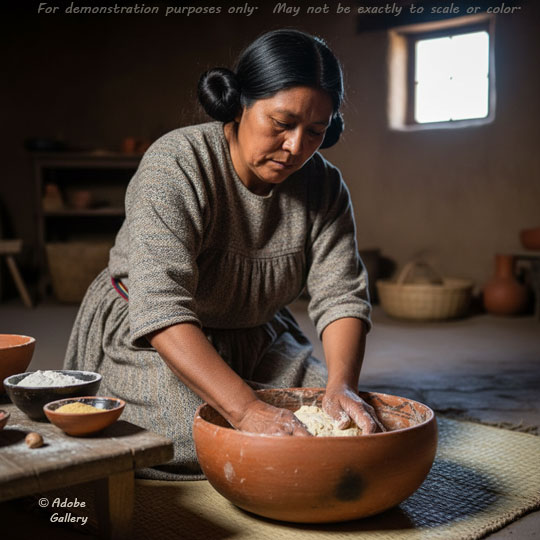
We hear you, and we appreciate your feedback. You are correct-specific images are generated using AI tools to serve as a visual illustration of the process, rather than a historical photograph.
We understand why that might be disappointing. In the world of fine art and antiquities, 'authenticity' is everything. Here is why we occasionally use these illustrations:
- Respecting Privacy & Tradition: Traditional Pueblo bread-making and pottery-working are often private or sacred activities. Many historical photos are under strict copyright or were taken without the full consent of the subjects. AI allows us to create a respectful 're-enactment' of the atmosphere without infringing on private ceremonies or families.
- Contextual Storytelling: Our goal is to help collectors visualize how a utilitarian piece-like a Laguna dough bowl-was actually used in a home. Since high-resolution, color photography didn't exist when many of these historic bowls were first used, these images help bridge that gap for the modern eye.
- The Art Remains the Star: We want to be very clear: while the illustrative background might be tech-generated, the artworks we sell are 100% authentic, hand-wrought National Treasures.
We agree with you that nothing beats the soul of a real human moment. We will continue to use AI sparingly and strictly for demonstration, ensuring that the focus remains on the incredible, real-world skill of the Pueblo artists. These National Treasures are, in our opinion, highly undervalued, and we want to do everything we can to show the world the beauty of the life they came from.
Katsina or Kachina?
The short answer is that they refer to the same sacred beings, but the difference lies in linguistics, respect for cultural preference, and the evolution of how the Hopi language is written.
Here is a breakdown of why you see both terms:
1. The Linguistic Shift (Phonetics)
-
Kachina: This is the older, Anglicized spelling that became popular in the late 19th and early 20th centuries. Anthropologists and early collectors wrote it phonetically based on what they thought they heard. The "ch" sound was an approximation of the native pronunciation.
-
Katsina (plural: Katsinam): This is the more accurate spelling based on the modern Hopi Dictionary. In the Hopi language, the sound is closer to a "ts" (as in "cats") than a "ch" (as in "church").
2. Cultural Preference
Most contemporary Hopi people and scholars prefer the spelling Katsina. It is seen as a more respectful and accurate representation of their own language. Many galleries and museums (like the Smithsonian) have transitioned to "Katsina" to align with the wishes of the Pueblo communities.
3. The "Three-Fold" Meaning
Regardless of the spelling, the term refers to three distinct but connected things in Pueblo (primarily Hopi and Zuni) culture:
-
The Spiritual Beings: Powerful spirits that bring rain, fertility, and protection. They are the messengers between the people and the Creator.
-
The Masked Dancers: The men in the community who personify these spirits during ceremonies in the plazas and kivas.
-
The Dolls (Tihu): The wooden carvings (traditionally made from cottonwood root) given to children, not as toys, but as educational tools to help them learn about the different spirits.
A Legacy of Stewardship and Responsibility: Celebrating Treasures from the Collections of Friends
A Legacy of Stewardship: Treasures from the Collections of Friends
There is a profound sense of responsibility that comes when we are entrusted with the estates of dear friends. These aren't just "items" to us, but they are the physical manifestations of the passion and discerning eyes of people we knew and respected.
A Note on Our Responsibility
To the families who have trusted us with these collections: we thank you. Our goal is not simply to "sell" these items, but to act as stewards, ensuring that every katsina doll, every strand of turquoise, and every vessel finds a home where its history will be told and its beauty respected.
Photography Standards & Digital Integrity
Photography Standards & Digital Integrity
At Adobe Gallery, we have spent 50 years honoring the artistry of the Southwest. Our goal is to translate the physical beauty of an art object — its texture, color, and presence — into a digital format that allows you to collect with confidence from anywhere in the world. We utilize professional studio tools to document our collection and occasionally employ AI to help you visualize an item's scale and character in a home environment.
To achieve this, we follow a rigorous set of standards in our digital presentation:
Technical vs. Contextual Imagery
We provide two distinct types of imagery for our collection:
-
Technical Portraits: These are captured in our gallery studio under controlled, neutral lighting. These images are color-corrected using professional software (like Adobe Lightroom, Photoshop and InDesign) to ensure the most accurate representation of the artist's original pigments and natural condition.
-
Contextual Visualizations: We occasionally use advanced digital tools, including Artificial Inteligence (AI), to place an object in a "living" environment, such as a studio or a traditional Santa Fe home. These images are intended to help you visualize scale, size, and lifestyle fit.
-
The Science of Color: Why Screens Vary Despite our best efforts, digital images can never perfectly replicate the experience of seeing a piece in person. This is due to several technical factors:
- RGB vs. Print: Most digital screens use a three-color light system (RGB or RED, Green, Blue), whereas professional printing and the physical world operate on a more complex spectrum using four colors.
- Screen Calibration: Every device — from a Smartphone to a high-end desktop monitor — is calibrated differently. A turquoise stone may appear more green on one screen and more blue on another. Because digital screens (RGB) render colors differently than physical light, we provide multiple views to capture each piece's true nuance; however, please note that AI-generated environments are illustrative and may contain minor inaccuracies. The full depth and pigment of these masterworks are best realized in person or within your own home.
- Lighting Environments: A piece of pottery will look different under the morning sun of a Santa Fe window than it does under the incandescent lights of a gallery. We provide multiple photos in varying light to help illustrate these shifts.
Our Commitment to Transparency and Ethics
To maintain absolute integrity, we never use digital tools to obscure defects or imperfections.The tools we use — whether it is the precision of Adobe Lightroom, Photoshop or InDesign for our layouts or modern visualization software — are employed to enhance your experience as a collector. However, we believe that art is a physical experience. We always encourage collectors to visit the gallery to see a piece "in the flesh" for real-time viewing.
"The true life of a piece is only fully realized when it enters your home and lives in your light."
Gamut Image Source: Getty Images
Discrepancy in the Origins of 'Bambi'
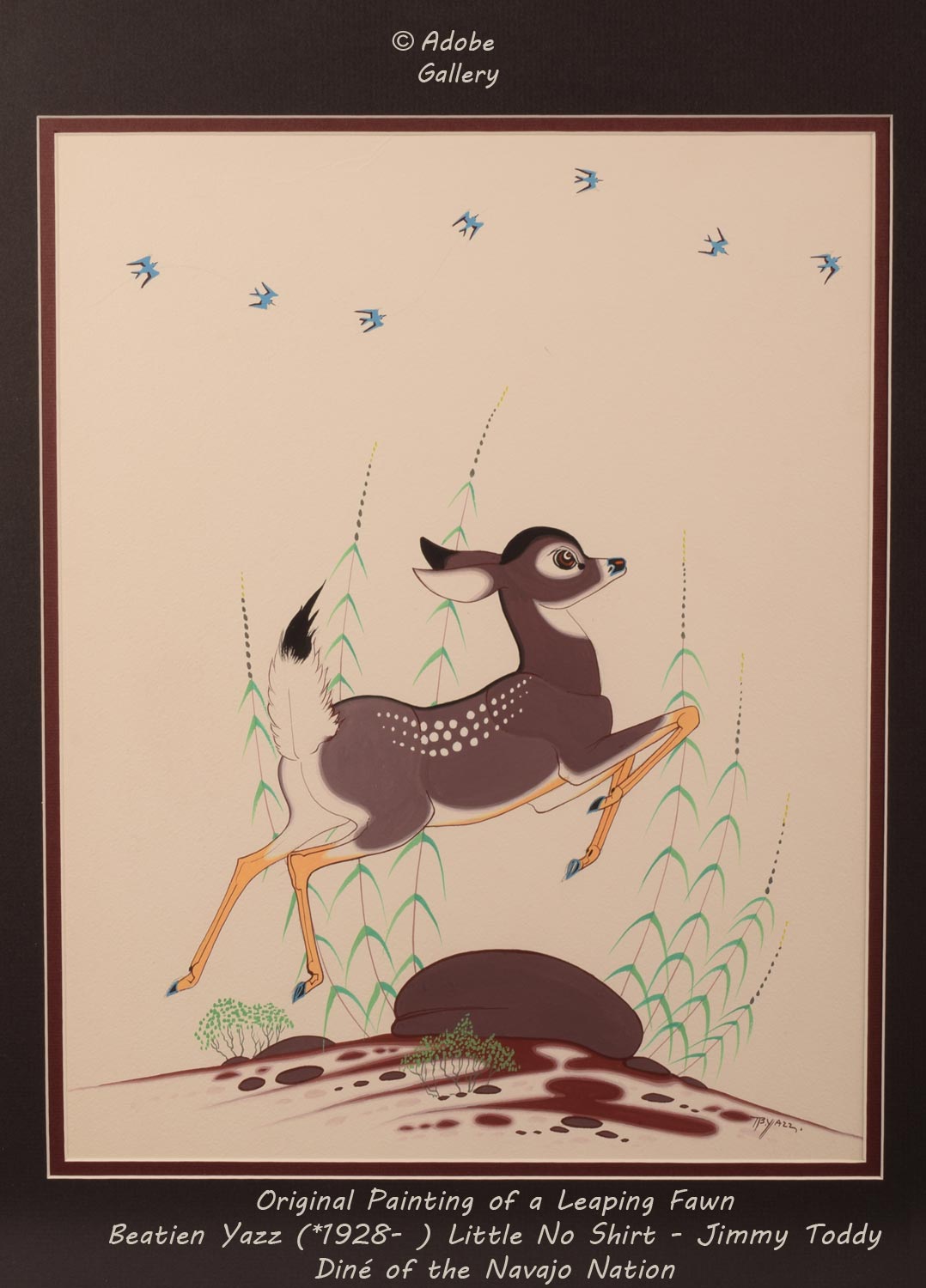
"Given the widespread popularity of Walt Disney productions, it is not surprising that Taos Pueblo artist Pop Chalee's work has been dismissively labeled as 'Bambi art,' or imitative of the stylized, wide-eyed animals popularized by the Walt Disney Studio. HOWEVER, Pop Chalee first began painting forest images in 1936; the Disney studio did not begin sketches for bambi until 1937, and the film was not released until 1941.
Source: BLOG: NATURE AND CULTURE, FRIDAY, APRIL 27, 2007 (this will take you to another website)
Beyond Utility: The Sacred Art of Pueblo Pottery
When pottery is referred to as "utilitarian," it often overlooks the pueblo people's perspective. While pottery may serve utilitarian purposes, it holds deeper meanings for the potters. They do not view their vessels as mere utensils. This is evident in the time and effort potters invested in beautifying a water jar, treating each vessel as a sacred gift from Mother Earth.
The use of the terms "prehistoric," "historic," and "utilitarian" is not necessarily wrong or insensitive, provided we understand them as descriptive terms and acknowledge the significance of vessels at the pueblo, beyond their utilitarian function. As collectors, we admire the beauty of a vessel with its elaborate designs and appreciate the effort put into making it so.
The Song of the Lark
From Women and Vessels in The Song of the Lark and Shadows on the Rock
by ANGELA CONRAD
Their pottery was the most direct appeal to water, the envelope and sheath of the precious element itself" (334). Sharon O'Brien explains how during her sojourn in the canyon, Willa Cather, too, "felt herself recipient of a mode of creativity marked by receptivity rather than self-assertion" (415). She was, according to Sergeant, interested in the ancient women who "under conditions of incredible difficulty" had "made beautiful objects for daily use out of riverbottom clay" (O'Brien 415). Thus when Thea's revelation about art hits her, it is closely tied to the idea of women and spirituality:
The stream and the broken pottery: what was art but an effort to make a sheath, a mould in which to imprison for a moment the shining, elusive element which is life itself,-life hurrying past us and running away. . . . The Indian women had held it in their jars. In singing, one made a vessel of one's throat and nostrils and held it on one's breath, caught the stream in a scale of natural intervals. (334-35)
- Willa Cather The Song of the Lark (1915)
https://cather.unl.edu/scholarship/catherstudies/11/cs011.conrad
What is a Heartline?
The heartline is used primarily by Zuni Pueblo potters and can be seen in many animals – usually a deer, called a Heartline Deer. The line from the mouth to the heart signifies the "breath of life."
Specifically, the heartline deer motif is an innovation of the 1860-1870 period (see image below). It was previously referred to as an antelope, the meaning of which was provided by John G. Bourke in 1881:
The line running down from the animal's mouth and terminating at its heart may be described as a "prayer." It is a pictographic invocation to the "spirit of the antelope" to incline the hearts of the antelope on earth to put themselves in the way of the Zunis that they may kill them for food. I made careful inquiries upon this point and know that I have obtained the correct explanation.
GROUNDED IN CLAY the spirit of Pueblo Pottery
GROUNDED IN CLAY the spirit of Pueblo Pottery (go there now)
Grounded in Clay is a collaborative exhibit curated by the Pueblo Pottery Collective and organized by the School for Advanced Research and New York's Vilcek Foundation. The School for Advanced Research, a not-for-profit educational institution, was established in 1907 to advance innovative social science and Native American art. Its 15-acre residential campus sits on ancestral lands of the Tewa people in O'gah'poh geh Owingeh or Santa Fe, New Mexico.
Native American Heritage Day
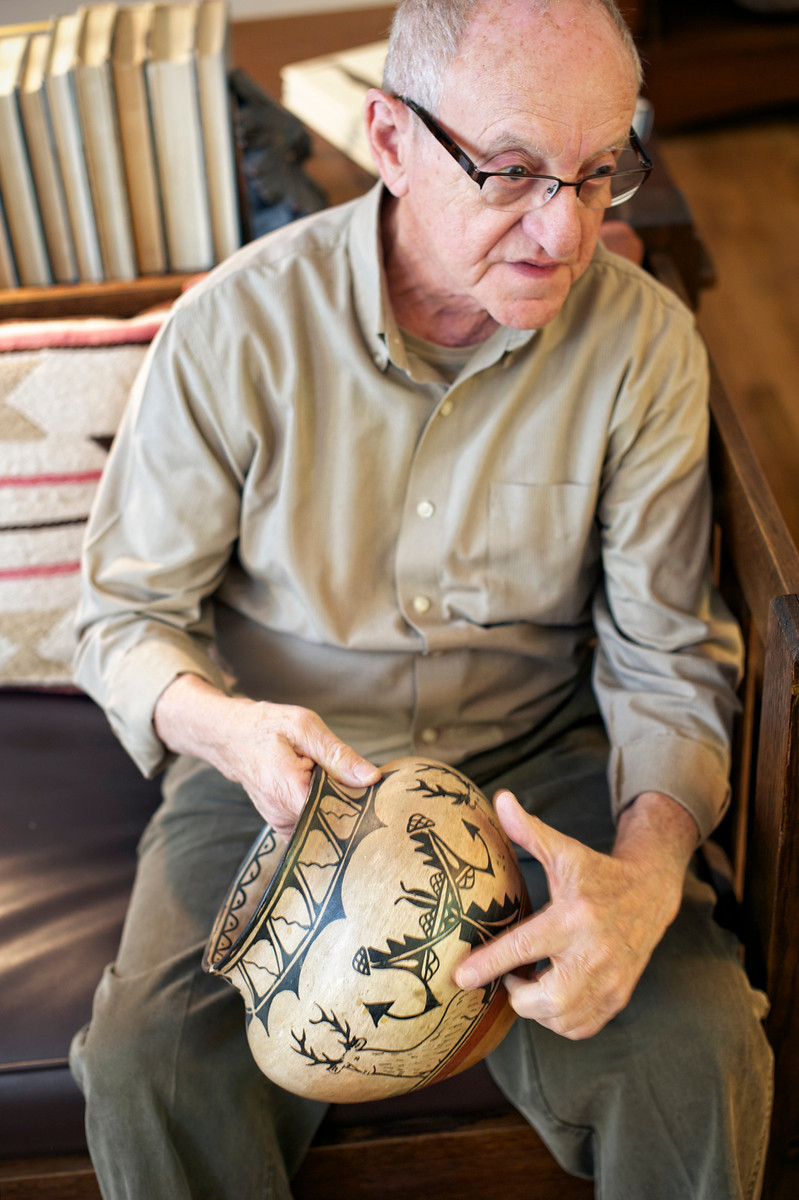 anIt is Black Friday but, more importantly, it is Native American Heritage Day, celebrated annually on the day after Thanksgiving, this year November 25, 2022. It is a day we celebrate the lives of our Native American population and, for many of us, a reminder to look at our collections of Native American art, whether it's a collection of pueblo pottery, Navajo textiles, Native jewelry, Hopi Katsina dolls, Zuni fetishes, or many other beautiful and meaningful creations we appreciate today as art objects.
What is Warp and Weft?
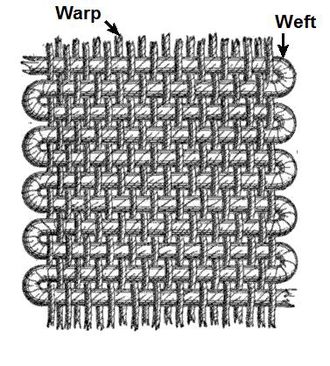
In weaving, the weft (sometimes woof) is the term for the thread or yarn which is drawn through, inserted over-and-under, the lengthwise warp yarns that are held in tension on a frame or loom to create cloth. Warp is the lengthwise or longitudinal thread in a roll, while weft is the transverse thread. A single thread of the weft, crossing the warp, is called a pick. Terms do vary (for instance, in North America, the weft is sometimes referred to as the fill or the filling yarn). Each individual warp thread in a fabric is called a warp end or end. The weft is a thread or yarn usually made of spun fibre. The original fibres used were wool, flax or cotton. Today, man-made fibres are often used in weaving. Because the weft does not have to be stretched on a loom in the way that the warp is, it can generally be less strong. The weft is threaded through the warp using a "shuttle", air jets or "rapier grippers." Hand looms were the original weaver's tool, with the shuttle being threaded through alternately raised warps by hand. A useful way of remembering which is warp and which is weft is: 'one of them goes from weft to wight'. -Wikipedia
More specifically:
"All twill weaves are produced by floating the weft elements over more than one warp at a time to create a raised pattern of color and texture. Three twill-weave techniques were used by both Navajo and Pueblo weavers: plain twill forming diagonal floats; herringbone twill, in which the diagonal floats alternate direction to form a vertical zigzag or chevron pattern; and a diamond twill, in which the herringbone patterns are woven in such a manner as to create concentric diamond patterns." Reference: Kaufman, Alice and Christopher Selser. The Navajo Weaving Tradition 1650 to the Present: page 138.