



Santa Clara Pueblo Tall Black Bear Paw Jar by Sharon Naranjo Garcia - C3837A
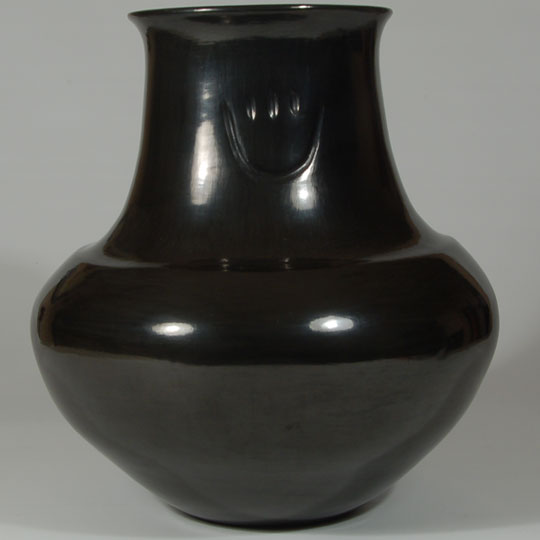 Many of today's potters began working with clay while very young. Most learned the art of making pottery from an adult family member. Sharon Naranjo Garcia (1951 - ) is no exception. She was raised by her grandmother, Christina Naranjo, and began making small animals using her grandmother's clay. From there, she developed into a full-fledge potter.
Painting of Navajo Couple in their Buckboard by Robert Chee - C3837G
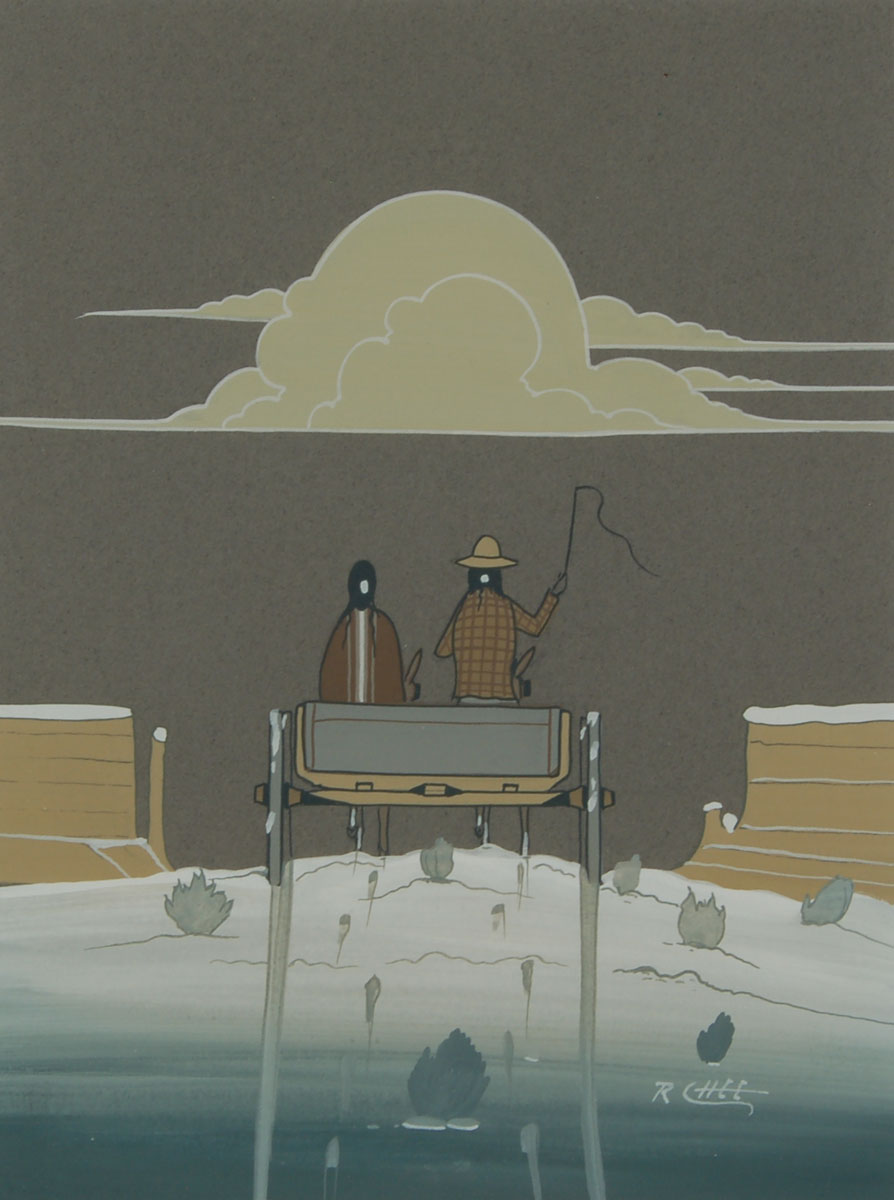 Robert Chee (1937-1971) Hashke-Yil-e-Cale has presented a nostalgic memory of the Navajo days of old when there were buckboards instead of pickup trucks. This is such a beautifully presented family portrait. The lines are simple but definitive in setting the scene. The clouds overhead and the dark sky set the scene for pending nightfall and the couple is quite likely returning to its hogan after visiting the trading post to possibly sell a Navajo rug or pawn some Navajo jewelry. The buttes framing the edges of the painting define the features of the Navajo Reservation. Snow on the buttes and ground reveal the cold winters experienced on the Reservation.
SPECIAL EXHIBIT: NACIMIENTO - NOW OPEN, Join us and explore the wonderful world of Nacimientos.
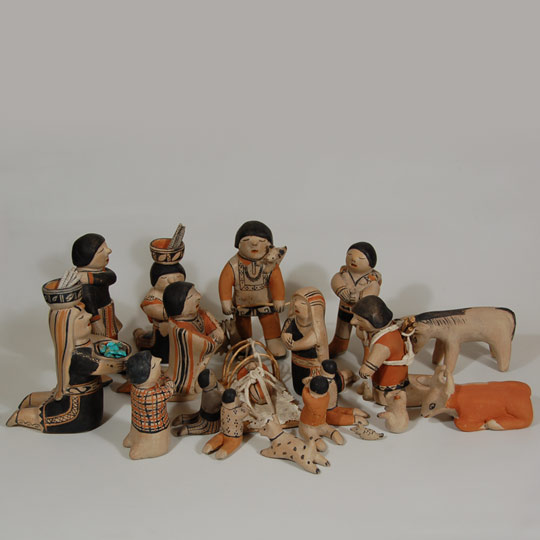 Since the 1970s, nativity sets have been popular with collectors as highlights of their Christmas decorating theme. These popular folk art pottery sets feature the Christian celebration of the birth of Jesus with a decidedly Native American twist. Adobe Gallery continues its holiday tradition begun in 1979 of exhibiting pueblo pottery "Nacimientos" or nativity sets made by New Mexico pueblo potters.
In their own tradition, the Indian artisans have made the figurines in the likeness of Indians. The Blessed Mother may wear her hair up in a "chonga", be wrapped in an Indian blanket, and be wearing moccasins. Joseph may have long, wrapped braids, moccasins and an Indian sash. The Three Wise Men may bring gifts of Indian bread, green chilies, a rabbit, or maybe a bowl of stew or several ears of corn. Baby Jesus may be dressed in beaded buckskin or wrapped in an Indian blanket. The animals around the manger may be black bears, deer, antelope or rabbits.
The artists represented here are:
Helen Cordero - Cochiti Pueblo
Ada Suina - Cochiti Pueblo
Seferina Ortiz - Cochiti Pueblo
Felicita Eustace - Cochiti Pueblo
Snowflake Flower - Cochiti Pueblo
Original Loloma Stone Lithograph “Father Lizard” by Charles Loloma - C3838J
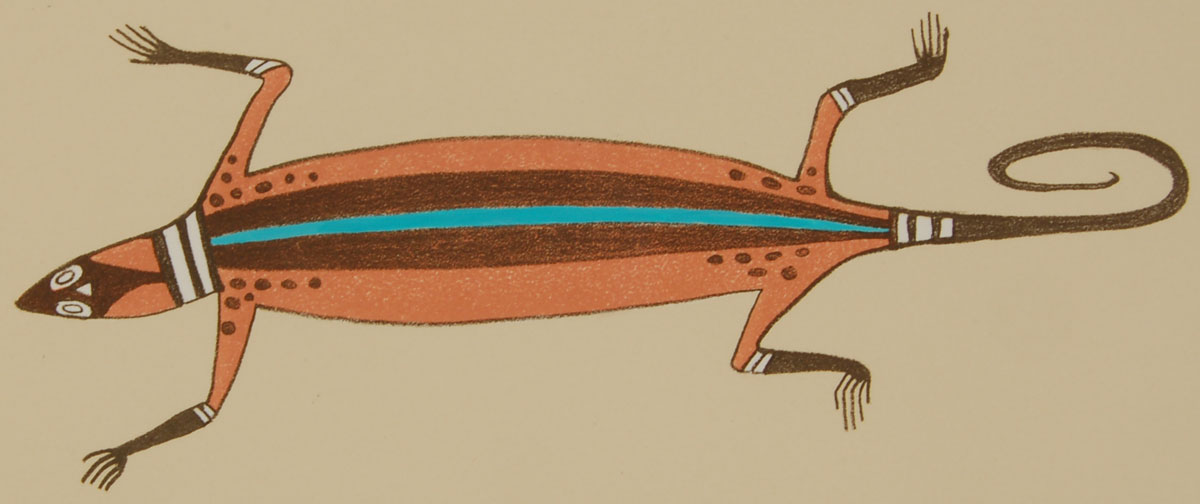 Charles Loloma is best known for his impact on Indian jewelry design, but, before venturing into jewelry design, he was first a ceramicist and a painter. While attending High School at the Village of Oraibi on the Hopi Reservation, he studied under the well-known Hopi artist Fred Kabotie. He attended the Phoenix Indian School and, while still a student, was selected by Kabotie to assist in the reproduction of the Awatovi murals for the Museum of Modern Art in New York.
Original Loloma Stone Lithograph “Medicine Man” by Charles Loloma - C3838L
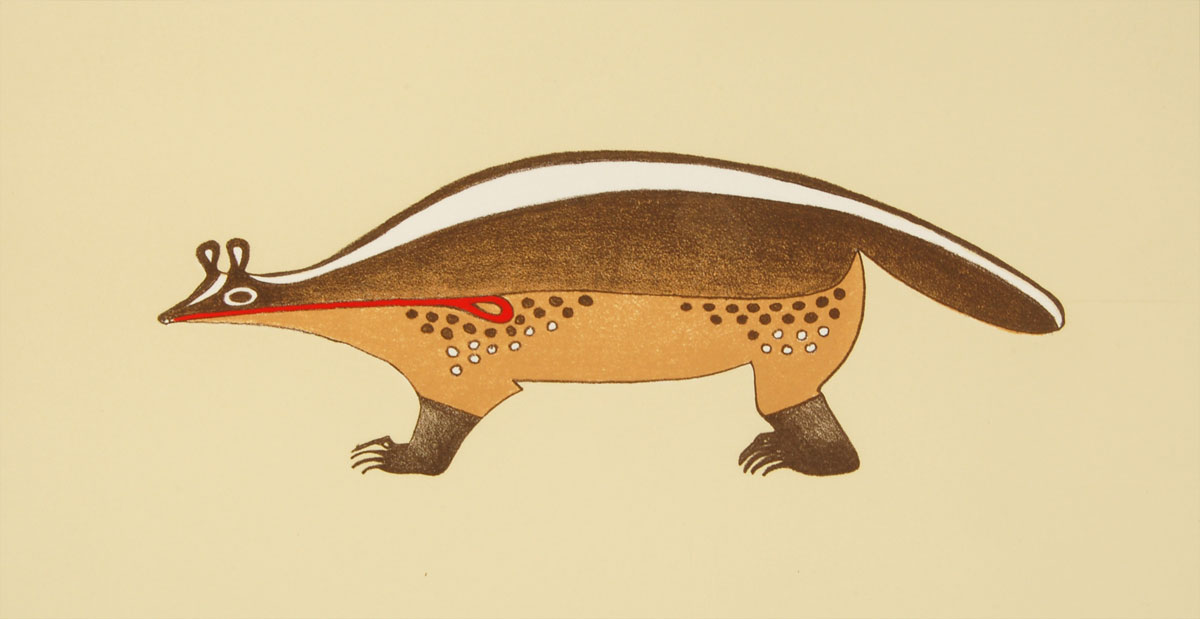 This image, which Charles Loloma labeled "Medicine Man," was executed as a stone lithograph. which is a process by which an artist draws an image with a crayon on a large flat stone that has a smooth surface. Rosin and talc are then brushed on the image to protect and prepare it for the etching process. An acidified gum Arabic solution is then spread over the image. It reacts with the crayon to produce a "grease reservoir" which will accept the ink in the printing process. In the surface areas where there is no crayon, the solution leaves a water absorbent gum jacket which resists ink. After processing, the printer washes out the crayon with a solvent and rolls printing ink over the image.
Original Loloma Stone Lithograph “Mudheads” by Charles Loloma - C3838K
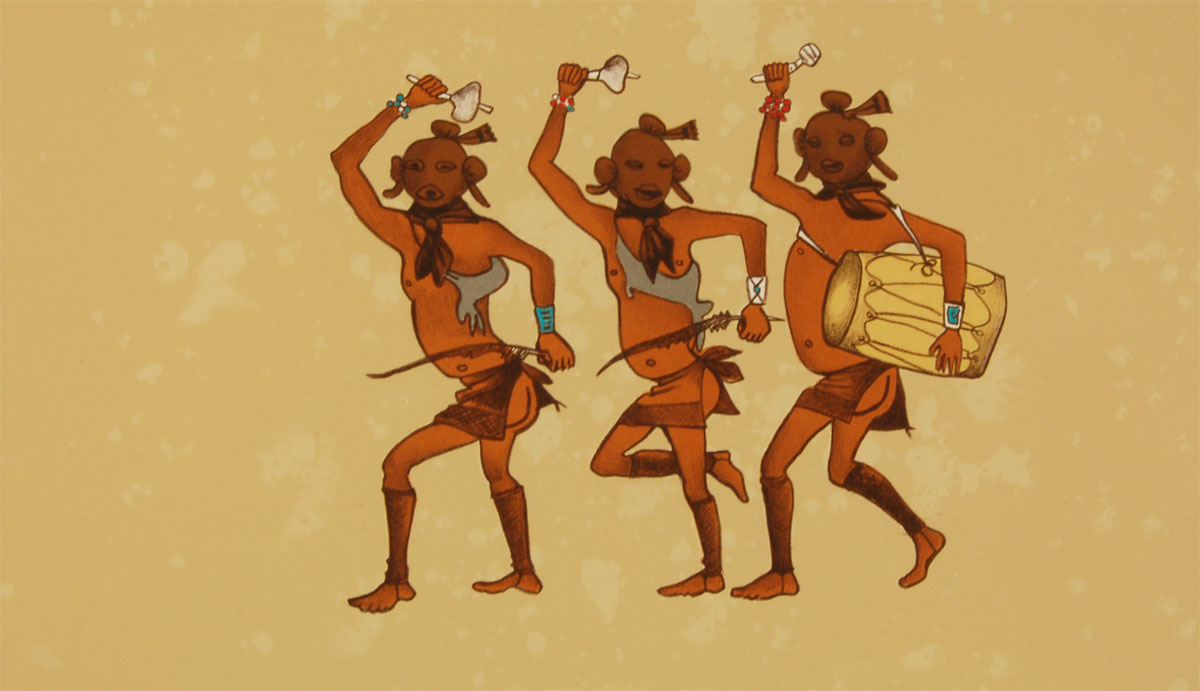 Charles Loloma is most famous for his imaginative jeweler but he also was a painter, a sculptor, a potter, a basket maker, a designer of houses and a stained glass artist. He then became a lithographer in 1980.
Loloma was born in the village of Hotevilla on the Hopi Reservation in 1920. His father was a weaver and his mother a basket maker. As a child, he began painting and by the time he graduated from High School, he had already illustrated a book for Edward Kennard. Loloma's jewelry made him a famous and wealthy man but it did not quench his thirst for finding another manner of expressing his artistic talents.
Original Loloma Stone Lithograph “Qöqöle” by Charles Loloma - C3838i
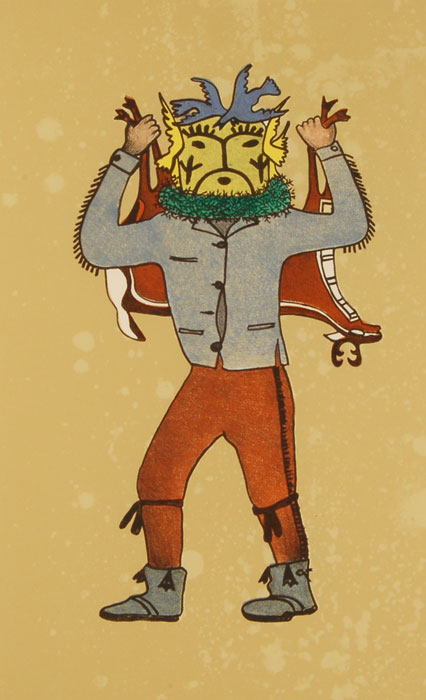 Charles Loloma is internationally known for his outrageously beautiful jewelry creations, but he was equally talented in making pottery and in paintings and lithography. He has often been overlooked in these latter categories, but he should not be. Multi-talented artists who are equally at ease in various mediums are not the norm. Some who come to mind are Michelangelo, Leonardo de Vinci, Allan Houser, and Charles Loloma. Of course there are others, but these stand out in most people's minds.
Tohono O´odham Shallow Basketry Bowl with Star Design - 24768
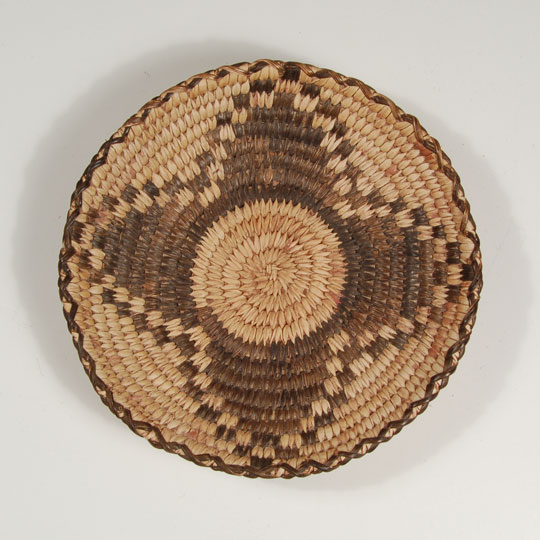 The name for the Papago Indians comes from the Pima word Papavi-ootam, meaning "Bean People," which was converted to Papago by the Spaniards. The people have, in the last few decades, returned to their original tribal name, Tohono O'odham. The word used by tribal members for themselves is Aw-aw-tam, meaning "the people."
Dyes are not used in their baskets. The materials are used in their natural colors. The foundation is comprised of bear grass and the covering materials are yucca leaves, in a sun-bleached state, and devil's claw for the brown decoration.
Papago Shallow Basketry Bowl with Flower Design - 24767
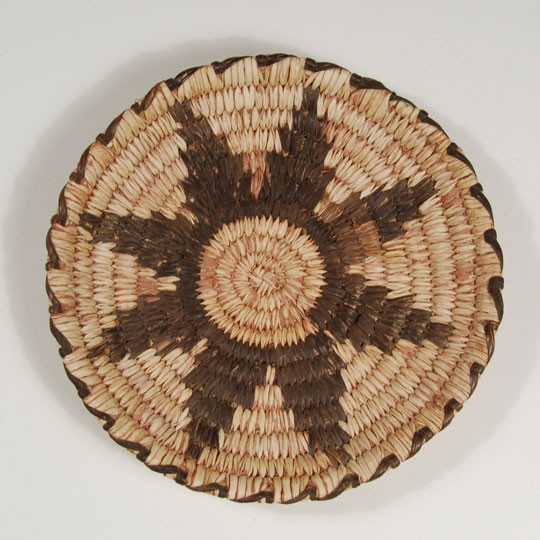 Basketry is the oldest of all Indian crafts which still exists today. Most tribes made baskets of various sizes and shapes for their own use and then eventually began making smaller baskets for sale to tourists, visitors and collectors. It is often quite difficult to distinguish between baskets of the Tohono O'Odham and their neighbors the Akimel O'Odham because of the proximity of the two tribes and intermarriage amongst the members. Generally, the former's baskets have larger coils and looser stitches than those of the Akimel O'Odham, which generally are of finer stitch and finer quality.
Mixed Media Painting “Turtle Walk” by David Dawangyumptewa - C3624H
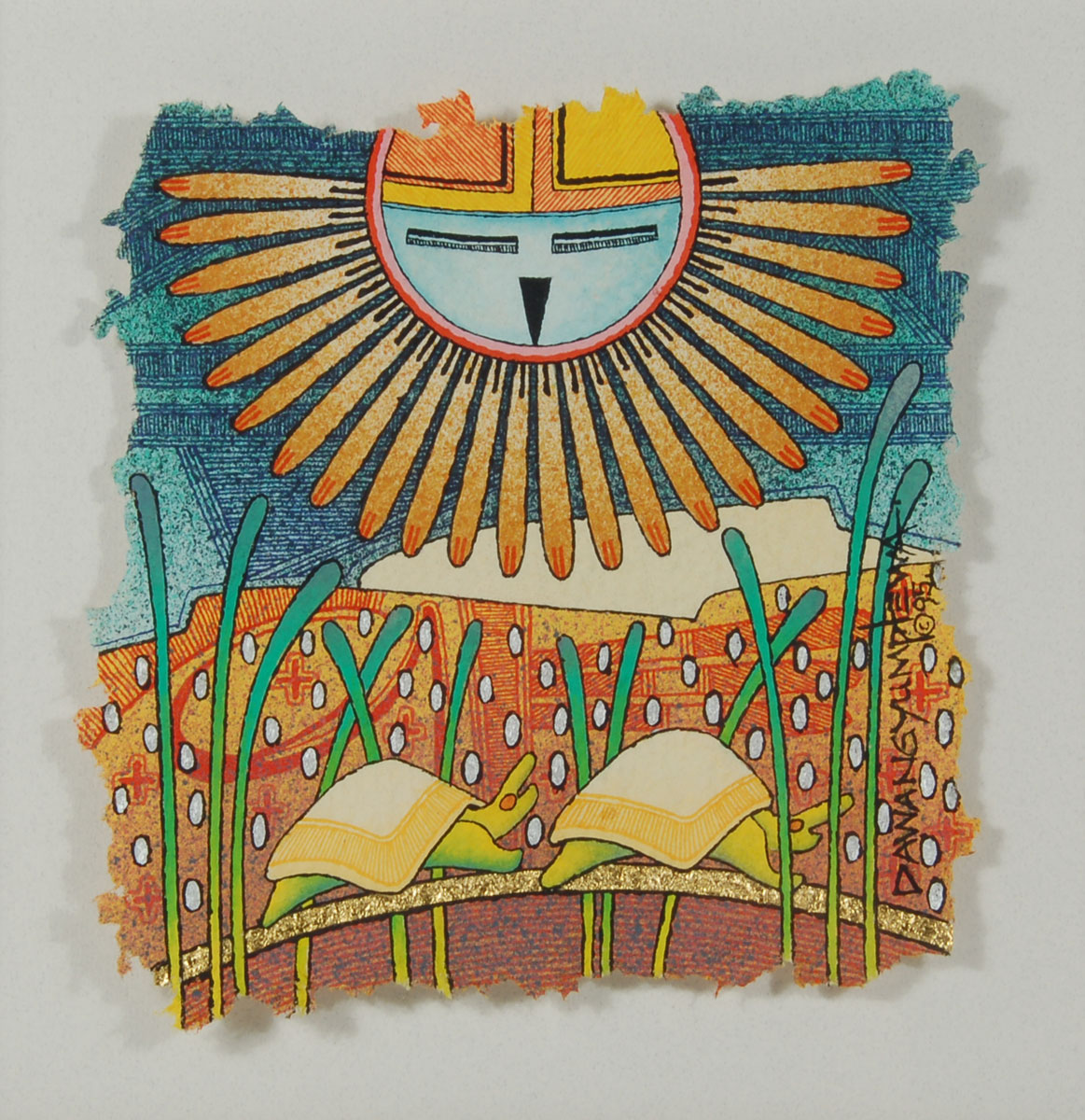 In this amazingly detailed gouache painting, David Dawangyumptewa presents a tranquil scene of a pair of turtles slowly walking through blades of grass with a beautiful colorful Sun image looking down on them. The painting was executed in gouache with gold leaf and silver paints on handmade paper with deckled edges. The images flow to the edges of the paper.
Navajo Sterling Silver Lidded Pill Box - C3838A
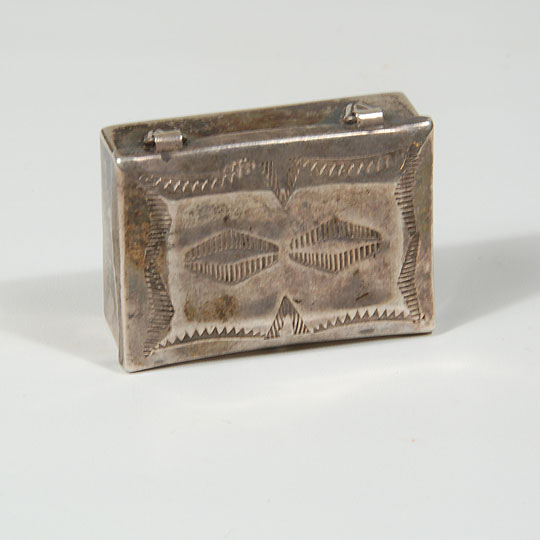 When the railroad came to New Mexico in 1880, it brought with it tourists eager to purchase souvenirs to remind them of their adventure west. By the early 20th century, Fred Harvey had built a chain of hotels along the railroad catering to the tourist trade. Making items to satisfy this new and growing market became a profitable business for the Navajo silversmith. Items such as combs and hair ornaments, brooches of all types, tie tacks and clips, pendants, cuff links, watchbands, key chains, silver tobacco flasks, and silver pill boxes, as well as other items became very popular with the buying public.
Small Navajo Square Sterling Silver Lidded Pill Box - C3838B
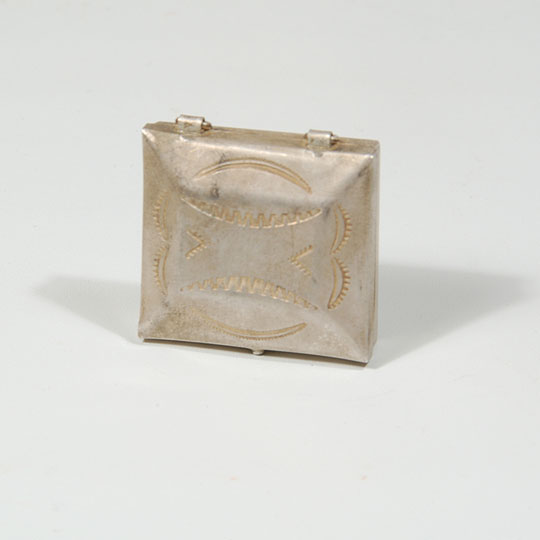 This is an older, probably circa 1950s, sterling silver lidded box with traditional stamping on the lid and handmade silver hinges on the back. This small box was constructed from sheet silver stock and has a beveled lid which is hinged to the box with a pair of handmade silver hinges. Sheet silver was introduced in the 1920s by the federal Arts and Crafts Board. The sheets are .925 fine and come in several thicknesses.
Navajo Sterling Silver and Turquoise Lidded Pill Box - C3838C
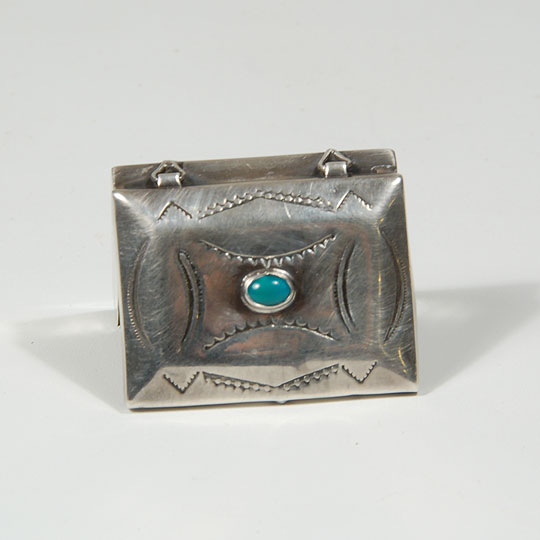 Silversmithing among the Navajo began sometime in the mid-1800s, possibly during the time of their internment at Bosque Redondo in southern New Mexico. The early days of silversmithing consisted of jewelry items such as bracelets, necklaces and earrings, and the source of silver was most often Mexican silver coins.
By the beginning of the 20th century, ingot silver and then sheet silver became the source of raw materials, and the demands of the buying public became the inspiration for ideas.
Sterling Silver Navajo Double Candle Holder - C3838D
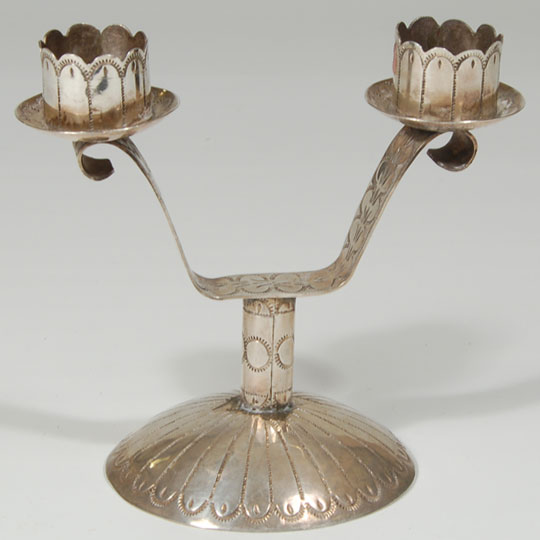 It is uncertain when Navajo silversmiths began making candle holders but it is quite likely that it was in the early 20th century at the suggestion of traders who were constantly looking for items to sell to local residents as well as tourists.
Merchants like the Maisel Company in Albuquerque had smiths working on-site to whom they furnished materials and the smiths furnished the labor. Such companies were likely an inspiration for new and unusual items. The Fred Harvey Company was another source of inspiration for smiths.
Original Drawing “Untitled—Seated Male” by R. C. Gorman - C2663J
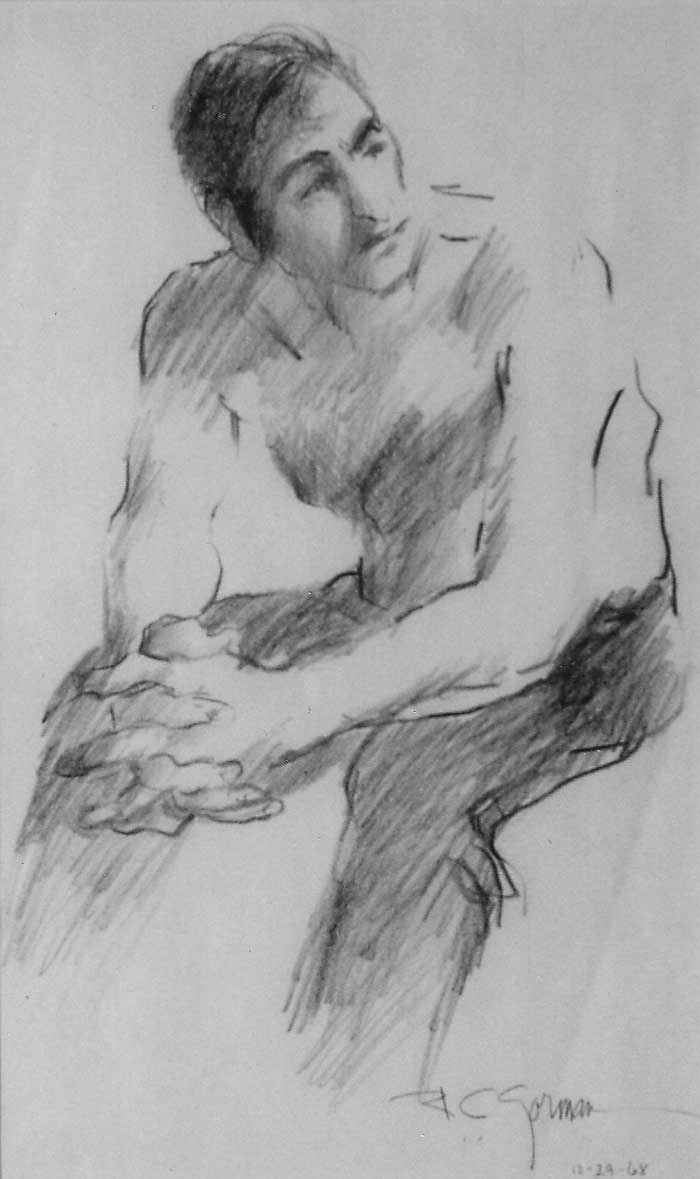 Gorman drew this pencil drawing of a seated male with pants and no shirt on December 29, 1968 at the time he was living in San Francisco. I showed the drawing to Gorman around 1995. He remembered drawing it but did not recall who the model was or to whom he gave it. He speculated he gave it to the model. I purchased it from an estate in San Francisco in the mid-1980s and it was probably the estate of the model.
Original Oil Pastel Drawing “Marguerite” by R. C. Gorman - C3836
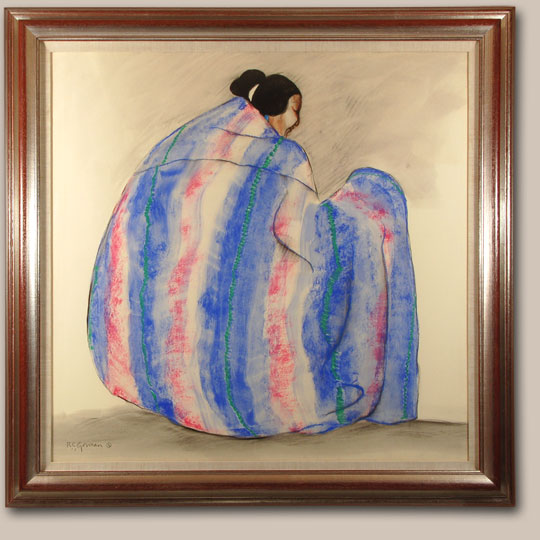 This original pastel drawing by R.C. Gorman was executed in 1985, a period recognized as possibly his best. It illustrates his ability to exhibit the full extent of his intended image through a minimum of lines. The full body of the female is so elegantly displayed in one simple line drawing, with the face and hair filled in with more detail.
In his portrayals of women, Gorman had no peers. His drawings are as individualistic as the models he used. The body of his work was directed toward the Navajo Indian women of his culture.
Original Painting of a Navajo Hunter or Warrior by Irving Toddy - C3834B
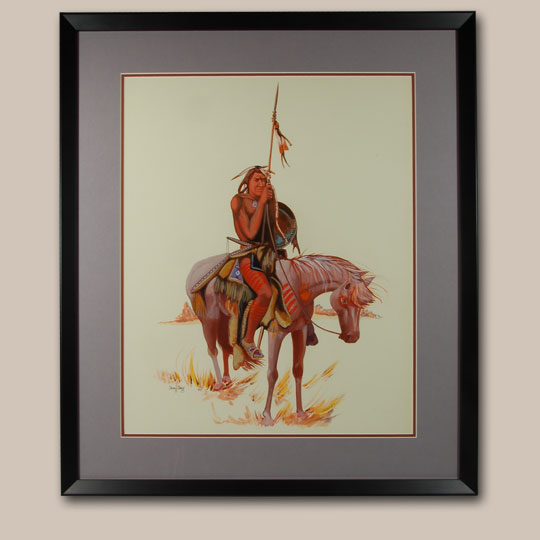 The oldest son of famed Navajo artist Beatien Yazz, Irving Toddy attended Utah State University where he studied painting and illustration. He and several other Navajo painters became known as the "Gallup Realists." Because his work is so realistic, it is greatly different from traditional Navajo painting.
Toddy's favorite subject matter is the Navajo people and their environment, done in a realistic style. He believes that the essence of an exceptional painting is a good drawing and he feels it is his drawing ability that has helped him develop his unique style.
Mixed Media Painting “Singing Potter” by David Dawangyumptewa - C3624G
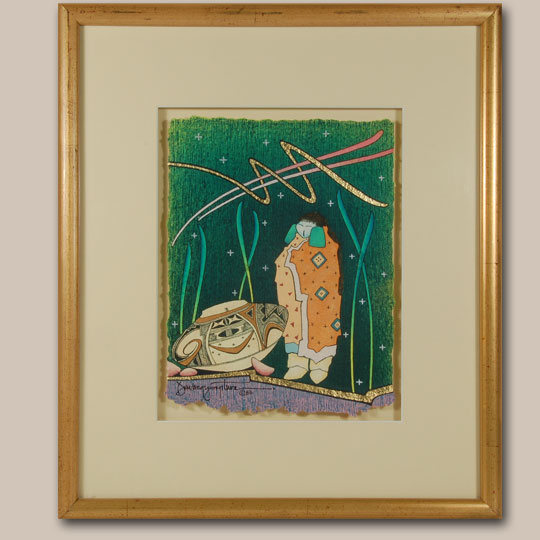 David Dawangyumptewa is a Hopi/Navajo who says that he would like to be thought of as a painter of mystical or spiritual subjects. He is a member of the Water Clanand often uses water as a theme. His paintings are distinguished by his use of jewel-like color and Hopi symbolism. He often paints on handmade paper as was done in this painting. The deckled edges of the paper are typical of handmade paper.
Acoma Pueblo Shallow Dish with Mimbres Fish Design by Rebecca Lucario - C3628
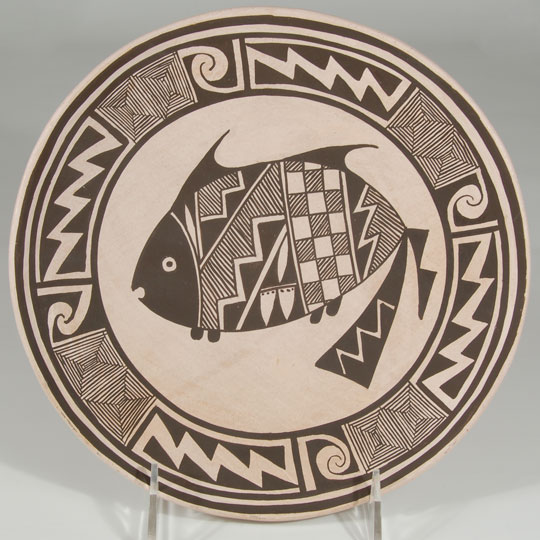 Rebecca Lucario is known for a variety of pottery shapes, particularly for ollas, plates, and seed jars. She has produced intricate fine-line designs, Mimbres animal designs and geometric designs. Early in her career, over 20 years ago when this shallow dish was made, she used larger designs such as this single Mimbres fish floating in the base of the dish, surrounded by geometric elements encircling the edge of the dish.
Original Mixed Media Painting “Hopi Maidens” by Janeele Numkena - C3624F
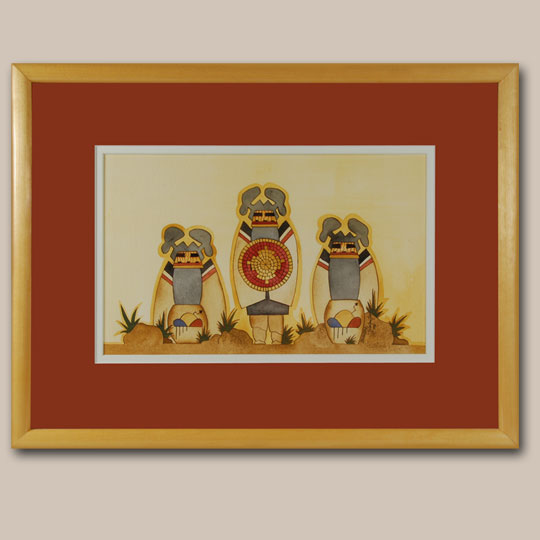 The artist is listed in a biographical publication under the name Janeele Talayumptewa Numkena. The painting is signed Numkena Talayumptewa, so we are unsure of whether the artist's last name is Numkena or Talayumptewa.
The artist has exhibited at Hopi-tu Tsootsvilla in Sedona, Arizona, received an award at the 1991 Gallup Inter-tribal Indian Ceremonial in Gallup, New Mexico, and has exhibited at Santa Fe Indian Market. That is the extent of the information I have found so far. I do not know the age of the artist. The painting is signed in lower right and dated 1990.