



Zia Pueblo Polychrome Jar with Bird Design by Seferina Bell Mayasits’a - C3753.06
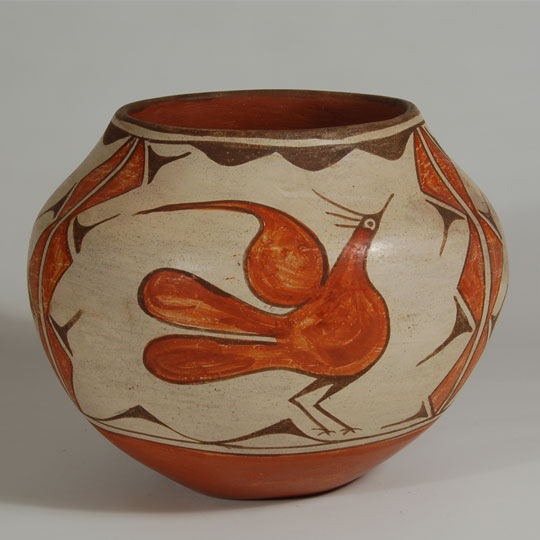
Read more about this pottery here.
Navajo Sterling Silver and Turquoise Bracelet - C3750J
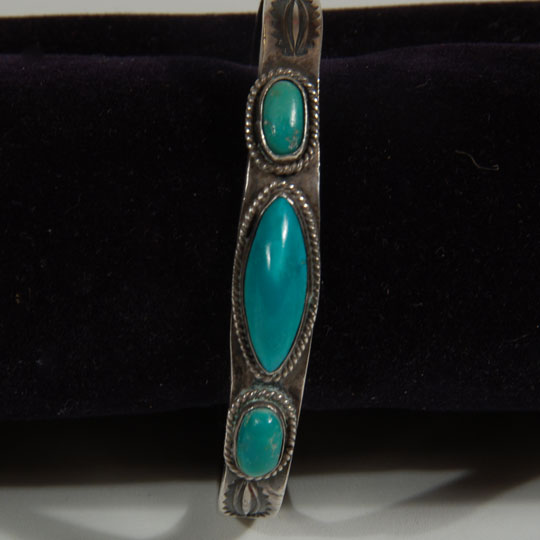
Read more about this bracelet here.
Navajo Sterling Silver Three Stone Turquoise Bracelet - C3750D
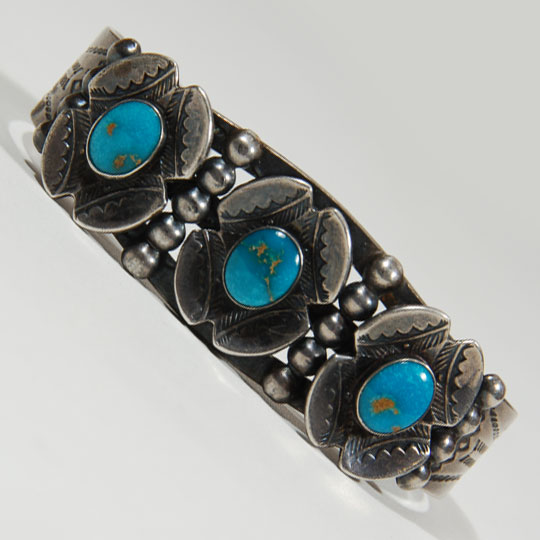
Read more about this bracelet here.
Sterling Silver and Single Green Turquoise Stone Bracelet - C3750C
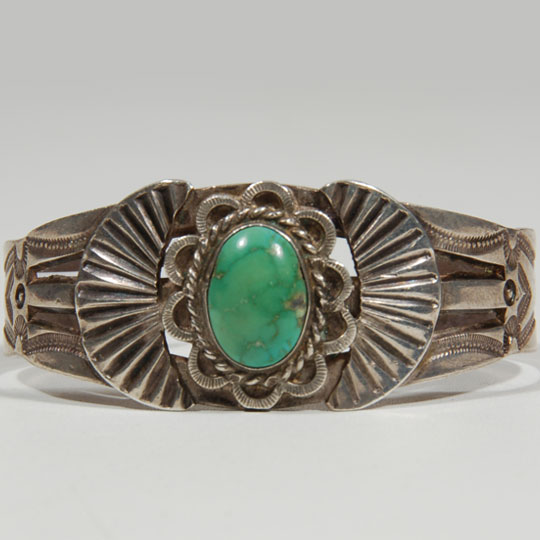
Read more about this bracelet here.
Historic Cochiti Pueblo Chile Bowl - C3753.32
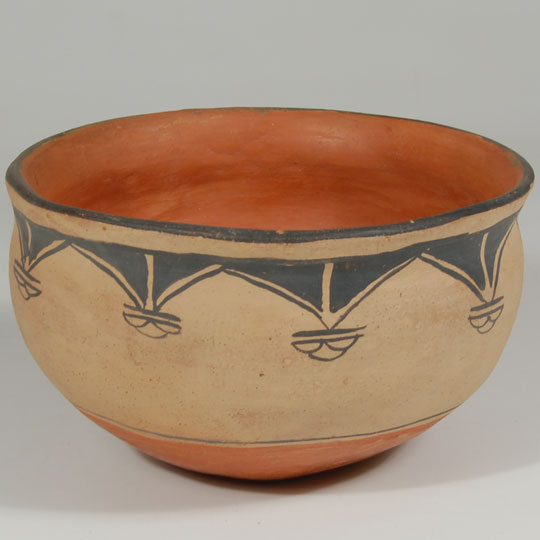 If you were ever invited to share a meal at a pueblo home, you would have seen vegetables or red chile or green chile stew served in a bowl similar to this. Six-inch bowls grace the table at all pueblo meals. This historic bowl, however, shows no evidence of use so you could be the first to put it to use on your table.
Read more about this historic pottery here.
Kewa (Santo Domingo) Pueblo Chile Bowl - C3753.20
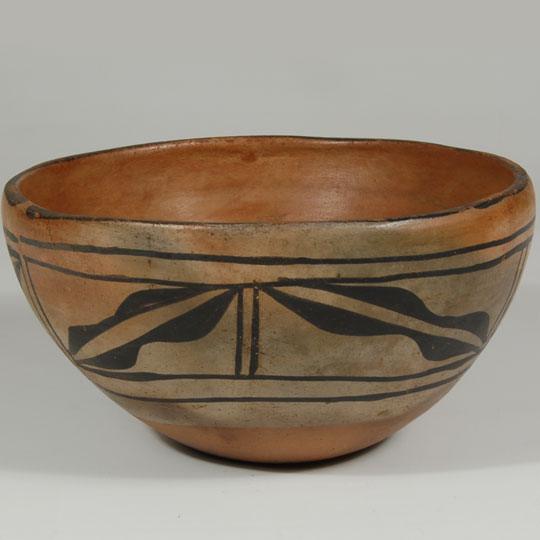 When chile bowls have been used for serving red or green chile stew, they absorb a wonderful patina that is neither red nor green, but a warm and smooth oily look. The interior of the bowl soaks up the essence of the contents and the exterior picks up the oil from one's hands. The clay is porous so it absorbs easily. The interior of the bowl is stone polished so the bowl is secure from disintegration.
Read more about this historic pottery here.
Kewa (Santo Domingo) Pueblo Chile Bowl with Excellent Patina - C3753.23
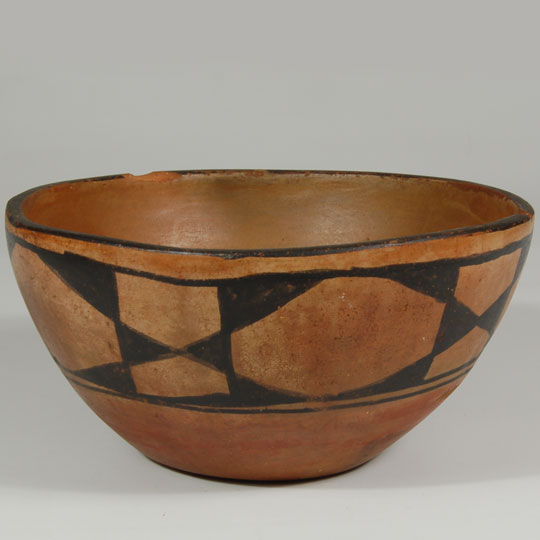 This Kewa (Santo Domingo) Pueblo polychrome chile bowl probably dates to the first half of the 20th century. It has the traditional rag-wiped bentonite slip, black rim around the top, and a wide red band wiped below the decorated section. The main body is decorated in a single extremely bold design that is an arrangement of black triangles strategically placed to form the desired design. It is one of the most traditional designs seen on Kewa bowls.
Read more about this historic pottery here.
Tesuque Pueblo Black-On-Cream Dimple-Rim Bowl - C3753.21
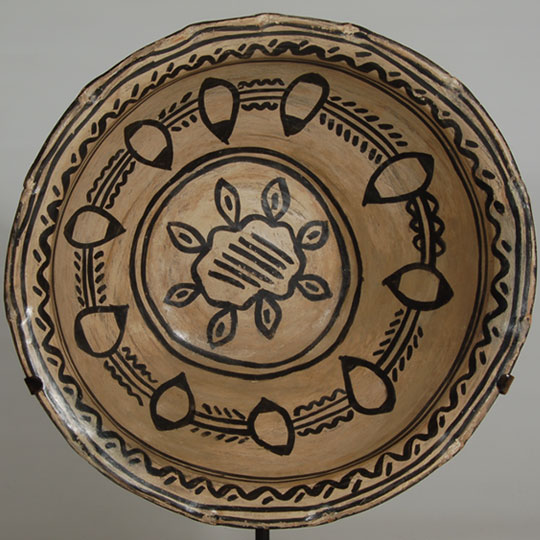 This is an extraordinarily beautiful bowl of traditional characteristics from Tesuque Pueblo. The paste is typically Tesuque in consistency-tan in color and fibrous in texture. The un-slipped tan exterior exhibits the bumpiness characteristic of Tesuque pottery. The bottom is flat and features an extraordinary fire cloud. There is no design on the exterior.
Read more about this histroic pottery here.
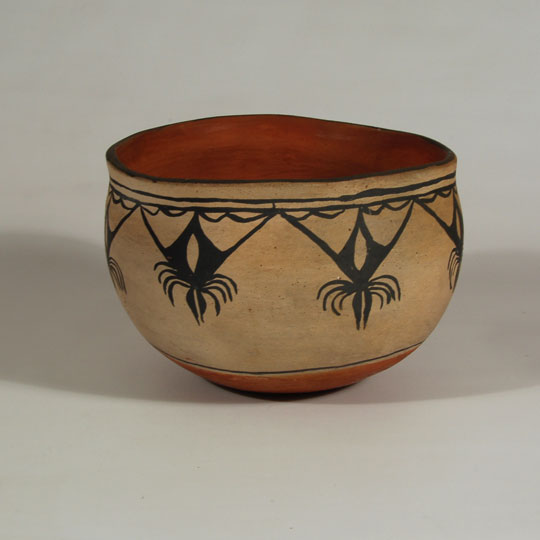
Historic Cochiti Pueblo Deep Bowl - C3753.07
Hopi Pueblo Kokopellmana Katsina Doll - C3753.42
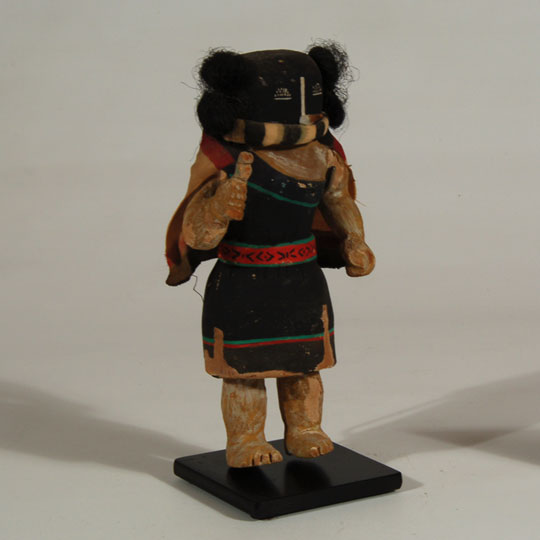
Read more about this Katsina doll here.
Original Watercolor “Sun Snake” by José Angela Aguilar - C3754A
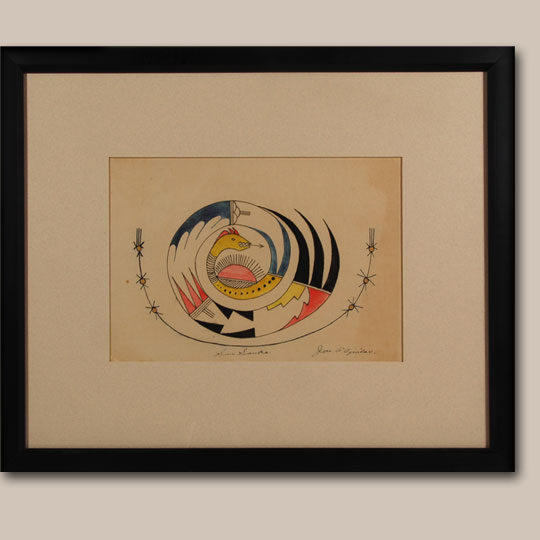
Read more about this painting here.
Navajo Crystal Trading Post Pictorial Rug - C3755C
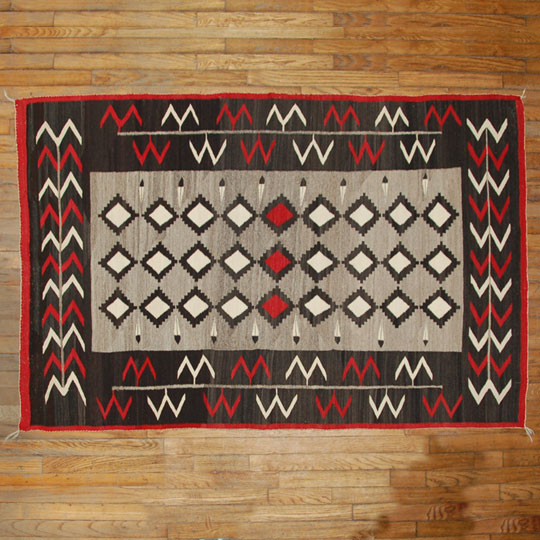
Read more about this Rug here.
Hopi Third Mesa Very Large Plaque - C3750A
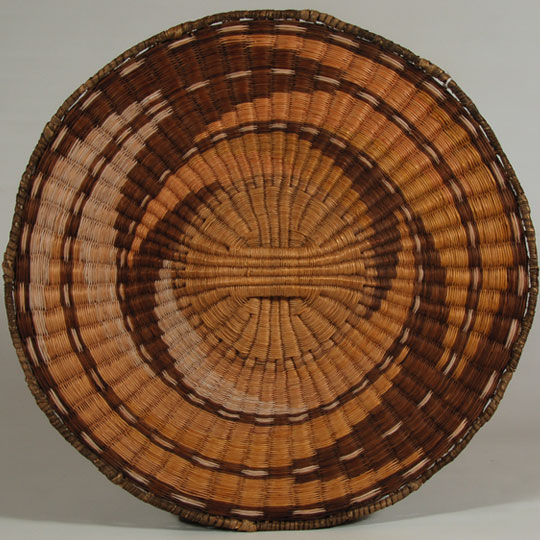
We, as outsiders, see Hopi plaques as decorative objects made to sell to tourists and collectors but that is only a secondary and recent purpose. The plaques have served to retain Hopi culture and the women are responsible for this occurrence. It is the females who laboriously gather the materials, process them through sun drying, preparing the dyes and dying the wicker and then, as a last step, weaving the plaque. It is the plaque that symbolizes the woman's role in Hopi culture as it is the reenactment of the Katsina dances that reinforces the role of the men.
Read more about this basket here.
Navajo Sterling Silver Box with Rainbow Man by Little Joe Begay - C3753.40
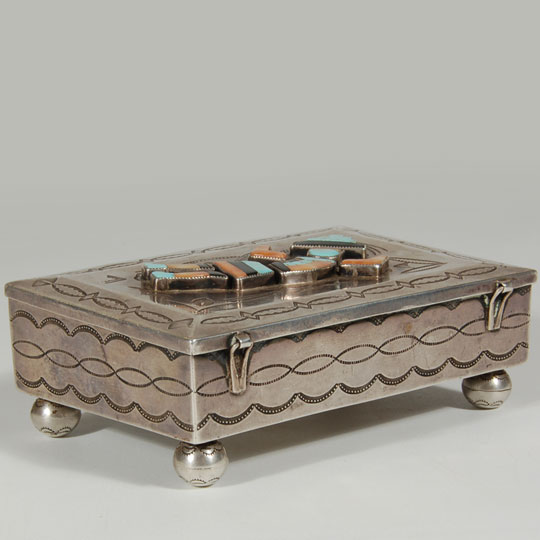
Read more about this jewelry here.
Pair of Small Zia Pueblo Paintings by MaPeWi - C3754C
Read more about these paintings here.
Laguna Pueblo Contemporary Black-on-white Design Jar by Evelyn Cheromiah - C3752E
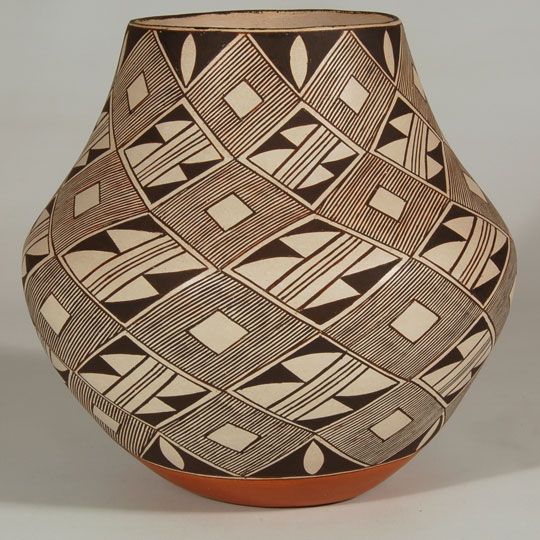 Pottery production declined at Laguna Pueblo in the early 20th century, largely because the men were being employed by the railroad, thereby providing cash income for the families. It was then no longer necessary for the women to make pottery for sale to tourists. They could, and did, purchase pottery from potters at Acoma Pueblo for use in their households.
Read more about this pottery here.
Polished Black Oval Dish with Twisted Handles by Legoria Tafoya - C3752F
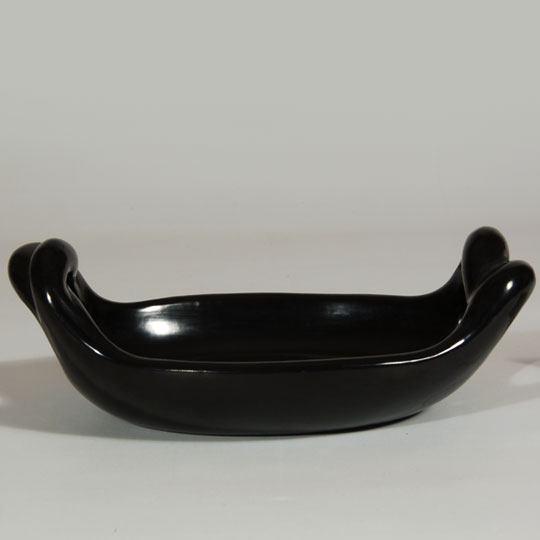 This beautifully polished black dish by Legoria features twisted handles often seen in Santa Clara engagement jars. Legoria used such handles in many of her pottery items where handles were incorporated and on wedding vessels between the two spouts. The dish is signed Legoria Str Clara Pueblo on the underside.
Read more about this pottery here.
San Ildefonso Stone Polished and Carved Red Jar by Rose Gonzales - C3752D
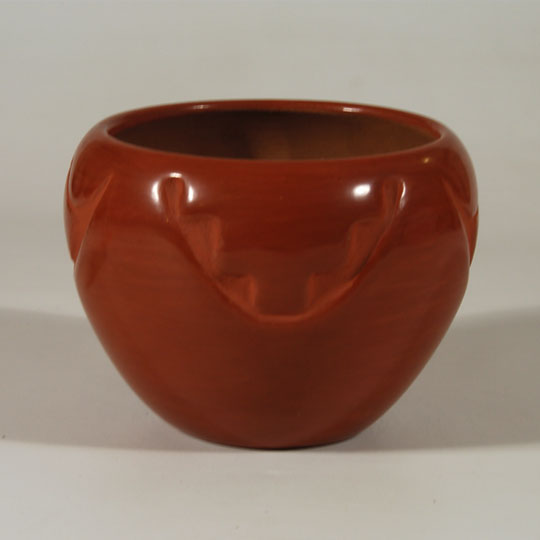 Rose Gonzales was born at Ohkay Owingeh (formerly San Juan) Pueblo in 1900 and, soon after, became an orphan when her parents died from the flu epidemic. She and her sister survived by boarding at the Santa Fe Indian School. She married Robert Gonzales of San Ildefonso Pueblo and moved to his pueblo at that time. She learned the art of pottery making from his mother.
Read more about this pottery here.
Kewa Pueblo Silver and Turquoise Ring by Anthony Lovato - C3750Q
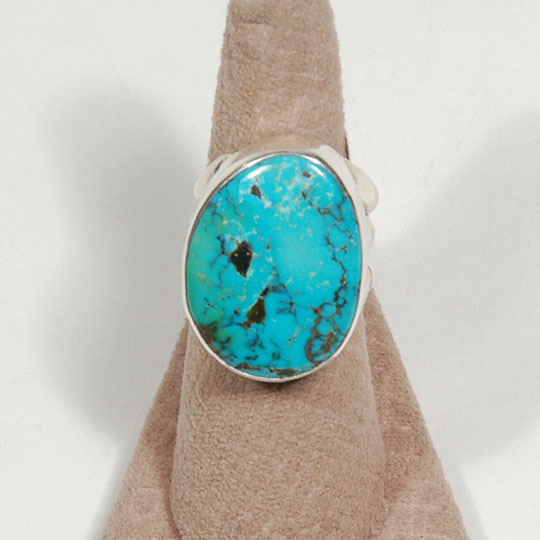 Anthony Lovato is Corn Clan from Kewa Pueblo. He has been an active jeweler since he was 20 years old. He studied at the Institute of American Indian Arts (IAIA) in Santa Fe and studied under the tutelage of Allan Houser. He also credits Leo Coriz, Sedelio Lovato and Skip Holbrook as teachers.
Read more about this ring here.
Zuni Petit Point Drop Clip Earrings - C3750N
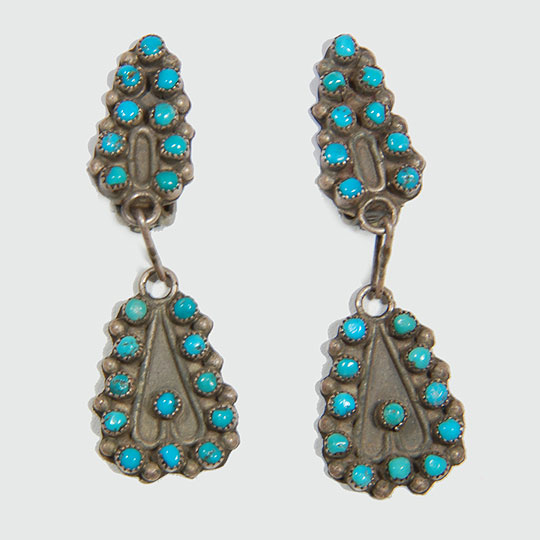 Zuni artisans have a long history in lapidary work but after learning silver work from the Navajo in the late 1800s, they put the two ideas together and started producing jewelry of silver and stone. Zuni lapidary artisans became proficient in mosaic-style inlay jewelry and miniature turquoise stones called petit point. Zuni petit point jewelry was first made in the 1930s. This process is time consuming and painstaking. Multiple small stones are cut and shaped to fit into tiny bezels to create the design.
Read more about these earrings here.