



Zuni Silver and Inlay Butterfly Necklace - C3750H
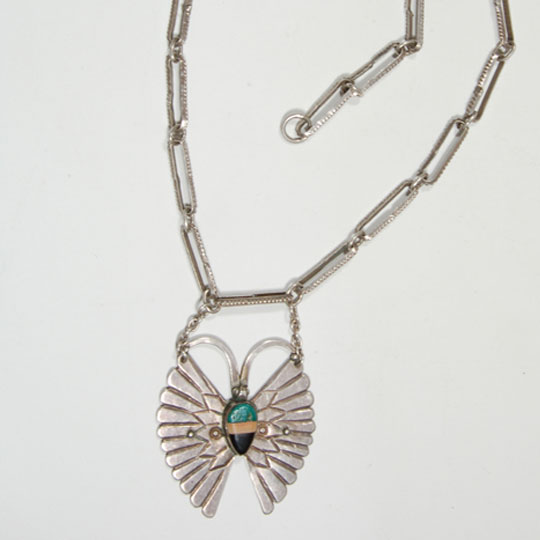 This exquisite sterling silver sculpted butterfly pin is not signed with the name of the artisan but it appears to be an early Zuni piece perhaps from the 1940s. The silver chain is handmade and each link in the chain is stamped with a design. It is quite possible that the butterfly was a pin at one time and has been converted to a necklace.
Read more about this necklace here.
Male and Female Pair of Butterfly Dancers by Alfonso Roybal - Awa Tsireh - C3749B
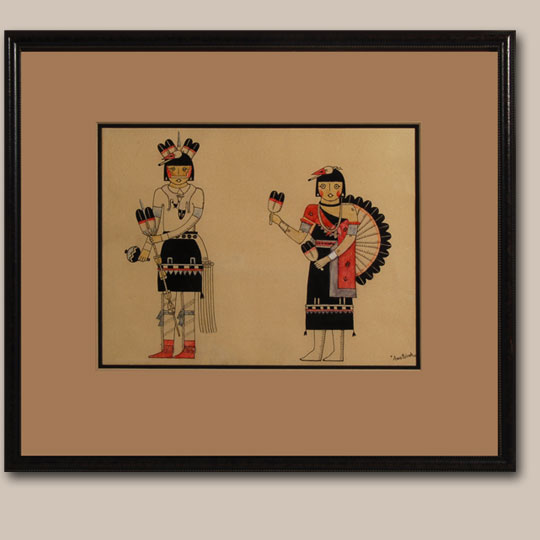
It is quite likely that Awa Tsireh developed the style seen in this painting through studying Henderson's Asian art books. The static, frontal symmetrical positioning of flat imagery outlined in black line and filled with flat bright colors has a definite Asian appearance. The dancers are positioned facing to the front with their feet facing sideways. Their faces are rounded and abstract, yet their clothing is pictured in the finest accurate detail. It is this style that Awa Tsireh produced in the 1920s. This is only one style of Awa Tsireh's art. He apparently tried styles seen in other books belonging to Henderson.
Read more about this painting here.
Painting of a Navajo Encampment by Andrew Van Tsihnahjinnie - C3751
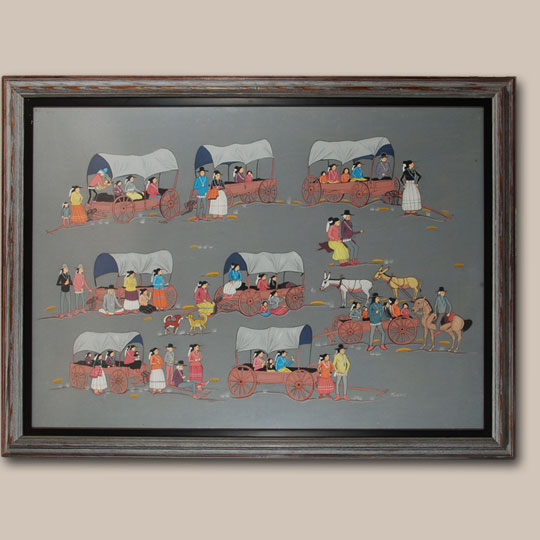
Read more about this painting here.
San Ildefonso Antelope Dancer signed Awa Tsireh by Alfonso Roybal - C3749A
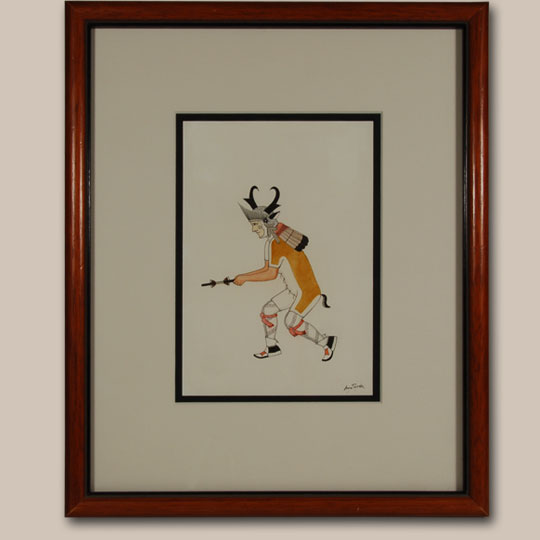
Read more about this painting here.
Taos Pueblo Painting of a Single Buffalo Dancer by Pop Chalee - C3142C
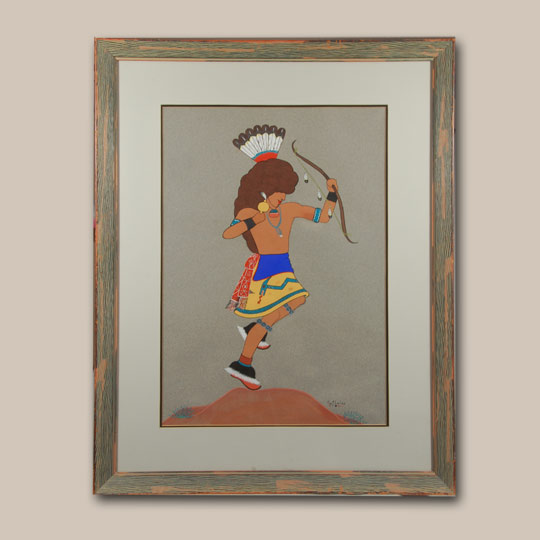
Merina Lujan - Pop Chalee (Blue Flower) graduated from the Santa Fe Indian School in 1937 and was a student at The Studio under the tutelage of Dorothy Dunn. The author continues: "Her paintings, jewelry, textile designs and murals grace museums, private collections and public institutions across the county. During her artistic life, Pop knew some of the most influential people of her times."
Read more about this painting here.
Black-on-Black San Ildefonso Jar signed Maria/Popovi 970 - C3752C
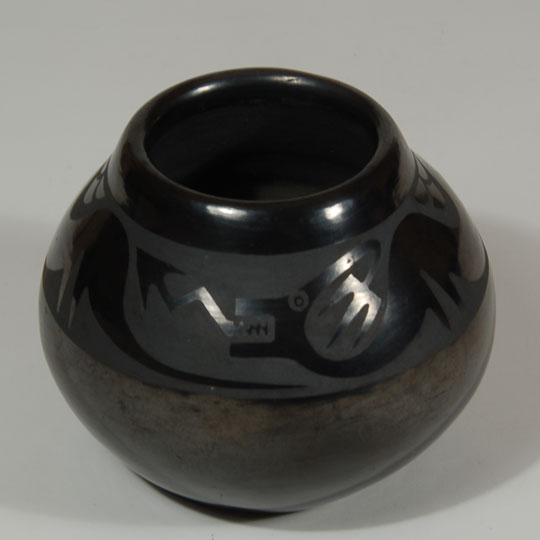 This small jar was made by Maria Martinez and painted, and probably fired, by Popovi Da. It features an Avanyu wrapped around the upper half of the jar, achieved by painting a matte border around the polished image desired.
Read more about this pottery here.

Hopi Eagle Tail Design Jar in Polychrome by Fannie Polacca Nampeyo - C3752A
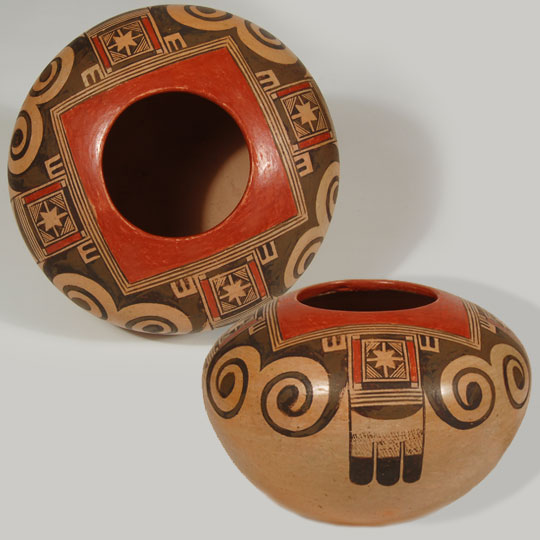 Fannie Nampeyo was an outstanding potter. She was one of three daughters of Nampeyo of Hano and was the last of the three to pass away. As a result, she is probably the best known of Nampeyo's daughters. Fannie was particularly adept at making fine, well balanced vessels. She seemed to be particularly outstanding at applying just the right design to fit the scale and shape of the vessel.
Read more about this Hopi Pottery here.
Santa Clara Pueblo Black Melon-ribbed Jar by Anita Suazo - C3752B
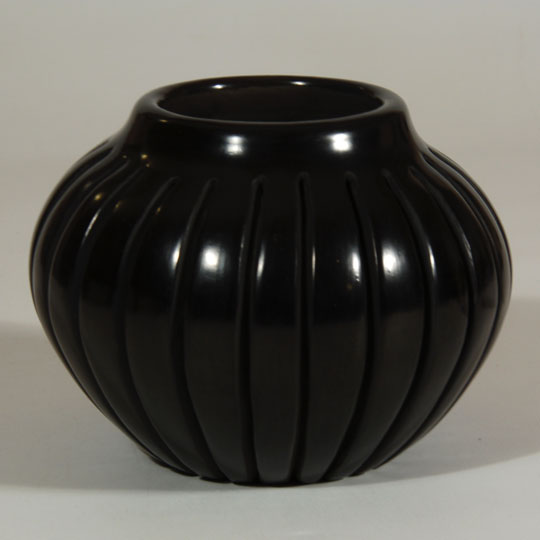 It is from the shape of melons that the pottery melon jar evolved. It resembles cantaloupe with its globular shape and vertical ribs. The melon jar seems to have developed at Santa Clara Pueblo with the most renown potters Helen Shupla and Angela Baca being the ones who specialized in making them. Other potters followed the tradition.
Read more about this pottery here.
Zuni Pueblo Channel Inlay Hummingbird Pin - C3750L
 Zuni lapidary artisans are masters at cutting turquoise precisely to fit between silver bars in a mosaic style. The shape of the pin has been noted as representing a pair of hummingbirds. The shape is known internationally and has many names but we will stick with the Zuni name.
Read more about this pin here.
Zuni Jet and Turquoise Adjustable Ring - C3750R
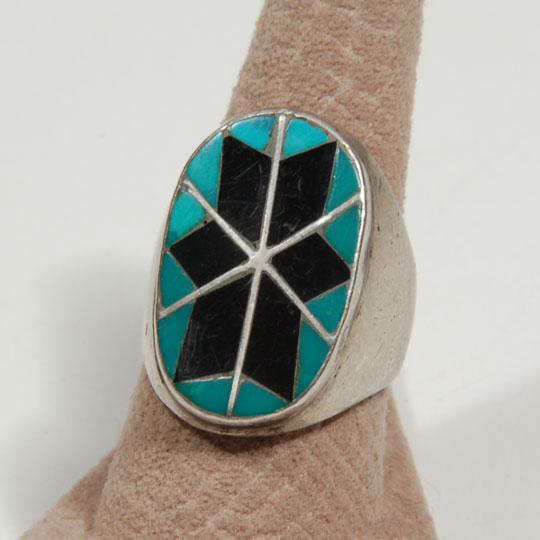 The first Zuni silversmith, Lanyad, learned his trade from the Navajo smith Adsity Chon in 1872. After that time the Zuni combined their lapidary skills with delicate silver work to develop a distinctive jewelry style. The Zuni then specialized in setting stones into the newly discovered technique of silverwork. This exquisite ring is comprised of individual small cuts of turquoise and jet which then were joined stone-to-stone. The six stone-to-stone pieces were then inlayed between silver channels. The face of the ring is flat.
Read more about this Zuni ring here.
Zuni Multi-Stone Inlay Rainbow Man Pin - C3750G
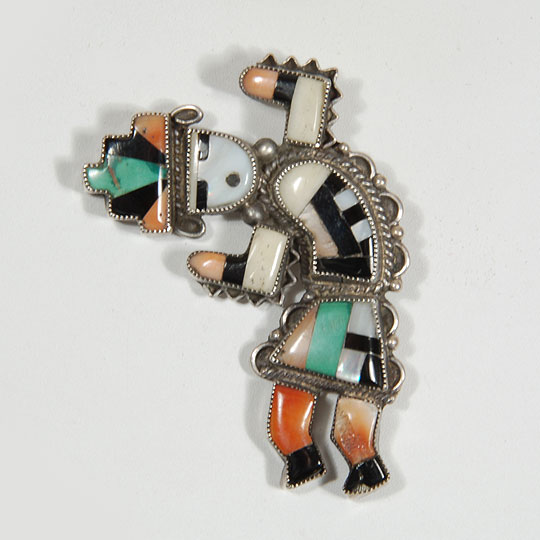 The Zuni Rainbow Man is among the most popular jewelry item for collectors. Representations of specific native religious imagery such as this was frowned upon among most pueblos, but some ceremonially significant figures were conventionalized and used for decorative purposes, probably knowingly so, because of non-Indian interest. Some of these figures had their appearances deliberately altered to avoid offending traditionalists' spiritual sensitivities.
Read more about this pin here.
Zuni Silver and Turquoise Channel Inlay Ring by Frank Vasit - C3750P
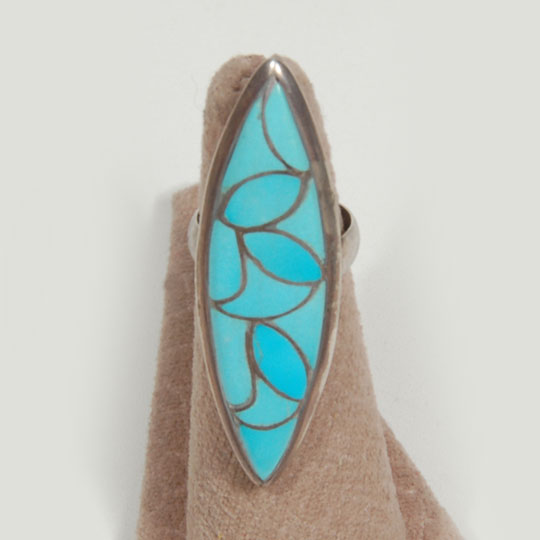 Zuni artisan Frank Vasik was active between 1930 and 1950 or a little later. He was married to the daughter of Leekya Deyuse, the most famous Zuni fetish carver of all times. His jewelry is in the collections of the Smithsonian National Museum of the American Indian and the Heard Museum in Phoenix.
Read more about this ring here.
Diné – Navajo Silver and Turquoise Bola with Tips - 25639
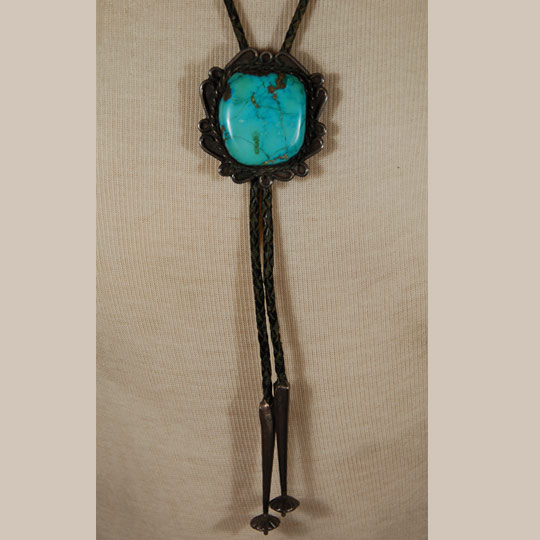
Read more about this bola tie here..
Female with Shawl Holding an Infant and a Child by Marie Charlotte Suina - C3688.70
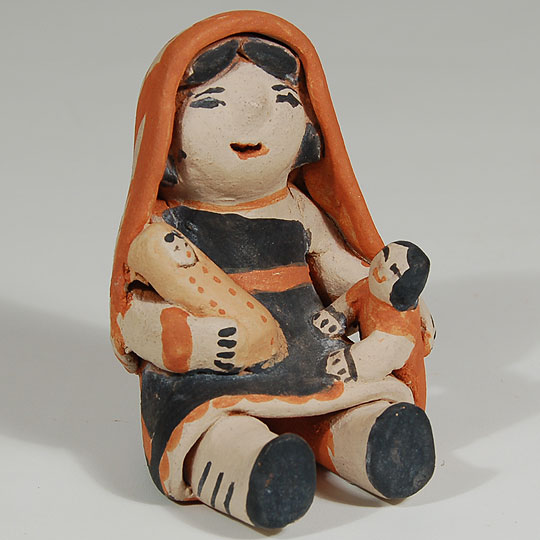
Read more about this storyteller here..
Seated Female Cochiti Storyteller Holding 3 Kids by Rufina Trujillo - C3688.27
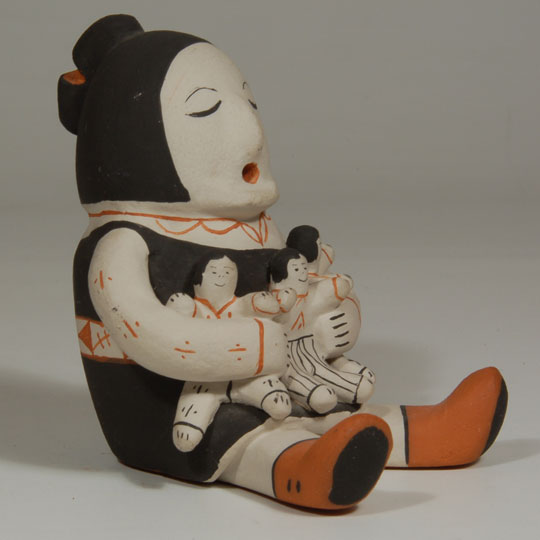
I have been unable to find any published information on Rufina Trujillo. In a personal conversation with Mary Trujillo of Cochiti Pueblo..
Read more about this storytellery here..
Zia Pueblo Pencil Sketch of Indian on a Horse by Ma Pe Wi - C3224AG
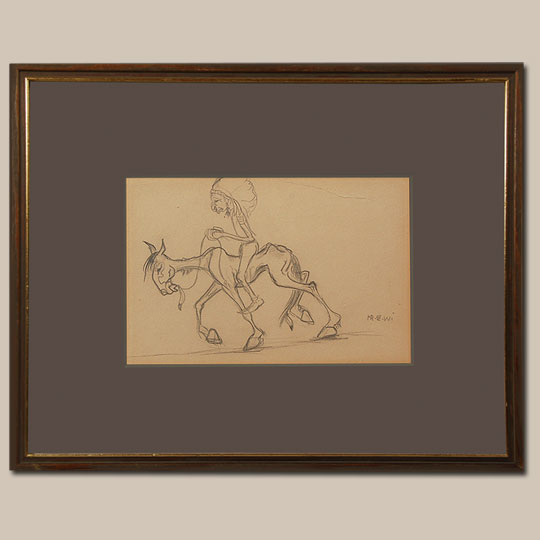
Read more about this drawing here..
Acrylic Painting “Unique Horn” by David Chethlahe Paladin - C3748B
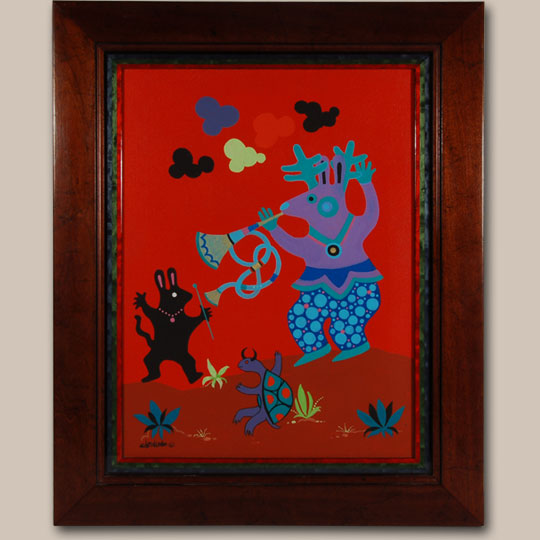
Read more about this painting here..
Original Painting “The Mystery Storm” by Beatien Yazz - C3748A
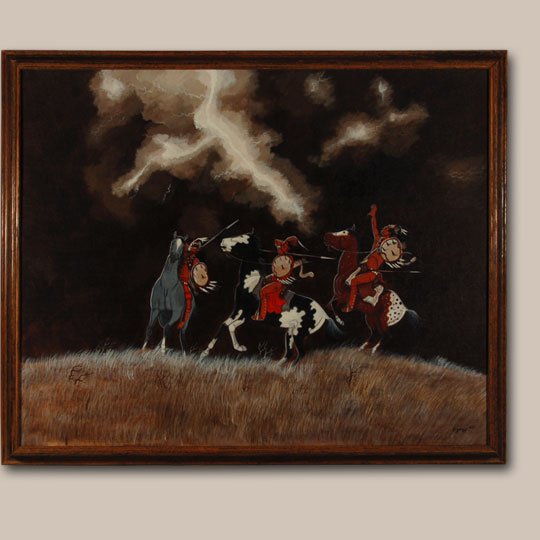
Read more about this painting here..
Watercolor Painting of “Bow and Arrow Dancers” by Encarnacion Peña - C3747
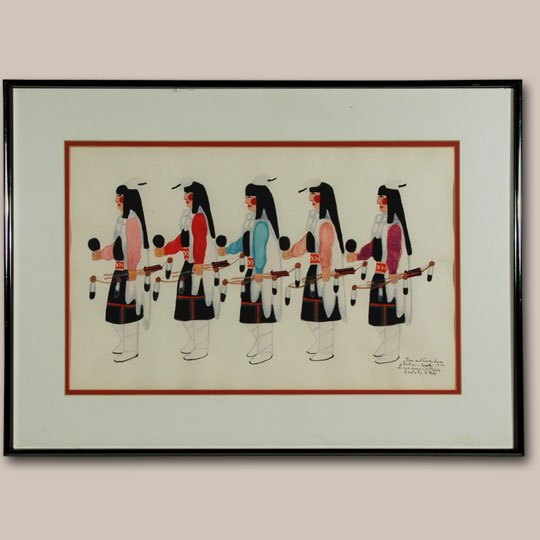
Read more about this painting here..
Painting Entitled “Tesuque Deer Dancer #3” by Patrick Swazo Hinds - C3679C
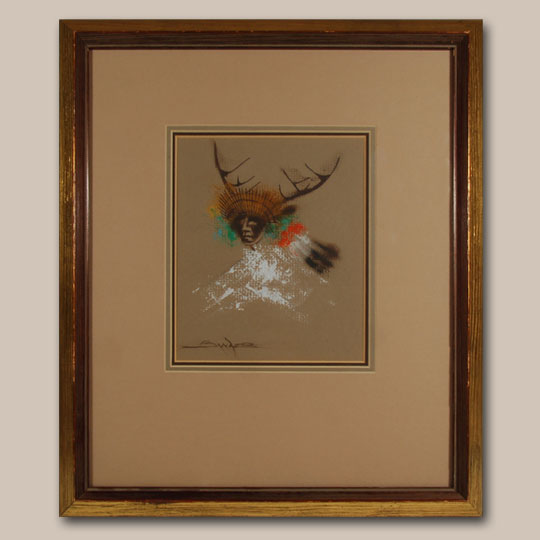
Read more about this painting here..